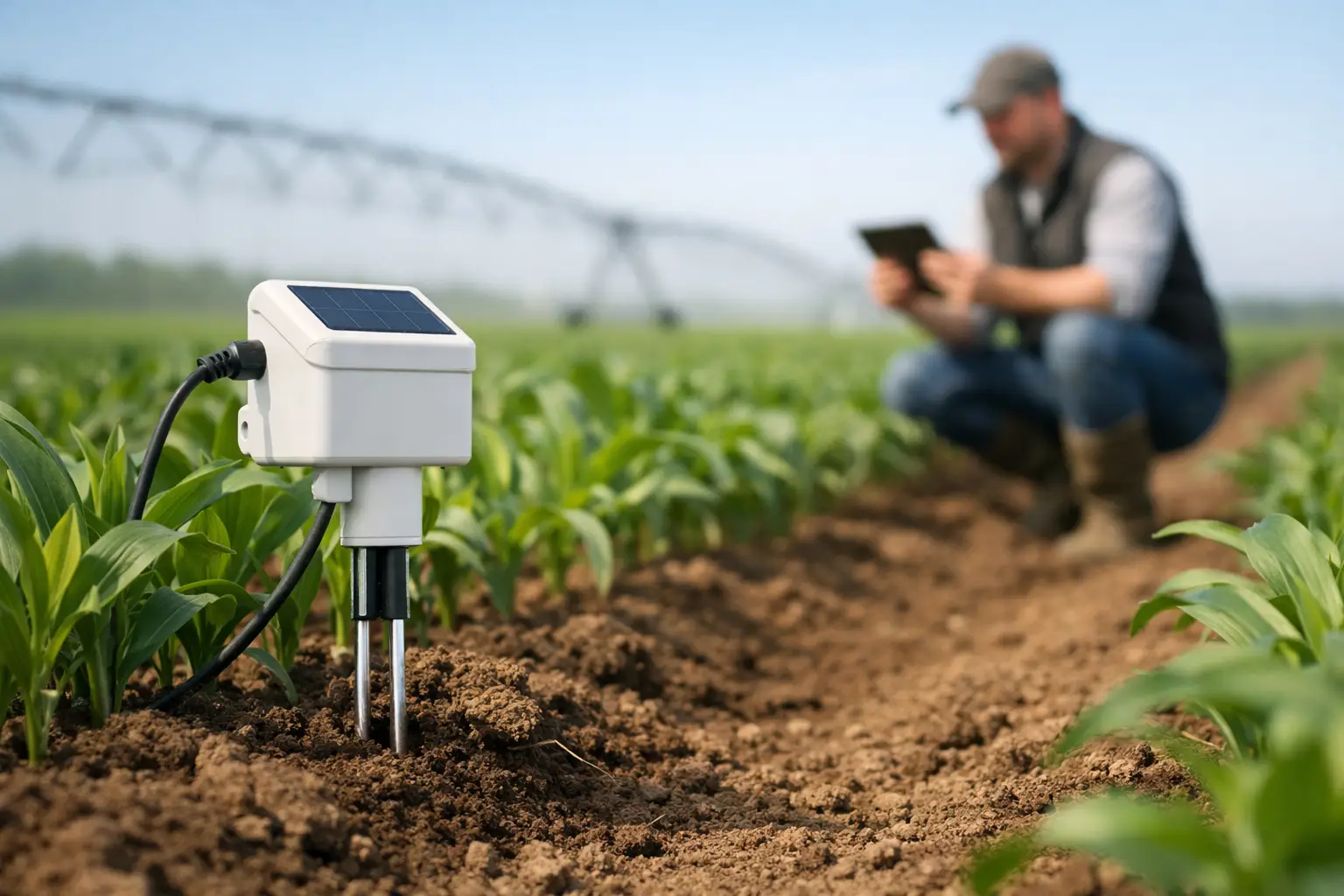
Soil Moisture Sensor Review for Commercial Farms
A missed irrigation window can cost more than water. It can mean uneven emergence, stressed roots, lower packout, excess energy use, or a crop that falls short of contract specifications. This soil moisture sensor review looks at the sensor categories commercial growers are most likely to source, what each one can and cannot tell you, and how to buy equipment that supports better irrigation decisions rather than adding another dashboard to manage.
What a Soil Moisture Sensor Actually Measures
A soil moisture sensor does not measure plant health directly. It measures a soil property that helps estimate how much water is available in the root zone. That distinction matters because a field can show acceptable moisture at one depth while crops are already under stress at another.
Most systems report either volumetric water content, soil water tension, or a relative moisture reading. Volumetric water content estimates the percentage of water in a known volume of soil. Tension measures how strongly water is held by the soil, which is often useful for irrigation timing. Relative readings can identify wetting and drying trends but may not provide a reliable absolute value without calibration.
For commercial operations, the value is not the individual reading. The value is a repeatable decision process: determine when to irrigate, how long to run, and whether water reached the intended root depth without moving beyond it.
Soil Moisture Sensor Review: Main Technologies Compared
Sensor technology should fit the crop, soil profile, irrigation system, labor availability, and management goals. A low-cost probe may be sufficient for a small block with uniform soil. Multi-depth, connected monitoring is usually more valuable where water is expensive, fields are variable, or irrigation runs across many zones.
| Sensor type | What it measures | Main advantages | Main limitations | Best commercial fit | |—|—|—|—|—| | Tensiometer | Soil water tension | Direct, understandable irrigation threshold data; effective in wet soil ranges | Requires maintenance; less useful in very dry soils | Vegetables, orchards, nurseries, high-frequency irrigation | | Granular matrix sensor | Soil water tension | Lower maintenance than tensiometers; useful across a broad moisture range | Requires soil-specific interpretation and good installation | Field crops, orchards, vineyards | | Capacitance or FDR probe | Dielectric response related to water content | Fast readings, multi-depth options, telemetry compatibility | Accuracy varies by soil type; calibration improves results | Row crops, permanent crops, irrigation districts | | TDR sensor | Travel time of an electrical signal | High accuracy when properly installed; strong research-grade option | Higher purchase cost and more technical setup | Research farms, high-value crops, precision programs | | Resistance block | Electrical resistance related to moisture | Affordable and simple for trend monitoring | Less precise, slower response in some conditions | Entry-level monitoring and supplementary checks |
No technology wins in every field. A capacitance probe can provide useful depth-by-depth data across a large operation, but only if the installation represents the field. A carefully maintained tensiometer in a high-value vegetable block may deliver more actionable information than an expensive connected probe placed in an unrepresentative location.
What to Look for Before You Buy
Measurement Depth and Root-Zone Coverage
A sensor placed at 6 inches tells a different story from one placed at 24 inches. Shallow sensors help track irrigation events and early root activity. Deeper sensors show whether moisture is being stored for later use or pushed below the active root zone.
For annual crops, many growers use at least two depths: one in the active root zone and one below it. Permanent crops may justify three or more depths because roots occupy a larger profile and irrigation mistakes can accumulate over a season.
Ask suppliers whether the system uses individual sensors at selected depths or a continuous-profile probe. Individual sensors offer placement flexibility. Profile probes simplify multi-depth monitoring but may require more careful installation and a larger upfront investment.
Accuracy, Calibration, and Soil Type
Manufacturer accuracy claims are useful only when read with context. Soil texture, salinity, temperature, air gaps, and installation quality all affect performance. Clay soils, sandy fields, organic growing media, and saline irrigation areas should not be treated as identical measurement environments.
For many irrigation decisions, trend accuracy matters more than laboratory-grade absolute accuracy. If a sensor consistently shows the soil drying between irrigations and clearly responds to water application, it can support useful scheduling. When exact volumetric values are needed for irrigation models, research, or highly variable soils, field calibration becomes more important.
Request technical specifications for the intended soil range, operating temperature, salinity tolerance, and recommended calibration procedure. A supplier that can explain these limits clearly is usually a better commercial partner than one that promises universal accuracy.
Connectivity and Data Access
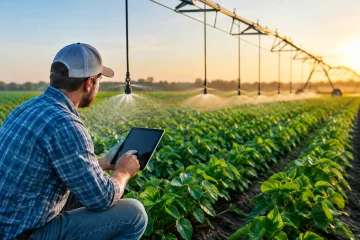
Manual-read sensors have a place, especially in smaller farms or where field staff already inspect irrigation blocks daily. Connected systems add value when they reduce travel, provide alerts, combine weather information, or allow agronomists and managers to review the same data remotely.
Common communications options include cellular, LoRaWAN, radio networks, Bluetooth, and satellite. The best choice depends on field coverage and recurring costs. Cellular systems can be easy to deploy but may require subscriptions. LoRaWAN can be cost-effective across a large farm if network infrastructure is available. Satellite is useful in remote areas but typically carries higher operating costs.
Before purchasing, confirm who owns the data, whether historical records can be exported, what happens if a subscription ends, and whether the platform can display multiple fields and crop blocks without excessive per-device fees.
Installation Is Where Many Sensor Programs Fail
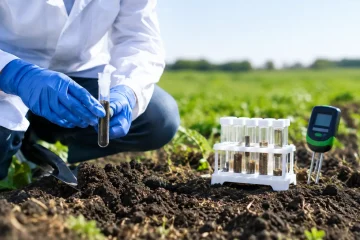
A high-quality sensor installed badly produces high-confidence bad data. The probe must have close contact with undisturbed soil, be positioned where roots and irrigation water are representative, and avoid obvious anomalies such as wheel tracks, field edges, ponding areas, and buried drip leaks.
Choose locations based on soil zone, crop vigor, irrigation zone, and topography. In a variable field, one sensor station rarely represents everything. Start with the highest-value or most variable zones, then expand when the operating team has a clear process for reviewing results.
For drip irrigation, placement relative to the emitter is critical. A sensor too close to the drip line may show frequent wetting that does not reflect water distribution across the root zone. A sensor too far away may indicate dry soil even when the main feeder roots are adequately supplied. Installation guidance should account for emitter spacing, soil texture, and crop row position.
Practical Advantages and Trade-Offs
Soil moisture monitoring can create measurable operational gains when it changes irrigation behavior. Common benefits include:
- Reduced overwatering, pumping hours, and nutrient leaching risk
- Better irrigation timing during establishment, flowering, fruit fill, and other sensitive stages
- Earlier detection of blocked emitters, uneven application, or unexpected rainfall effects
- Better records for consultants, irrigation managers, and farm ownership teams
- More confidence when water allocations or energy costs force tighter scheduling
The trade-off is that sensors require management discipline. Data does not replace field scouting, flow-meter checks, pressure testing, or crop observation. It also cannot correct an irrigation system with poor uniformity. If the system applies water unevenly, a sensor may identify the problem but will not solve it.
Cost and Return on Investment
Entry-level manual sensors may cost relatively little per monitoring point, while connected multi-depth stations can require a larger investment plus recurring software and connectivity charges. The right budget should include installation tools, training, replacement parts, labor, and annual data fees, not just the probe price.
ROI is strongest when a sensor program addresses a known cost or production risk. Examples include expensive pumping, limited water allocations, nutrient-intensive fertigation, premium crops, sandy soils with low storage capacity, or large farms where manual irrigation checks take too long.
For a grower managing many blocks, the most practical approach is often a pilot. Install sensors in one representative high-value block and one variable or problem block. Compare irrigation runtime, water use, crop observations, and yield or quality outcomes over a full cycle. That evidence provides a stronger purchasing basis than selecting equipment solely from a specification sheet.
A Sourcing Checklist for Buyers and Distributors
When comparing manufacturers, importers, or irrigation technology suppliers, ask for a complete commercial picture. Confirm sensor type, supported depths, calibration requirements, expected service life, communications method, dashboard access, warranty terms, technical support coverage, and replacement-part availability.
Also ask whether the supplier can support installation training in your region. A distributor with local agronomic knowledge, reliable inventory, and responsive service may deliver more value than a lower-priced device with limited after-sales support. For international sourcing, verify power requirements, network compatibility, language options, shipping lead times, and any import documentation needed for electronic equipment.
Agricial helps agricultural businesses compare specialized suppliers and technology categories in one commercial marketplace, making it easier to identify partners that match local production conditions and procurement requirements.
Choosing the Right Sensor for Your Operation
Choose a tensiometer or granular matrix sensor when irrigation thresholds and practical field interpretation are the priority. Choose capacitance or profile probes when you need multi-depth trends, remote visibility, and scalable monitoring. Choose TDR when precision requirements justify the higher technical and financial commitment.
The best system is the one your team will install correctly, review consistently, and use to change irrigation decisions. Start with a meaningful field problem, select a sensor that answers it, and build your monitoring program around the crop root zone rather than the latest device feature.