Smart Irrigation Adoption Trends Shaping Farm Buying
A grower replacing a failing pump or expanding acreage is no longer choosing only pipe, valves, and emitters. The decision now includes controllers, sensors, connectivity, software support, and the supplier’s ability to provide parts after installation. Smart irrigation adoption trends reflect this shift: water management is becoming a purchasing, productivity, and risk-management decision for farms of every size.
For agricultural businesses, the opportunity is clear. Better scheduling can reduce avoidable water use, labor trips, and crop stress. But adoption is not moving at the same speed in every market or crop. The systems gaining ground are the ones that solve a defined field problem, fit available infrastructure, and deliver usable information without adding unnecessary complexity.
Why Smart Irrigation Adoption Trends Are Accelerating
Water availability is the most visible driver, particularly in regions facing tighter allocation rules, rising pumping costs, or inconsistent rainfall. Yet water scarcity alone does not explain the market. Commercial farms are also responding to higher labor costs, pressure to document resource use, and the need to protect yield quality in high-value crops.
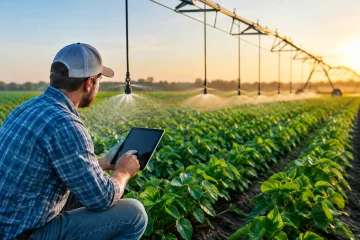
Remote management has become more practical as cellular and low-power connectivity improves. A manager can check pressure, start a zone, receive a leak alert, or review irrigation history without driving between fields. For farms with scattered blocks, this can be as valuable as the water savings.
Adoption is also being pulled by buyers downstream. Exporters, food processors, and large retailers increasingly ask suppliers to show stronger traceability and resource-management practices. Irrigation records are not a complete sustainability program, but they provide useful operational evidence when paired with crop, fertilizer, and weather data.
The strongest demand is crop- and system-specific
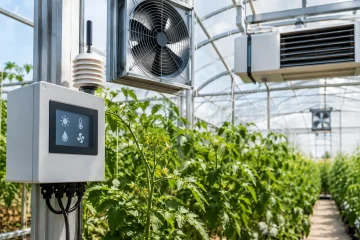
Orchards, vineyards, greenhouses, nurseries, and vegetable operations often adopt first because water timing has a direct effect on crop quality and revenue. These operations also tend to use drip or micro-irrigation, where zones can be managed precisely.
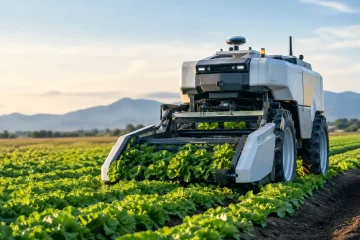
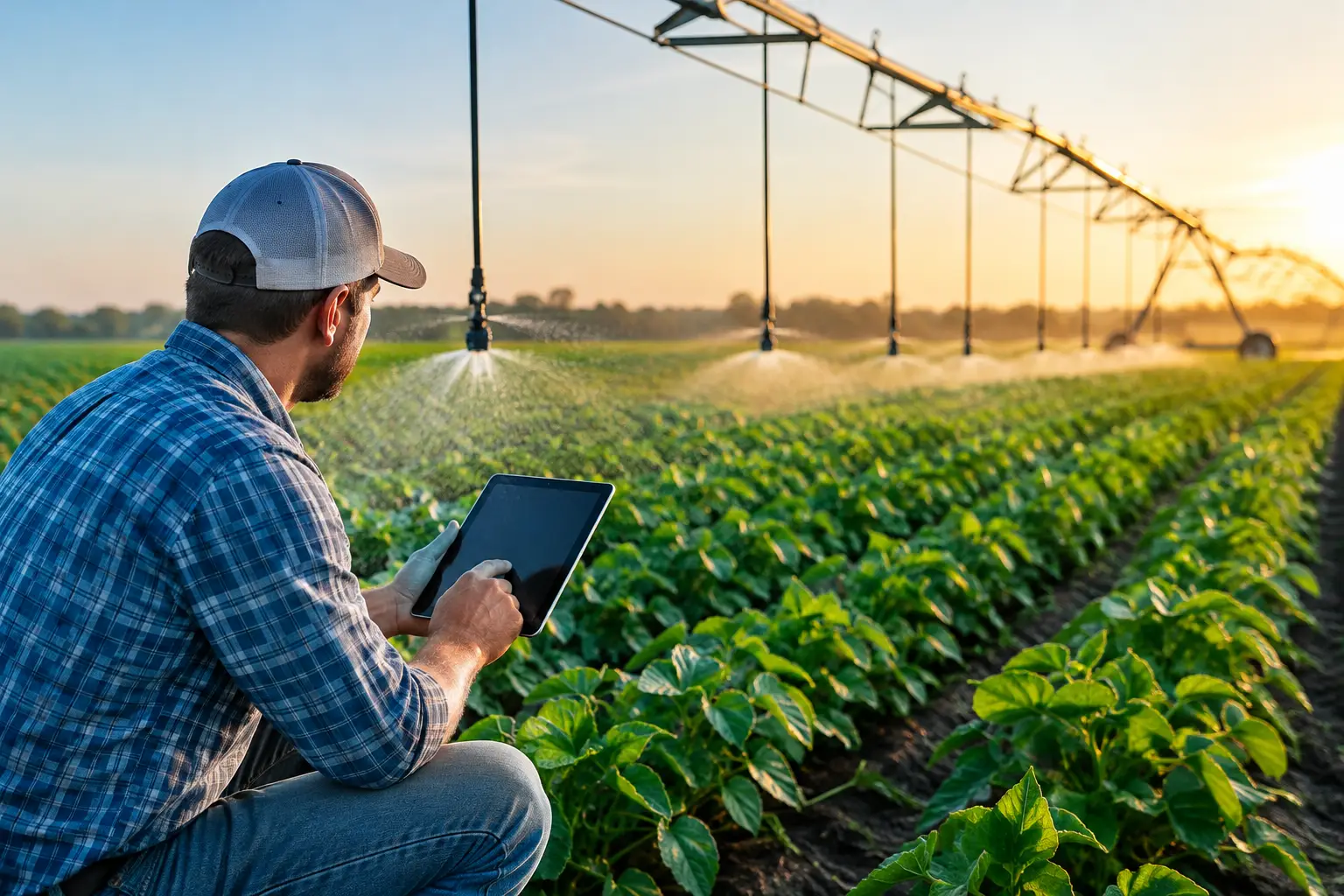
Broad-acre farms are adopting too, especially where center pivots cover large areas and labor is limited. Their technology mix may look different: pivot controls, flow monitoring, weather-based scheduling, and variable-rate application can matter more than dense networks of soil sensors. A low-margin field crop operation may prioritize uptime and simple alerts over sophisticated prescription maps.
What Buyers Are Actually Adopting
The phrase smart irrigation can describe everything from a timer with weather adjustment to a fully connected system that combines sensor readings, satellite imagery, pump controls, and automated fertigation. That range matters because suppliers should avoid presenting every farm with the same solution.
| Technology level | Typical components | Best-fit applications | Main advantage | Main trade-off | |—|—|—|—|—| | Connected control | Remote controller, valves, mobile app | Small farms, landscapes, basic zone control | Fast operational improvement | Limited insight without field data | | Sensor-guided scheduling | Soil moisture sensors, weather station, controller | Drip-irrigated vegetables, orchards, nurseries | Better timing decisions | Sensor placement and maintenance matter | | Flow and pressure monitoring | Flow meters, pressure sensors, alerts | Pumped systems, large zone networks | Finds leaks, clogs, and performance loss | Requires reliable baselines | | Advanced automation | Integrated control, modeling, fertigation, variable-rate tools | Larger commercial operations | Can manage complex irrigation at scale | Higher setup, training, and support needs |
The practical trend is not that every farm is buying the most advanced platform. It is that more farms are buying an upgrade path. They may begin with a controller and meter, then add sensors after one season of using the data. This phased approach lowers capital risk and gives operators time to establish irrigation routines.
Automation is valuable only when the data is trusted
A sensor can produce precise readings from the wrong location. A weather model can be useful but may not reflect a farm’s soil depth, canopy, slope, or local microclimate. Successful deployments combine digital recommendations with field knowledge.
Before automating a schedule, operators should confirm that flow rates, pressure, filter performance, and zone runtimes are accurate. In drip systems, a clogged filter or uneven pressure can create crop variability that software cannot fix. Technology improves decisions; it does not replace hydraulic design or regular maintenance.
Buying Criteria That Are Changing Supplier Selection
Price remains a major consideration, but commercial buyers are comparing total operating value more closely. They want to know whether a controller works with existing valves, whether data can be exported, how long batteries last, and who can troubleshoot a failed device during a critical irrigation window.
The supplier relationship has become part of the product. Importers and distributors should look for manufacturers that offer clear installation documents, warranty terms, replacement components, and technical training. A product with a lower purchase price can become expensive when local support, compatible fittings, or spare parts are unavailable.
When evaluating systems, ask suppliers to address these four questions:
- Can the equipment integrate with current pumps, filters, valves, and irrigation layouts?
- Which connectivity option works reliably at the farm: cellular, radio, Wi-Fi, or satellite?
- What data will the farm own, export, and retain if it changes software providers?
- What is the local plan for commissioning, service calls, spare parts, and seasonal maintenance?
These questions help distinguish a useful commercial offer from a feature-heavy product sheet. They also create better quote comparisons, because buyers can request like-for-like details on sensors, gateways, subscriptions, installation, and support.
Barriers Slowing Adoption
Upfront cost is still a barrier, especially when a farm needs new electrical work, communications equipment, filtration upgrades, or pressure regulation before controls can perform as intended. Financing, water-efficiency incentives, and phased installation can help, but the return should be based on the farm’s real water, energy, labor, and crop-value conditions.
Connectivity remains uneven in rural locations. A system designed around strong cellular coverage may disappoint in remote production areas. For these farms, suppliers should assess signal strength early and offer alternatives rather than treating communications as an afterthought.
There is also a skills barrier. A busy irrigation manager may accept a dashboard only if it simplifies decisions. Too many alerts, unclear charts, and poorly defined thresholds lead to alert fatigue. Training should focus on a short set of daily and weekly actions: check exceptions, verify flow, inspect the field, and adjust the schedule when conditions change.
Where the Next Demand Will Come From
The next wave of adoption is likely to come from practical integration. Buyers will favor systems that connect irrigation performance to pump energy use, fertigation records, weather forecasts, and field operations without forcing teams into multiple disconnected applications.
Artificial intelligence will be marketed heavily, but its useful role will be narrow and measurable: spotting unusual flow patterns, prioritizing fields that need attention, and recommending schedules based on defined inputs. Farms should judge these tools by accuracy, transparency, and the ability to override recommendations. A black-box recommendation is a poor fit where a missed irrigation event can damage a crop.
For suppliers, this trend creates demand beyond hardware. Installation partners, irrigation designers, agronomists, data specialists, and service technicians all have a role in helping farms obtain results. For buyers, it expands the sourcing process from finding a device to finding a capable delivery network.
How Agricultural Businesses Can Act on the Trend
Start with the constraint that costs the operation the most. It may be labor spent checking distant fields, unexplained water loss, uneven crop development, power costs, or limited water allocation. Then match the technology to that constraint and set a baseline before installation. Without baseline flow, runtime, yield, and labor records, it is difficult to prove value or improve the next purchase.
Agricial helps agricultural professionals compare irrigation equipment, service providers, and supply partners in one sector-focused marketplace. Buyers can use clearer requirements to request more relevant quotes, while suppliers can present the technical fit, service coverage, and commercial support that serious customers need.
The strongest smart irrigation investment is rarely the one with the most sensors. It is the one that gives the farm a reliable next decision – and gives the business a dependable partner when water, time, and crop value are all on the line.