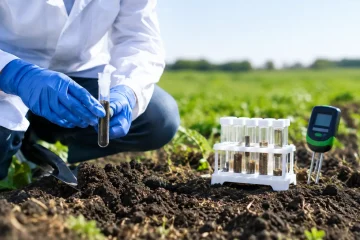

Guide to Soil Testing Methods for Better Crops
A fertilizer program can look efficient on paper and still waste money in the field. The difference is often hidden below the surface: nutrient reserves, pH, salinity, compaction, and organic matter vary by field, soil type, and management history. This guide to soil testing methods explains how agricultural businesses can choose the right tests, collect dependable samples, and turn results into better purchasing and crop-management decisions.
For growers, soil testing provides a starting point for nutrient planning. For consultants, input suppliers, and distributors, it creates a clearer basis for recommending fertilizers, lime, soil amendments, irrigation practices, and precision-agriculture services. A good test does not replace field knowledge. It makes that knowledge more measurable and commercially useful.
Why Soil Testing Matters Before Buying Inputs
Soil testing measures properties that affect crop performance and input efficiency. The most common reports cover soil pH, organic matter, phosphorus, potassium, calcium, magnesium, sulfur, and micronutrients such as zinc, boron, iron, manganese, and copper. Depending on the test, a laboratory may also report salinity, cation exchange capacity, nitrate nitrogen, texture, and potentially harmful elements.
The business case is direct. Applying a nutrient that is already adequate ties up working capital and can create runoff or crop-quality issues. Skipping a limiting nutrient can reduce yield, quality, and return on every other input. Testing helps prioritize what the soil actually needs rather than relying on a standard fertilizer blend across every acre.
Results should always be interpreted against local crop recommendations and realistic yield goals. A phosphorus result considered low for corn may be adequate for another crop, while a high-pH calcareous soil may require a different micronutrient strategy than an acidic sandy field.
Guide to Soil Testing Methods: Choosing the Right Option
No single method answers every question. Most commercial operations benefit from combining routine laboratory analysis with targeted field measurements and, where practical, zone-based or sensor-supported sampling.
| Method | What it measures well | Best use | Main limitation | |—|—|—|—| | Routine laboratory test | pH, major nutrients, organic matter, selected micronutrients | Annual or regular fertility planning | Results depend on representative sampling and local calibration | | Soil nitrate test | Plant-available nitrate nitrogen | In-season nitrogen decisions | Nitrate changes rapidly with weather and moisture | | Electrical conductivity mapping | Relative changes in salinity, texture, moisture, and soil depth | Management-zone development | Does not directly measure nutrient availability | | Field pH and EC meters | Rapid pH or conductivity readings | Scouting, irrigation and salinity checks | Requires calibration and does not replace a full lab analysis | | Soil health testing | Biological activity, carbon, aggregation, infiltration indicators | Long-term resilience and regenerative practices | Interpretation is less standardized across regions | | Plant tissue testing | Nutrient status within the crop | Diagnosing in-season nutrient issues | Shows crop response, not the full soil nutrient supply |
Routine Laboratory Soil Tests
Routine laboratory testing is the foundation for most farms. A lab extracts nutrients using a chemical solution, then reports the amount extracted and often assigns a rating such as low, medium, high, or very high. The extraction method matters because laboratories may use different procedures for the same nutrient, particularly phosphorus and potassium.
Use the same credible laboratory and test method over time whenever possible. That consistency makes year-to-year trends easier to compare. If operations span different states or countries, work with an agronomist who understands the regional calibration behind the report rather than comparing raw numbers across unrelated methods.
Soil pH and Lime Requirement Tests
Soil pH affects nutrient availability, microbial activity, and the performance of certain herbicides. In strongly acidic soils, aluminum and manganese toxicity may restrict roots, while phosphorus and molybdenum availability can decline. At high pH, iron, zinc, manganese, and phosphorus may become less available.
A standard pH result tells you the current acidity or alkalinity. A buffer pH or lime requirement test estimates how much liming material may be needed to reach a target range. This is a critical distinction: two fields can have the same measured pH but require different lime rates because their buffering capacity differs.
Nitrate and Pre-Sidedress Nitrogen Tests
Nitrogen is mobile and highly affected by rainfall, irrigation, temperature, residue breakdown, and crop uptake. A pre-plant or pre-sidedress nitrate test can help refine nitrogen rates, especially after manure applications, cover crops, drought, or unusually wet conditions.
These tests are time-sensitive. Samples should be cooled, shipped promptly, and analyzed quickly because microbial activity can change nitrate levels after collection. They are most valuable when paired with crop stage, weather history, irrigation records, and a realistic estimate of mineralization from organic matter or manure.
Electrical Conductivity, Salinity, and Sodicity Testing
Electrical conductivity, often called EC, measures a soil solution’s ability to conduct electricity. Higher readings may indicate salinity, although texture, moisture, and temperature can also influence results. In irrigated production, EC testing can reveal salt accumulation before it becomes an obvious crop problem.
Where sodium is a concern, request sodium adsorption ratio and related indicators. High sodium can disperse soil particles, reduce infiltration, and create crusting or poor drainage. The remedy may involve gypsum, drainage improvement, leaching, or irrigation-water management, but it depends on soil chemistry and water quality. Applying gypsum without diagnosing the cause is an avoidable expense.
How to Collect a Representative Soil Sample
A laboratory can only analyze the soil that arrives in the bag. Poor sampling is the most common reason for misleading recommendations.
Start by dividing fields into areas that have been managed similarly and appear similar in yield history, soil type, slope, drainage, crop rotation, and manure history. Do not combine ridge tops, low spots, old feedlots, eroded areas, and highly productive ground into one composite sample. Their average may describe no part of the field accurately.
For a typical composite sample, collect 15 to 20 cores in a zigzag pattern from the same management area. Mix them thoroughly in a clean plastic bucket and submit the required amount to the laboratory. Avoid galvanized containers, fertilizer bags, or tools with residue that could contaminate micronutrient results.
Sample depth must match the crop and the recommendation system. A 0- to 6-inch or 0- to 8-inch depth is common for many row-crop fertility tests, while nitrate testing often requires deeper cores. Perennial orchards, vineyards, pasture, and turf may need different depths. Follow the laboratory’s instructions rather than assuming one depth works for every test.
For repeatable trends, sample at roughly the same time of year and before fertilizer or manure application when possible. Label each sample with the field name, zone, depth, crop history, and intended crop. This turns a lab report into a usable record rather than a disconnected set of numbers.
Reading the Report Without Overreacting
A soil report is a decision tool, not a fertilizer order. First, check the basics: sample depth, extraction method, units, intended crop, and whether the result is reported as an elemental nutrient or oxide equivalent. Confusing pounds per acre, parts per million, and fertilizer-grade units can produce costly rate errors.
Next, focus on nutrients rated below the crop-response threshold. A low or very low rating usually signals a strong likelihood of response, while a high rating often means maintenance or no application may be justified. The exact recommendation depends on crop removal, yield target, soil test calibration, placement method, and economics.
Consider nutrient interactions before selecting a blend. High potassium applications can contribute to magnesium imbalance in some soils. Excess phosphorus may increase zinc deficiency risk. Correcting pH can improve access to several nutrients at once, making it more cost-effective than chasing individual deficiencies with repeated foliar products.
Matching Testing Strategy to Farm Type
Broadacre grain operations often begin with grid or management-zone sampling every two to four years, then use in-season nitrate tests where nitrogen costs and weather risk justify the effort. Variable-rate application can be valuable when soil test variation is meaningful and equipment can execute the plan accurately.
High-value horticulture, greenhouse, and specialty-crop businesses generally need more frequent testing. Root-zone EC, irrigation-water quality, and nutrient solution analysis may matter as much as a standard field fertility panel. Small changes in salinity or pH can affect marketable quality quickly.
Livestock farms should test soils where manure is applied and maintain records of manure nutrient analysis. Manure is a valuable nutrient source, but its nitrogen, phosphorus, potassium, and moisture content can vary widely. A nutrient management plan should account for both the manure analysis and the soil test result.
Build a Soil Testing Workflow That Supports Better Sourcing
Testing creates value when findings are connected to purchasing and application decisions. Keep laboratory reports, field maps, fertilizer invoices, application records, irrigation-water tests, and yield data together. Over time, this record shows whether lime, compost, gypsum, nutrients, drainage work, or variable-rate programs are producing a measurable return.
When sourcing products or services, request technical specifications that match the recommendation: nutrient analysis, particle size for lime, solubility, application compatibility, delivery terms, and quality documentation. Comparing suppliers on price alone can obscure differences in nutrient concentration, freight cost, timing, and suitability for local equipment.
Agricial helps agricultural professionals compare suppliers, service providers, and input categories in one business-focused marketplace. The strongest purchasing conversations start with clear soil data, a defined crop plan, and specifications that give suppliers enough information to quote accurately.
A soil test is most useful when it leads to one practical next action: sample a problem zone separately, confirm a questionable nutrient result, test irrigation water, or ask for a quote that matches the field’s actual requirement. That discipline helps protect margins while giving every acre a more credible path to performance.