Autonomous Harvesting Technology for Commercial Farms
A ripe crop can lose value by the hour when crews are short, weather is closing in, or harvest windows are narrow. Autonomous harvesting technology is designed to reduce that pressure by helping farms pick, collect, sort, and move crops with less dependence on manual labor at the most time-sensitive point of the season.
For commercial growers, the opportunity is not simply to replace workers with machines. The stronger business case is to improve harvest consistency, extend operating hours, capture better-grade produce, and give managers clearer data for labor and equipment planning. Results depend heavily on crop type, farm layout, production scale, and how well the technology fits existing harvest operations.
What Is Autonomous Harvesting Technology?
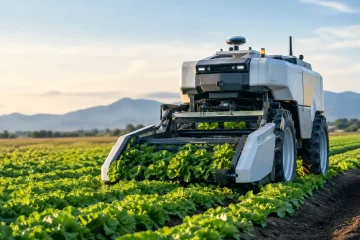
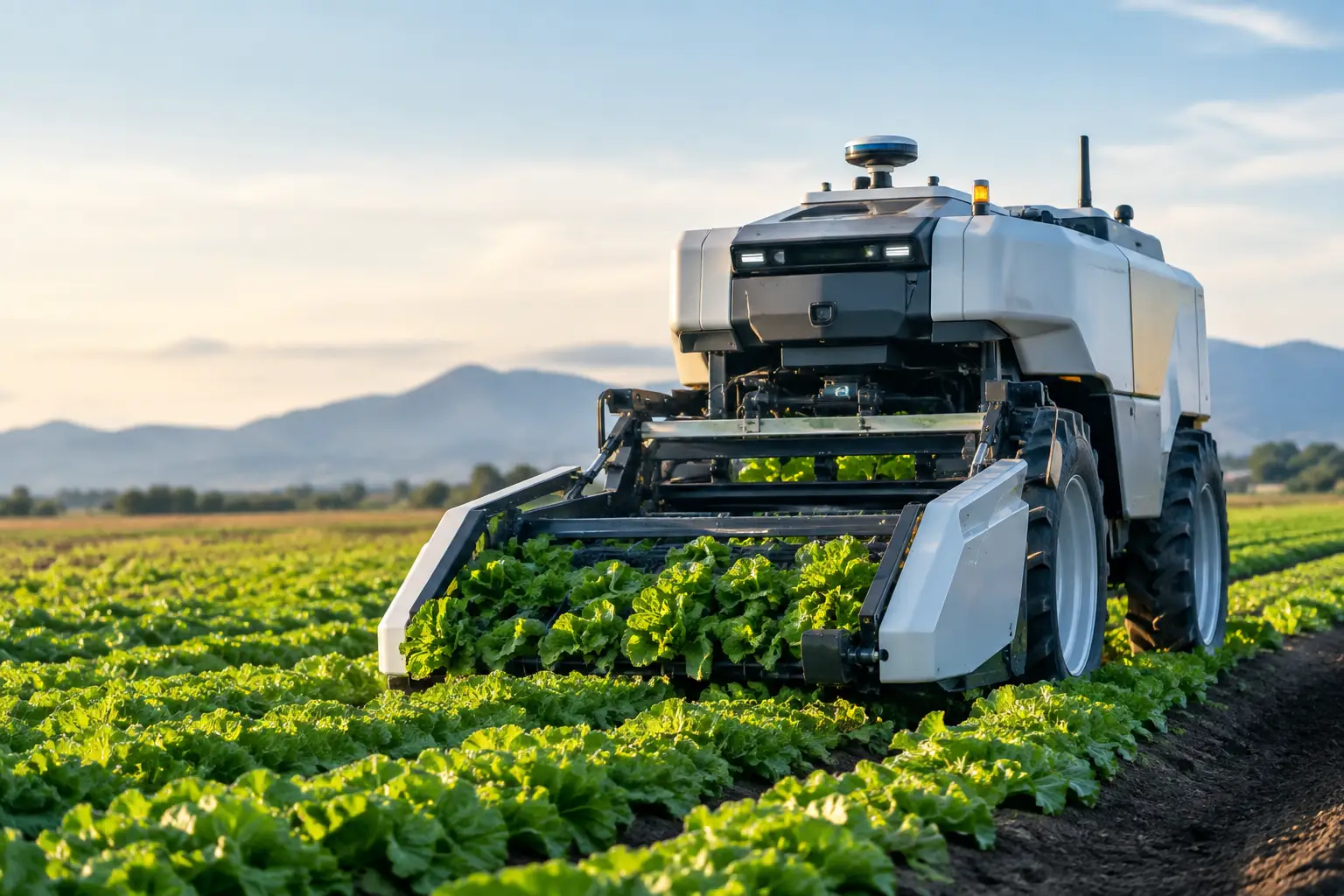
Autonomous harvesting technology combines machinery, sensors, software, and artificial intelligence to complete harvest tasks with limited human control. Systems may identify ripe fruit with cameras, guide robotic picking arms, navigate orchard rows, cut field crops, transport filled bins, or sort harvested produce by size, color, and defects.
The term covers more than fully robotic pickers. In many farms, the practical starting point is semi-autonomous equipment: a platform that follows workers, a driverless carrier that moves produce, or a harvesting machine with automated steering and crop-flow controls. These tools can deliver measurable gains before a business is ready for fully autonomous picking.
Core Components Behind the Machine
Most systems rely on a combination of machine vision, GPS or lidar navigation, onboard computing, and specialized end effectors. Machine vision assesses crop position and maturity. Navigation tools keep the equipment within rows and around obstacles. The end effector – such as a gripper, vacuum tool, cutting blade, or shaker – performs the physical harvest action.
The difficult part is not just finding a crop. A robot must handle variable lighting, overlapping leaves, uneven terrain, fruit hidden in the canopy, and delicate produce that bruises easily. That is why autonomous harvesters tend to perform best in structured production systems with consistent row spacing, trained canopies, and predictable crop presentation.
Where Autonomous Harvesting Delivers the Most Value
High-value specialty crops are often the first target because manual harvesting represents a large share of total production cost. Apples, citrus, strawberries, tomatoes, peppers, grapes, leafy greens, and greenhouse vegetables all present different automation opportunities.
| Application | Typical Autonomous Task | Commercial Benefit | Main Limitation | |—|—|—|—| | Orchards | Fruit detection, picking, bin transport | Reduces peak-season labor pressure | Dense canopies can slow picking | | Vineyards | Mechanical harvesting, navigation, sorting | Faster harvest over large acreages | Not suitable for every premium wine program | | Greenhouses | Picking tomatoes, cucumbers, peppers | Controlled environment improves accuracy | High setup and integration costs | | Row crops | Combine guidance and automated crop flow | Higher capacity and lower operator fatigue | Requires large-scale equipment investment | | Leafy greens | Cutting, collection, inspection | Consistent throughput and traceability | Product variation can affect cut quality |
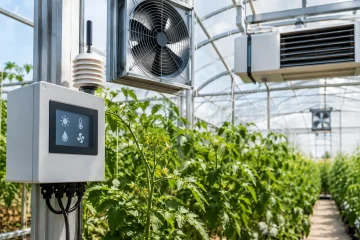
Greenhouses are particularly favorable because lighting, pathways, plant spacing, and crop support systems are more controlled. Open-field crops are more complex, but autonomous transport vehicles and smart harvesting aids can still reduce repetitive work and travel time.
For grain, forage, and other broad-acre crops, automation often focuses on autonomous guidance, machine optimization, and fleet coordination rather than robotic picking. A combine that adjusts settings based on crop conditions and communicates with grain carts can improve harvest flow even when a skilled operator remains in the cab.
Comparing Levels of Harvest Automation
Farm businesses should avoid treating automation as a single purchase decision. The right level depends on whether the largest constraint is labor availability, picking speed, operator fatigue, product handling, or logistics between the field and packing area.
| Level | What It Does | Best Fit | Investment Consideration | |—|—|—|—| | Assisted | Provides guidance, sensors, or worker-following functions | Farms testing automation | Lower entry cost, quick adoption | | Semi-autonomous | Completes defined tasks with human oversight | Orchards, vineyards, greenhouse operations | Requires training and workflow changes | | Fully autonomous | Navigates and harvests with minimal intervention | Highly structured, repeatable operations | Highest capital cost and technical risk |
Assisted systems are often the most commercially sensible first step. Automated steering, harvest platforms, crop monitoring cameras, and autonomous carts can improve productivity without redesigning the entire operation. A fully autonomous picker may be attractive for a large, labor-constrained orchard, but less practical for a diversified farm with irregular blocks and multiple crop varieties.
Benefits That Matter Beyond Labor Savings
Labor savings are the headline benefit, but they should not be the only metric. A system that lowers headcount but damages fruit, creates downtime, or requires costly technical support can weaken the expected return.
The strongest deployments can improve several parts of the harvest business at once:
- Longer operating windows, including early morning or evening work where conditions allow
- More consistent picking standards and fewer missed harvest passes
- Better visibility into yield, maturity, machine performance, and field conditions
- Reduced travel time for workers carrying bins or moving between rows
- Improved worker safety by removing repetitive lifting, ladder use, or exposure to heat
Data is an increasingly valuable output. When harvesting equipment records where crops were collected, how long each task took, and where quality issues occurred, farm managers can compare blocks, forecast packing volume, and make more informed decisions for the next season.
The Trade-Offs Buyers Need to Assess
Autonomous harvesting equipment is not a plug-and-play answer to every labor challenge. Upfront costs can be substantial, especially when farms need upgraded connectivity, charging infrastructure, redesigned rows, or compatible bins and packing systems. Service coverage also matters. A machine that cannot be repaired quickly during a short harvest window creates real commercial risk.
Crop handling remains another concern. Fresh-market berries, stone fruit, and delicate vegetables require gentle, accurate picking. Some systems perform well on uniform fruit but struggle where maturity varies significantly within a plant or where foliage blocks camera views. Mechanical harvesting can be highly efficient, yet it may not meet the quality standard required for every fresh-market channel.
Before sourcing equipment, buyers should ask suppliers for field performance data under conditions similar to their own. Demonstrations should evaluate throughput per hour, percentage of marketable crop recovered, bruising or damage rate, labor needed for supervision, fuel or battery demand, cleaning time, and service response commitments.
Questions to Ask an Autonomous Harvester Supplier
A productive supplier conversation starts with operational detail rather than broad claims about artificial intelligence. Ask whether the system has been tested on your crop variety, row width, canopy style, terrain, and harvest method. Clarify how it handles obstacles, rain, dust, night operation, and manual override.
Commercial terms deserve equal attention. Confirm warranty coverage, spare-parts availability, training requirements, software subscriptions, data ownership, and whether the supplier provides local technicians. For importers and distributors, review certification requirements, replacement-part lead times, and the ability to support customers after installation.
Preparing a Farm for Autonomous Harvesting Technology
The best results usually begin before equipment arrives. Farms should map the harvest workflow from field to packing facility and identify the actual bottleneck. It may be picking, but it could also be bin availability, transport, cold storage capacity, or quality inspection.
Start with a pilot block that represents normal conditions without carrying the full risk of the season. Measure current labor hours, yield, grade-out rate, harvest speed, and operating cost. Then compare the same indicators during the trial. This creates a realistic basis for return-on-investment decisions rather than relying on vendor estimates alone.
Farm layout may need adjustment over time. Uniform row spacing, accessible turning areas, reliable field maps, well-maintained roads, and standardized containers all help autonomous machines work more efficiently. In orchards and vineyards, canopy management can influence whether cameras and picking tools can reach the crop effectively.
Sourcing Equipment and Building the Right Partnerships
The autonomous harvest market includes established machinery manufacturers, robotics specialists, sensor providers, fleet-management software companies, and service partners. Buyers should compare complete systems against modular options that can be added to existing equipment. The lowest purchase price is not always the best value if integration, training, or service costs are unclear.
For suppliers, this category creates a growing opportunity to offer more than a machine. Buyers need installation support, agronomic guidance, maintenance packages, financing options, and dependable local parts access. Clear product specifications and verified business profiles make it easier for serious buyers to compare capabilities across regions.
Agricial helps agricultural businesses discover specialized machinery providers and connect directly with potential partners across the supply chain. A well-defined request for quote should state the crop, acreage, current harvest method, terrain, labor challenge, preferred automation level, and service location.
Autonomous harvesting will not remove the need for skilled people. It will change where their value is applied – toward oversight, crop-quality decisions, maintenance, logistics, and data-driven management. Farms that begin with a clear operational problem, test equipment under real conditions, and choose suppliers prepared to support the full harvest cycle will be better positioned to turn automation into a practical commercial advantage.