
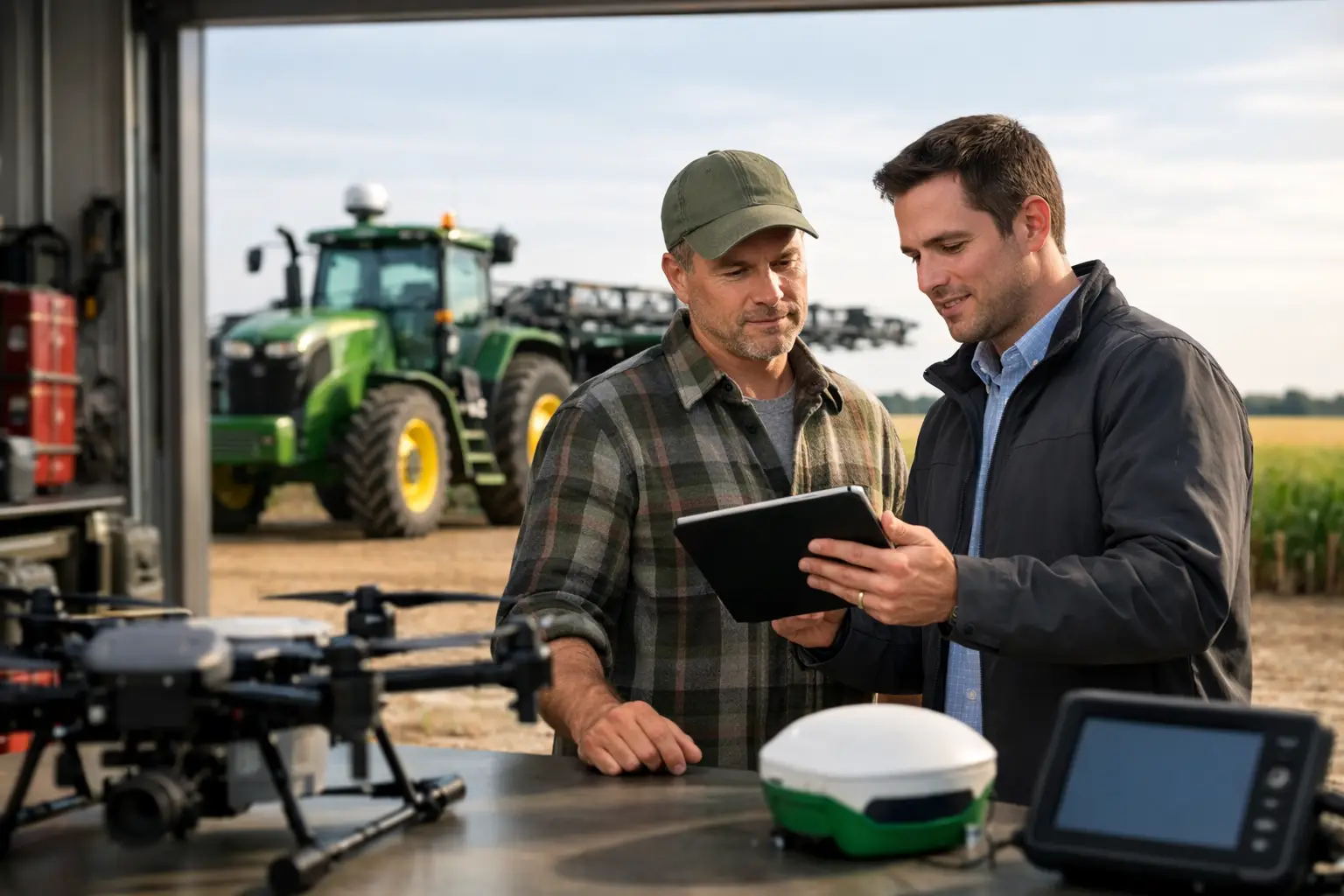
How to Choose Precision Agriculture Equipment Suppliers
A monitor that looks impressive at a trade show can become a costly problem by planting season if it does not integrate with your machinery, your software, or your team. That is why choosing precision agriculture equipment suppliers is not just a purchasing task. It is a business decision that affects uptime, data quality, labor efficiency, and the return you get from every acre.
For growers, dealers, and agribusiness buyers, the market now offers more options than ever – GPS guidance systems, variable rate controllers, sensors, drones, telematics, and farm data platforms. More choice is good, but it also makes sourcing harder. The right supplier helps you match technology to operational goals. The wrong one sells features you may never use and leaves you dealing with service gaps when timing matters most.
What precision agriculture equipment suppliers should actually provide
A supplier in this category should do more than move hardware. The best precision agriculture equipment suppliers support a full operating environment around the equipment. That means helping buyers evaluate compatibility, installation requirements, training needs, software connections, maintenance expectations, and local service response.
This matters because precision tools rarely work in isolation. A guidance display may need to communicate with a steering system, planter controller, field mapping software, and cloud platform. A sensor package may require calibration support and reliable data transfer. A drone provider may also need to advise on imaging workflow, compliance, and interpretation. If the supplier only handles the sale, the buyer carries the integration risk.
For commercial farms and agricultural businesses, that risk shows up quickly. Delayed support during planting or spraying can cost far more than the initial equipment discount. In many cases, the most affordable quote is not the lowest-cost choice over the life of the system.
Start with your operation, not the catalog
Buyers often begin by comparing brands, but the stronger starting point is the field-level problem you want to solve. Are you trying to reduce overlap in spraying? Improve seed placement? Apply fertilizer by management zone? Track machine performance across multiple operators? Each goal points to a different type of equipment stack and a different supplier profile.
A row crop operation with modern machinery may prioritize integration and data visibility. A smaller farm may care more about straightforward setup, low training demands, and dependable local service. A dealer building an equipment package for customers may need supplier consistency, product availability, and margin clarity. An importer may focus on durability, documentation, and support for different regional conditions.
When needs are clear, it becomes easier to filter suppliers based on actual fit instead of brand recognition alone.
How to assess supplier fit
The strongest suppliers are usually easy to recognize once the conversation moves beyond product brochures. They ask detailed questions about your machinery fleet, acreage, crops, connectivity, operator experience, and software environment. They also explain limitations clearly. That is a good sign. Precision agriculture works best when expectations are realistic.
A credible supplier should be able to tell you whether a system fits older equipment, whether retrofitting is practical, and whether certain features depend on paid subscriptions or third-party tools. They should also explain what implementation looks like after purchase. That includes installation, calibration, onboarding, and support during the first season.
Service depth is often the difference-maker. Some suppliers are excellent at product sales but weak on after-sales support. Others have fewer product lines but deliver stronger technical assistance. Which option is better depends on your operation. If you have in-house technical capability, a broader catalog may work well. If you need hands-on support, service capacity matters more than product range.
Compatibility is where many purchases go wrong
In precision ag, compatibility deserves more attention than specifications. Buyers may focus on screen size, automation features, or mapping resolution, but the real issue is whether the equipment will communicate properly with the rest of the operation.
That includes hardware compatibility with tractors, sprayers, planters, and combines. It also includes data compatibility with farm management software, file formats, wireless transfer systems, and reporting workflows. Even power requirements, mounting systems, and cab layout can affect usability.
Ask suppliers direct questions. Will this system work with your current implements? Can data move easily between platforms? Are licenses required for full functionality? Is remote support available if setup issues appear during the season? A supplier that gives vague answers here may create expensive friction later.
Interoperability is not always perfect, and in some operations a single-brand ecosystem may be the cleanest choice. In others, open-platform flexibility is worth more. There is no universal answer. It depends on the age of the fleet, the mix of equipment brands, and how important data centralization is to management.
Price matters, but cost structure matters more
Two suppliers can quote similar systems and still present very different long-term costs. One may include installation, training, and software access. Another may price the hardware aggressively but add annual fees, activation charges, support costs, or upgrade expenses later.
That is why buyers should look at total cost of ownership, not just purchase price. Precision equipment often comes with recurring costs tied to correction signals, software subscriptions, cloud storage, image processing, or service contracts. These costs may be reasonable if the system delivers clear value, but they should be visible upfront.
It also helps to measure expected return in operational terms. Reduced input waste, fewer passes, improved timing, better recordkeeping, and more consistent machine performance all contribute to payback. The right supplier should be able to discuss that value in practical business language, not just technical claims.
Local support still matters in a digital category
Precision agriculture is increasingly connected, but field support still matters. Remote diagnostics and software updates are useful, yet many issues happen at inconvenient times and require quick action. During planting, spraying, or harvest, response time becomes a commercial issue.
For that reason, buyers should evaluate the supplier’s support model carefully. Do they have regional technicians? Do they work through dealers? What are their service hours during peak season? How quickly can they replace a failed component? If training is needed for multiple operators, who provides it?
For international buyers and cross-border sourcing, support questions become even more important. Shipping times, warranty handling, language clarity in technical documentation, and access to replacement parts all affect whether a supplier is practical in real operating conditions.
Why marketplace visibility helps buyers compare better
Finding the right supplier is often harder than evaluating the technology itself. Agricultural buyers deal with fragmented channels, regional limitations, and uneven product information. A specialized marketplace can reduce that friction by making supplier discovery, product comparison, and quote requests more efficient.
This is where a focused platform such as Agricial can be useful for agriculture professionals who want to compare precision suppliers in a business-ready environment. Instead of searching across unrelated directories, buyers can review category-specific listings, evaluate supplier presence, and reach out directly based on operational need.
That kind of visibility is valuable not just for farmers. Dealers, consultants, exporters, and procurement teams also benefit from seeing which suppliers are active, how they present their capabilities, and whether they appear positioned for long-term commercial relationships.
Signs a supplier is built for growth
The best supplier for this season is not always the best supplier for the next five years. If your operation is expanding acreage, adding machinery, increasing automation, or improving data management, your supplier should be able to grow with you.
That means looking beyond the current product and asking bigger questions. Can they support additional modules later? Do they offer solutions across guidance, application control, sensing, and analytics? Are they updating their product line in step with industry change? Can they support multiple sites or multi-operator environments?
Growth-ready suppliers tend to think in systems rather than isolated sales. They understand that a buyer who starts with auto-steer today may need variable rate capability, machine connectivity, and advanced analytics tomorrow. Suppliers that can support that path often create more value over time, even if they are not the cheapest option at the start.
Final questions before you choose
Before committing, ask yourself whether the supplier has shown clear understanding of your operation, not just enthusiasm for the sale. Have they explained trade-offs honestly? Have they outlined support after installation? Have they been transparent about recurring costs and compatibility limits?
Precision equipment can improve decision-making, reduce waste, and strengthen farm performance, but only when the supplier relationship is as reliable as the technology. The right partner helps you make better use of every tool you buy – and that tends to show up where it matters most, in the field and on the balance sheet.