
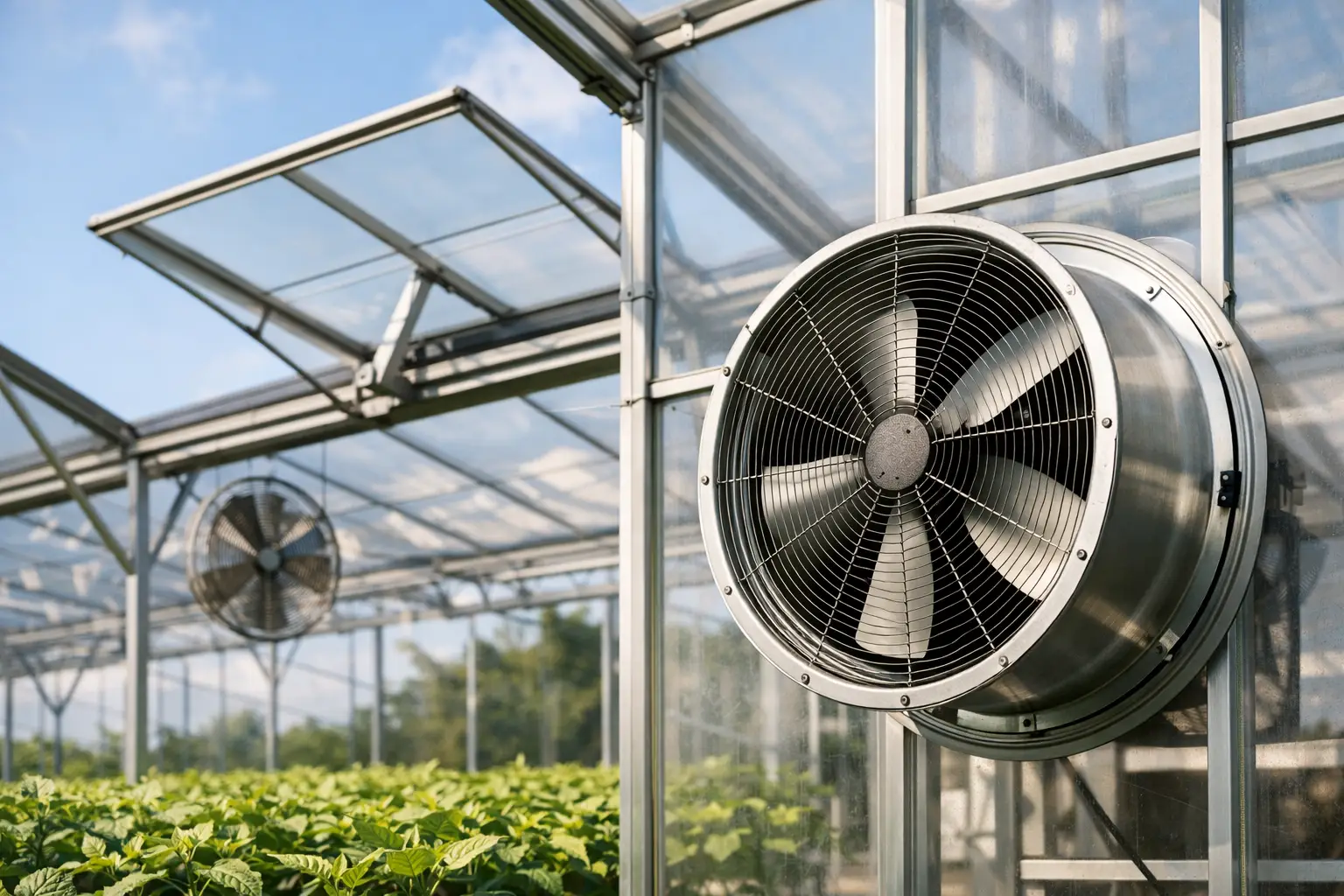
Best Greenhouse Ventilation Systems
Heat stress can cut crop quality fast, and poor airflow often becomes visible only after plants start showing damage. Choosing the best greenhouse ventilation systems is not just about cooling – it is about protecting yield, managing humidity, reducing disease pressure, and keeping production predictable.
For commercial growers, nursery operators, and greenhouse suppliers, the right setup depends on structure size, crop sensitivity, local climate, and energy budget. A small tunnel house in a dry region does not need the same solution as a large polycarbonate greenhouse producing high-value vegetables year-round.
What the best greenhouse ventilation systems need to do
A greenhouse ventilation system has one job on paper: move air. In practice, it must also remove excess heat, balance humidity, support CO2 exchange, and limit condensation on leaves and structural surfaces. If any of those fail, growers often see slower growth, fungal disease, pollination issues, and uneven crop development.
The best systems create consistent air movement without excessive power use or unnecessary complexity. In commercial settings, reliability matters as much as airflow capacity because downtime during hot periods can become expensive very quickly.
Main types of greenhouse ventilation systems
Natural ventilation
Natural ventilation uses roof vents, side vents, roll-up walls, or louvers to release hot air and pull in cooler outside air. It is widely used in mild climates and in lower-cost greenhouse designs.
Its main advantage is operating cost. With fewer mechanical parts, energy use stays low. The trade-off is control. Natural systems depend heavily on wind speed, wind direction, and outside temperature. In hot and humid conditions, they may not deliver enough cooling for sensitive crops.
Mechanical exhaust ventilation
Mechanical exhaust systems use fans to pull warm air out while intake shutters or vents draw fresh air in. This is one of the most common choices for commercial greenhouses because it offers predictable performance and easier sizing.
Exhaust ventilation works well for vegetable, ornamental, and propagation operations where growers need steady air exchange. The limitation is energy use. Fan sizing, placement, and maintenance all affect efficiency, and poor layout can create dead zones inside the house.
Circulation fan systems
Horizontal airflow fans, often called HAF fans, do not replace greenhouse air on their own. Instead, they keep internal air moving evenly. This helps reduce hot spots, cold pockets, and condensation.
In many operations, circulation fans work best as a support system rather than a standalone solution. They are especially valuable in larger houses where air layering becomes a problem.
Evaporative cooling with fan-and-pad systems
Fan-and-pad systems combine mechanical ventilation with evaporative cooling. Exhaust fans pull outside air through wet pads, lowering incoming air temperature before it moves across the greenhouse.
This approach is highly effective in hot, dry climates and is common in commercial horticulture. Performance drops in humid regions, where evaporation potential is lower. Water quality and pad maintenance also matter, especially for large-scale installations.
Best greenhouse ventilation systems compared
| System Type | Best For | Main Advantage | Main Limitation | Typical Commercial Use |
|---|---|---|---|---|
| Natural ventilation | Mild climates, low-cost houses | Low operating cost | Less precise control | Seasonal vegetables, simple tunnels |
| Exhaust fan system | Broad commercial use | Reliable air exchange | Higher energy use | Vegetables, flowers, nurseries |
| HAF circulation fans | Internal airflow support | Improves uniformity | Not a full ventilation solution | Propagation, large greenhouses |
| Fan-and-pad cooling | Hot, dry regions | Strong cooling performance | Less effective in humidity | Intensive horticulture, high-value crops |
How to choose the right system for your operation
Match the system to climate
Climate should drive the first decision. In dry regions with high daytime temperatures, fan-and-pad systems often deliver the best return because they actively cool incoming air. In temperate zones, natural ventilation plus circulation fans may be enough for seasonal production. In humid tropical areas, strong mechanical exhaust and airflow management are usually more practical than relying on evaporative cooling.
Size for the structure, not just the crop
Many ventilation problems start with undersized equipment. Greenhouse length, width, height, covering material, and internal shading all affect heat load. A system that works well in a small structure may fail completely at larger commercial scale.
For buyers comparing suppliers, the most useful specifications are airflow capacity, fan efficiency, vent area, automation compatibility, and maintenance requirements.
Consider automation and control
Manual systems cost less upfront, but automated controls improve response time and consistency. Thermostats, humidity sensors, and integrated climate controllers help reduce labor and prevent delayed action during weather swings.
For professional operators, automation often pays off through crop protection and labor savings rather than energy savings alone.
Key buying factors for commercial greenhouse ventilation
When comparing equipment, focus on these points:
- Airflow performance per greenhouse volume
- Energy consumption and motor efficiency
- Corrosion resistance in humid environments
- Spare parts availability and service access
- Compatibility with cooling pads, shutters, and control systems
- Installation complexity and maintenance schedule
Price matters, but lifecycle cost matters more. A cheaper fan with poor durability can become more expensive than a premium unit once downtime, repair frequency, and crop risk are factored in.
Which option is best overall?
For most commercial growers, the best greenhouse ventilation systems combine mechanical exhaust ventilation with internal circulation fans. This setup gives dependable airflow, better climate uniformity, and broad suitability across crops and regions. In hot, arid climates, adding evaporative fan-and-pad cooling usually delivers the strongest performance.
Natural ventilation still has a strong place where capital budgets are tight or climate conditions are favorable. The smart decision is not choosing the most advanced system on paper. It is choosing the one that matches your greenhouse design, crop value, and operating conditions well enough to protect production every day.
For businesses sourcing equipment across regions, a marketplace such as Agricial can make supplier comparison faster by bringing ventilation products, greenhouse components, and agricultural service providers into one commercial search environment. The right ventilation partner is not just selling hardware – they are helping you protect output, quality, and margin.