How to Source Irrigation Equipment Smarter
A cheaper pump that fails in peak season is never the cheaper option. The real question in how to source irrigation equipment is not just where to buy, but how to buy in a way that protects uptime, water efficiency, and long-term operating cost.
For growers, contractors, distributors, and agricultural buyers, irrigation sourcing is a commercial decision before it is a product decision. The wrong supplier can delay installation, limit spare parts access, or leave you with equipment that does not match your field conditions. The right approach helps you compare options faster, reduce risk, and build supplier relationships that hold up beyond the first order.
How to source irrigation equipment with a clear buying plan
Start with the application, not the catalog. Many sourcing mistakes happen because buyers begin by comparing brands or prices before defining what the system actually needs to do. Irrigation equipment performs differently depending on crop type, field size, slope, water source, filtration needs, pressure requirements, and labor availability.
A small orchard using drip lines has a very different equipment profile than a row crop operation using center pivots or a greenhouse managing precise fertigation. If your operating conditions are not clear, supplier quotes will be difficult to compare because each one may be built around different assumptions.
Before contacting suppliers, outline the basics in practical terms. Define the acreage or production area, the crop, the available water source, the daily irrigation target, and whether you need a full system or only selected components. Include any power constraints, expected climate pressure, water quality concerns, and existing infrastructure that must connect with new equipment.
This step saves time because it narrows the market. It also gives suppliers enough detail to respond with relevant proposals instead of generic product recommendations.
Focus on system fit, not just individual products
Irrigation sourcing often gets fragmented. A buyer may source pumps from one company, filters from another, valves elsewhere, and controllers from a fourth source. Sometimes that is the right strategy, especially if you already know the market and want to optimize cost by component. But fragmented sourcing also creates integration risk.
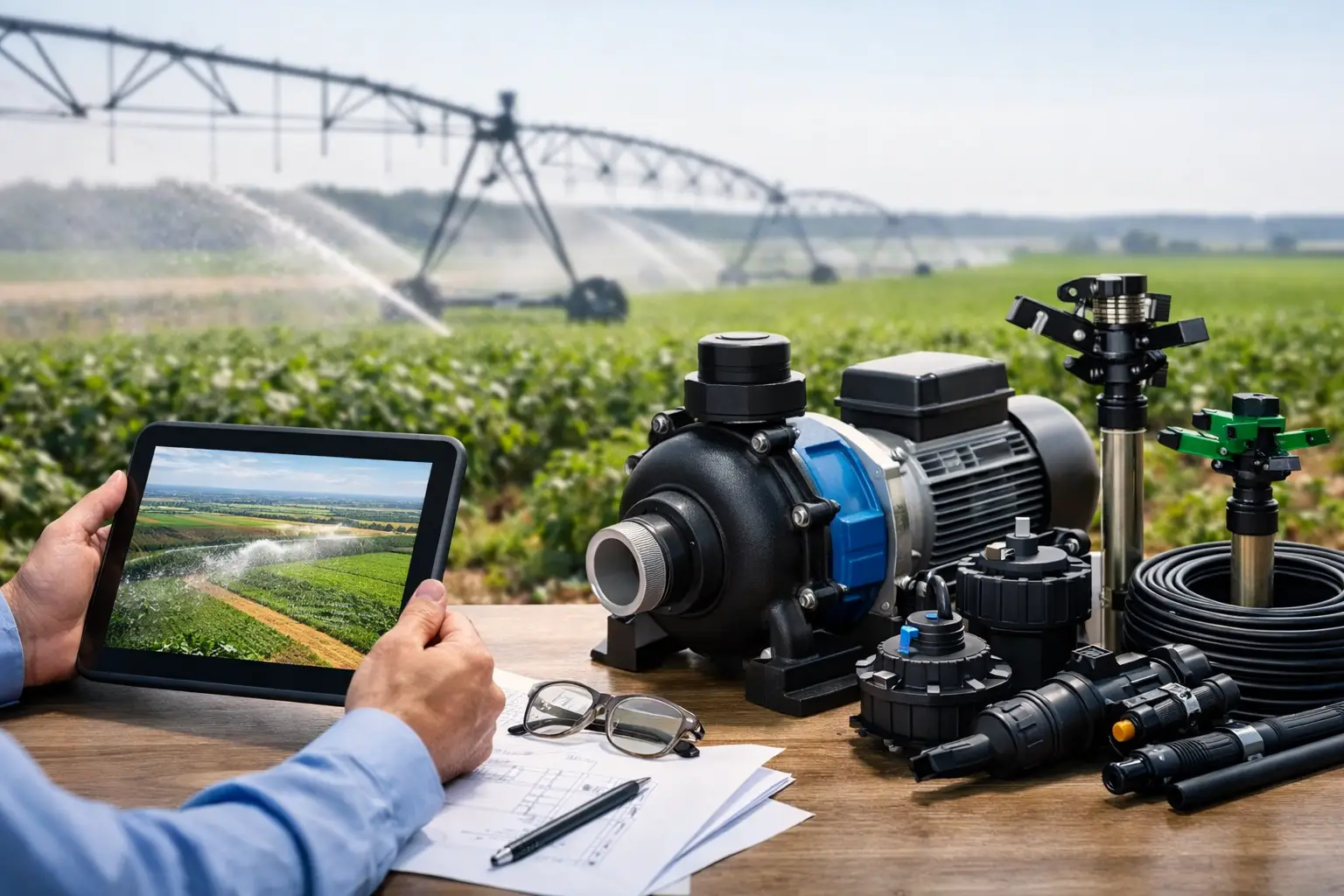
A pump that looks suitable on paper may not align well with your filter station. A controller may support automation, but not the valve configuration in your design. Pipe and fitting standards may vary by region or manufacturer. This is why strong buyers evaluate the system logic behind the quote, not just the unit price of each item.
When reviewing offers, ask whether the supplier is quoting a complete operating solution or only supplying parts from a list. There is value in both models, but you need to know which one you are buying. If you are sourcing across multiple vendors, make sure one party, internal or external, is accountable for technical compatibility.
How to compare irrigation suppliers the right way
Reliable sourcing comes down to supplier quality as much as product quality. A supplier with strong technical documentation, responsive communication, and consistent export or delivery capability often creates more value than a low-price seller who disappears after the invoice is paid.
Look closely at supplier credibility. How long have they worked in irrigation? Do they specialize in agriculture, or is irrigation only a minor category in a broader industrial business? Can they explain performance limits and maintenance needs clearly? Serious suppliers do not only talk about what the equipment can do. They also explain where it may not be the best fit.
It helps to compare suppliers across a few commercial criteria. Product range matters because it affects whether they can support system continuity as your needs grow. Technical support matters because installation issues are common, especially in custom or multi-component systems. Parts availability matters because downtime is expensive and often avoidable. Delivery timelines matter because missed planting or irrigation windows can hurt an entire season.
Price still matters, of course, but it should be viewed in context. The lowest quote may exclude fittings, filtration stages, pressure regulation, freight, commissioning support, or replacement parts. A higher quote can sometimes be the safer buy if it reduces operational gaps after installation.
Ask better questions before you request quotes
A vague inquiry usually produces a vague offer. If you want useful pricing and realistic lead times, your quote request should give enough operational detail for suppliers to respond accurately.
Describe the intended use, location, crop or production type, and the equipment categories you need. If possible, include expected flow rate, pressure requirements, water source type, and whether you need manual or automated control. If you are replacing an existing system, mention the current setup and the issues you are trying to solve.
It is also smart to ask direct commercial questions early. Ask what is included in the quote, what is excluded, what certifications or standards apply, what warranty terms are offered, and how spare parts are handled. Ask whether installation guidance, training, or after-sales support is available. These details often matter more than a small difference in base price.
For international sourcing, add questions about export experience, packaging, shipping terms, and customs documentation. A supplier may offer competitive pricing but still create delays if they are not prepared for cross-border transactions.
Watch for the hidden cost drivers
The cost of irrigation equipment is rarely limited to purchase price. Freight, duties, installation complexity, power consumption, maintenance frequency, and parts replacement can shift the economics quickly.
This is especially true for pumps, filters, automation systems, and large-scale sprinkler equipment. A lower-cost unit may consume more energy, require more frequent service, or wear faster in poor water conditions. Over time, that can erase any savings from the initial purchase.
This is where total cost thinking becomes useful. You do not need a perfect financial model to source well, but you do need to ask how the equipment will perform over multiple seasons. If one supplier offers cheaper components but limited technical backup, while another offers proven service access and documented parts support, the second option may protect your business better.
There is also a scale question. For a small or trial installation, buyers may accept more sourcing risk in exchange for lower upfront cost. For commercial farms, contracting operations, or distributor inventories, reliability usually deserves more weight.
Use specialized agricultural marketplaces to save time
General online searches create noise. You may find products quickly, but not always the supplier context, category depth, or commercial detail needed for a serious buying decision. That is why many agricultural buyers now start with sector-specific platforms where irrigation products and supplier listings are structured around actual farm and agribusiness needs.
A specialized marketplace can help you compare suppliers by category, explore product visibility across regions, and request quotes without starting from scratch each time. It also makes it easier to identify businesses that actively operate in irrigation rather than appearing in search results by chance.
For buyers managing multiple options, this improves sourcing speed. For smaller businesses without a dedicated procurement team, it also reduces friction by putting supplier discovery, product comparison, and direct contact in one place. Agricial is built for that kind of focused agricultural sourcing, where the goal is not just finding equipment, but finding suppliers you can work with confidently.
Check support after the sale before you buy
Irrigation equipment is not a one-time transaction. Even straightforward systems need maintenance, troubleshooting, and occasional replacement parts. More advanced systems may also require calibration, software support, or seasonal adjustments.
That is why after-sales support should be part of your sourcing criteria from the start. Ask who handles technical issues. Ask where replacement parts are stocked. Ask how quickly common failures can be resolved. If the answer is unclear before the sale, it is unlikely to improve after payment.
For buyers in remote areas, support logistics matter even more. A strong remote support process, clear manuals, and dependable spare parts access can offset distance. Without them, even a quality product can become difficult to manage.
Build a supplier shortlist, not a one-off transaction
The best sourcing process does not end with one purchase. It builds a shortlist of dependable suppliers you can return to as your operation grows, your crop mix changes, or your customers ask for new solutions.
That does not mean staying loyal without review. It means documenting who quoted accurately, who delivered on time, who handled problems well, and who provided equipment that matched the application. Over time, this becomes a commercial advantage. You spend less time requalifying vendors and more time making informed buying decisions.
If you are sourcing irrigation equipment regularly, consistency matters. Standardized components, repeatable supplier communication, and known lead times can make planning easier across seasons and projects.
The strongest buyers treat sourcing as part of operational performance, not just procurement. When your equipment fits the field, your supplier understands the application, and support is available when it counts, you are not just buying products. You are buying more control over water, timing, and results.