Best Greenhouse Climate Control Systems Compared
A greenhouse can look healthy at 8:00 a.m. and be under heat stress by noon. That gap is why the best greenhouse climate control systems are not simply heaters, fans, or thermostats. They are coordinated systems that measure conditions, respond quickly, and keep crop zones within workable limits when outdoor weather changes.
For commercial growers, the right choice protects yield, quality, labor efficiency, and delivery commitments. For suppliers, importers, and project planners, understanding the control architecture also makes it easier to compare equipment offers on performance rather than price alone.
What Makes a Greenhouse Climate Control System Effective?
A climate control system manages the conditions that influence plant growth: air temperature, relative humidity, vapor pressure deficit (VPD), light, carbon dioxide, airflow, and sometimes root-zone temperature. The goal is not to hold one fixed temperature all day. The goal is to maintain crop-appropriate conditions while using energy and water efficiently.
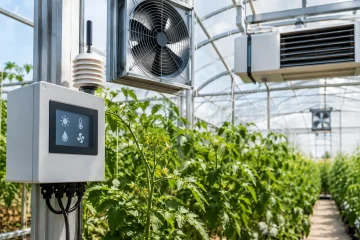
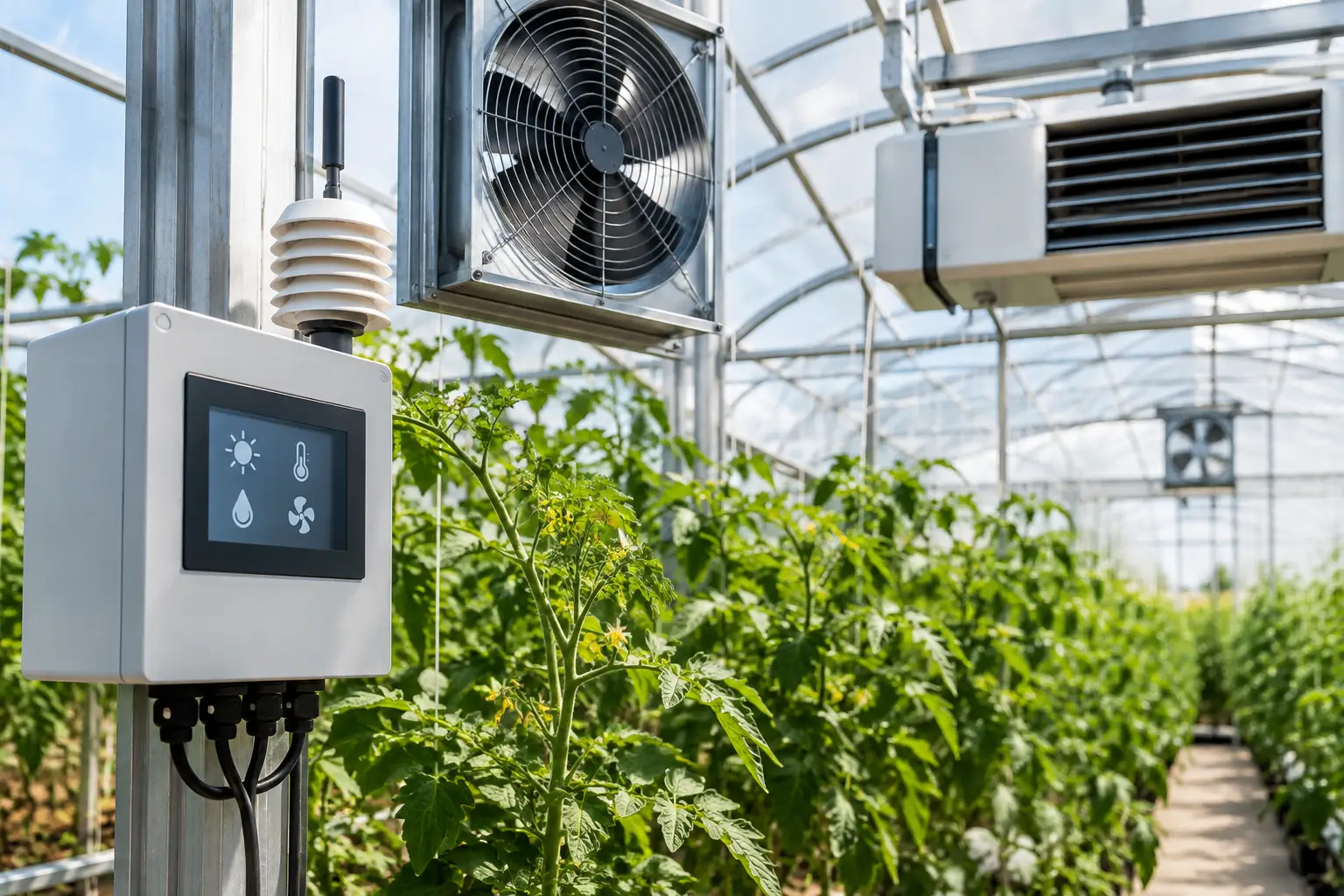
The strongest systems connect three functions: sensing, decision-making, and equipment control. Sensors collect readings from the crop area. A controller applies programmed setpoints and logic. Then it activates equipment such as ridge vents, circulation fans, evaporative pads, boilers, shade screens, foggers, or dehumidifiers.
A controller that switches equipment based on one air-temperature sensor may be sufficient for a small seasonal tunnel. A multi-zone tomato, cannabis, flower, or propagation operation usually needs much more detailed control. Humidity, leaf temperature, radiation, and ventilation status can all change the right response.
Best Greenhouse Climate Control Systems by Operation Type
There is no single best option for every greenhouse. The right system depends on crop value, greenhouse structure, local climate, available utilities, labor capacity, and the cost of a crop failure.
| System type | Best fit | Main strengths | Main limitations | |—|—|—|—| | Manual thermostat and timer controls | Small seasonal houses and low-value crops | Low upfront cost, easy to operate | Limited precision, depends on staff response | | Relay-based environmental controller | Small to mid-sized commercial houses | Automates fans, vents, heaters, and alarms | Fewer advanced sensors and reporting features | | Integrated climate computer | Multi-bay commercial greenhouses | Coordinates heating, venting, screens, irrigation, and alarms | Higher capital cost and setup requirements | | Cloud-connected control platform | Remote operators and multi-site businesses | Remote monitoring, data history, mobile alerts | Requires reliable connectivity and cybersecurity practices | | Sensor-led zone control system | Propagation, high-wire crops, floriculture, and indoor greenhouse hybrids | Precise control by crop zone and microclimate | More sensors, commissioning, and maintenance required |
Manual and Relay-Based Controls
Basic systems typically use thermostats, humidistats, timers, and relay panels to operate exhaust fans, circulation fans, unit heaters, and motorized vents. They remain practical where labor is available and weather patterns are predictable.
Their weakness is coordination. For example, a simple controller may run exhaust fans when temperature rises, while a separate humidistat activates fogging. Without integrated logic, the system can exhaust humidified air immediately, wasting water and power. These controls are best for growers who need dependable automation for a limited number of devices, not a complete crop-climate strategy.
Integrated Climate Computers
Climate computers are the standard choice for many year-round commercial greenhouses. They can stage heating, ventilation, screens, cooling, humidity management, irrigation, fertigation signals, and alarms from one control point.
The value comes from decision logic. Instead of opening vents at a single temperature threshold, the computer can consider indoor temperature, outdoor temperature, wind speed, solar radiation, humidity, and vent position. This reduces abrupt changes that can stress crops and helps managers review exactly what occurred during a production issue.
Cloud Monitoring and Remote Control
Cloud-connected systems give managers access to live readings, alarm notifications, trends, and equipment status from a phone or computer. They are particularly useful for growers managing several sites, distributors supporting installed equipment, and operators who cannot remain on-site overnight.
Remote access does not replace local safeguards. Critical equipment should still have manual overrides, local control capability, alarm backup, and clearly documented procedures for power or internet loss. A remote dashboard is useful only if the data is accurate and the response process is clear.
Core Components to Compare Before Buying
When reviewing offers, compare the complete system rather than buying individual devices that may not communicate effectively. The following components have the biggest effect on performance and operating cost:
- Sensors: At minimum, use calibrated air temperature and relative humidity sensors at crop height. Higher-value operations may add CO2, light, substrate moisture, EC, pH, leaf temperature, wind, rain, and outdoor weather sensors.
- Ventilation and airflow equipment: Roof vents, sidewall vents, exhaust fans, horizontal airflow fans, variable-speed drives, and intake shutters influence temperature uniformity and disease pressure.
- Heating and cooling equipment: Options include unit heaters, hot-water pipe systems, boilers, heat pumps, evaporative pads, fogging, and high-pressure misting. The correct choice depends heavily on climate and fuel availability.
- Control hardware and software: Check the number of input and output channels, control zones, expansion capability, alarm methods, data storage, user permissions, and compatibility with existing equipment.
Do not overlook sensor placement. A temperature sensor above the crop canopy may report a very different condition from the root-zone or leaf area. In large houses, one sensor rarely represents the entire structure. Place sensors away from direct heater discharge, wet walls, doors, and direct sunlight unless they are designed for those conditions.
How to Select the Right Control Strategy
Start with the crop and production calendar. A spring bedding-plant operation in a mild region needs a different investment than a winter lettuce facility or a high-wire tomato greenhouse producing for contracted buyers. Define acceptable day and night ranges, humidity limits, target CO2 use, and the conditions that require immediate alarms.
Next, map the greenhouse into meaningful zones. Separate zones may be needed for propagation, young plants, mature production, loading areas, or different varieties. A system that controls an entire facility from one sensor can create uneven growth and inconsistent quality.
Then evaluate utilities and physical equipment. Confirm electrical capacity, fuel supply, water quality, drainage, internet reliability, vent motor condition, fan capacity, and backup power. Installing an advanced controller will not solve undersized ventilation or poor air distribution.
Match Controls to Local Climate
Dry climates often benefit from evaporative cooling, but this method loses effectiveness as outdoor humidity rises. Humid regions may need stronger ventilation, dehumidification, heat-assisted moisture removal, and careful irrigation timing. Cold climates may prioritize energy curtains, efficient heating, and humidity control during long winter nights.
This is where a lower-priced system can become expensive. If it cannot manage humidity during cold weather or cannot stage equipment efficiently, the operation may face more disease pressure, higher fuel use, and more manual intervention.
Plan for Failures, Not Just Normal Days
Climate control should be designed around the worst credible event: a summer power outage, frozen vent, failed heater, sensor drift, or communication interruption. Require high-temperature and low-temperature alarms, backup power for essential controls, emergency ventilation where appropriate, and manual operating procedures.
Ask suppliers how the system behaves when a sensor fails. A controller should identify unreasonable readings and move to a safe operating mode rather than making an extreme decision from bad data. Also ask who can provide commissioning, calibration, replacement parts, and technical support in your region.
A Practical Procurement Checklist
Before requesting quotes, provide suppliers with greenhouse dimensions, glazing type, crop, production season, location, existing equipment, utility information, and desired number of zones. This produces more comparable proposals and reduces omissions.
Use the same evaluation criteria for every offer: equipment capacity, sensor package, control functions, software access, installation scope, training, warranty, spare parts, maintenance needs, and local service response. Lowest purchase price should not be the deciding factor if installation, integration, or support remains unclear.
For buyers sourcing across regions, Agricial can help centralize supplier discovery and quote comparisons across greenhouse equipment, irrigation, horticulture technology, and agricultural engineering categories. The strongest commercial decision comes from comparing both technical fit and supplier capability.
Questions to Ask Climate Control Suppliers
Ask whether the system can control your current vents, fans, heaters, pumps, and screens without costly adapters. Confirm how many zones and sensors are included, whether remote access has ongoing fees, and how long data is retained. Request a clear wiring diagram, equipment schedule, and description of alarm escalation.
Also ask for expected maintenance tasks. Sensors require cleaning and calibration, vent mechanisms need inspection, fans accumulate dust, and filters or pads need scheduled replacement. A well-specified maintenance plan protects the investment and prevents small issues from becoming crop-threatening failures.
Choose a system that gives your team clear information and practical control, then build the operating discipline to use it well. The best results come when accurate sensors, capable equipment, trained staff, and responsive suppliers work together around the needs of the crop.