
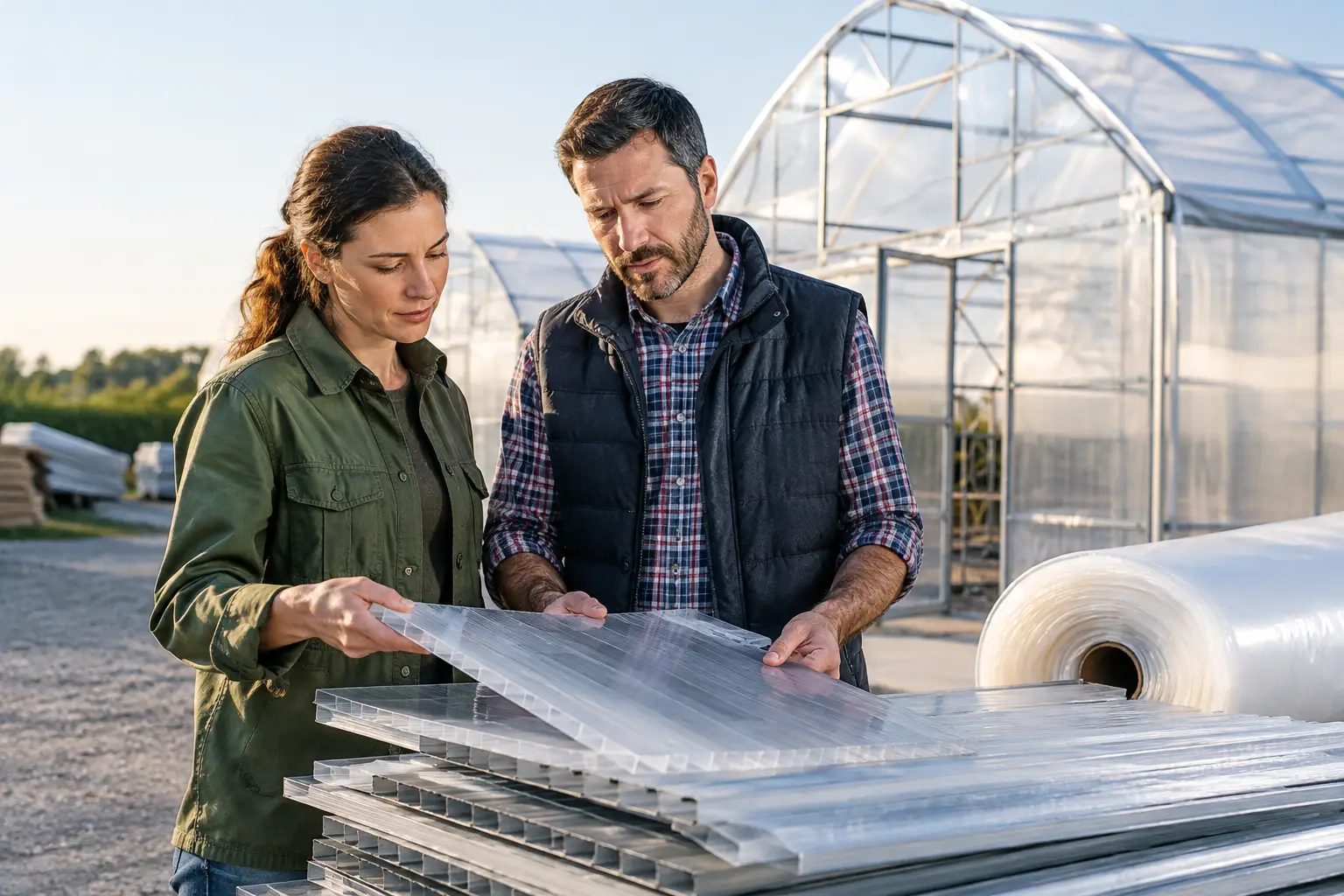
How to Source Greenhouse Materials With Less Risk
A greenhouse frame that arrives without matching connectors, film that is not rated for local UV exposure, or vents that cannot keep pace with summer heat can turn a promising project into an expensive delay. Knowing how to source greenhouse materials is not simply about finding the lowest unit price. It is about securing a complete, compatible system that performs in your climate, fits your crop plan, and can be maintained without disrupting production.
For commercial growers, distributors, and project buyers, the strongest sourcing decisions begin before the first supplier inquiry. Define the operating need, compare specifications on equal terms, and verify the supplier’s ability to deliver what was quoted.
Start With the Greenhouse Operating Plan
Material selection should follow the business and growing plan, not the other way around. A high-tunnel vegetable operation, a propagation nursery, and a climate-controlled floriculture facility need very different structures, coverings, ventilation capacity, and automation.
Start by documenting the footprint, target crops, production season, location, and expected service life. Local wind, snow load, humidity, solar intensity, and access to electricity and water are purchasing requirements, not background details. A structure designed for a mild climate may be unsuitable in a region with heavy snow or frequent high winds, even when its initial price appears attractive.
Also decide whether you are sourcing a complete greenhouse package or buying components separately. A full package can simplify engineering compatibility and accountability. Component sourcing may lower costs or allow better local adaptation, but it requires tighter coordination across frame, glazing, irrigation, ventilation, and controls suppliers.
Build a practical bill of materials
Before requesting quotes, prepare a bill of materials that separates essential components from optional upgrades. It should identify quantities, dimensions, preferred specifications, and acceptable alternatives. This gives suppliers a clear basis for pricing and prevents vague comparisons.
For most commercial greenhouse projects, include the following categories:
- Structural frame, columns, trusses, bracing, anchors, fasteners, and gutters
- Covering or glazing, including profiles, sealing materials, shade systems, and repair supplies
- Ventilation equipment, insect screens, circulation fans, exhaust fans, and ventilation controls
- Irrigation, filtration, fertigation, tanks, pumps, valves, and distribution lines
- Environmental systems such as heating, cooling pads, sensors, controllers, and backup power provisions
- Foundations, drainage, benches, trellising, internal partitions, packing materials, and spare parts
Specify whether dimensions are in feet or meters, and state the preferred measurement standard. Small misunderstandings at this stage can create major installation problems later.
How to Source Greenhouse Materials by Performance
A good quote tells you what is included. A better sourcing process tests whether those materials will perform for the required lifespan and climate. Ask suppliers to provide technical data sheets, drawings, load ratings, material grades, coating details, warranty terms, and installation documentation.
For frames, focus on steel grade, tube or profile dimensions, galvanization method, connection design, and stated wind and snow-load capacity. For coverings, confirm thickness, light transmission, diffusion, UV treatment, expected lifespan, and compatibility with the intended fastening system. A cheaper cover can be costly if it needs early replacement or causes heat stress and uneven crop growth.
| Material area | Common options | Commercial advantage | Key sourcing question | |—|—|—|—| | Frame | Galvanized steel, aluminum | Steel offers strength; aluminum resists corrosion and weighs less | What load rating applies to this exact span and bay spacing? | | Roof and wall covering | Polyethylene film, polycarbonate, glass | Film is economical; polycarbonate is durable; glass provides long service life | What light, UV, and insulation performance is guaranteed? | | Ventilation | Roll-up sides, roof vents, exhaust fans | Natural systems reduce energy use; forced systems offer greater control | Is airflow sized for local summer temperature and crop density? | | Shading | Shade cloth, retractable screens, coatings | Screens allow adjustable light management | What percentage shade is appropriate for the crop and season? | | Irrigation | Drip lines, fogging, boom systems, ebb-and-flow | Each method serves different crops and labor models | Are filters and pressure requirements included in the quote? |
Do not accept generic descriptions such as “heavy-duty steel” or “premium film” as a substitute for measurable specifications. Compare like with like. A quote for galvanized steel is not equivalent to another quote unless the steel thickness, coating, structural layout, and engineering assumptions are clear.
Find Suppliers Who Can Support the Entire Transaction
Greenhouse sourcing involves more than product availability. The supplier must be able to communicate technical details, pack the goods correctly, meet export requirements when applicable, and respond if a shipment is incomplete or damaged.
Use an agriculture-focused marketplace and directory to identify suppliers by category, product specialization, and region. Platforms such as Agricial can help buyers discover greenhouse, irrigation, horticulture, and agricultural equipment businesses in one place, then request comparable quotations directly.
Shortlist suppliers based on evidence rather than polished product photos. Review their company profile, years in operation, product range, export experience, project references, manufacturing capacity, and responsiveness. If a supplier sells both frames and climate systems, confirm whether it manufactures those products, distributes them, or coordinates third-party brands. The answer affects warranty responsibility and lead-time reliability.
Questions to ask before placing an order
A serious supplier should be prepared to answer direct commercial and technical questions. Ask whether the quoted system is engineered for your site conditions, what is excluded from the package, and whether the design can be adapted to your dimensions.
Clarify production lead time, minimum order quantity, payment stages, packing method, spare-parts availability, and post-sale technical support. For imported materials, ask for the package count, gross weight, container loading plan, country of origin, and documents that will accompany the shipment.
Request recent project references that are comparable in scale and climate. A supplier may be credible but still lack experience with your specific greenhouse type. That does not automatically disqualify them, but it should influence your level of engineering review and contingency planning.
Compare Quotes on Landed Cost, Not Price Alone
The lowest quoted material price can become the highest project cost once freight, duties, inland delivery, site preparation, assembly labor, and missing accessories are added. Build a landed-cost comparison before making a commitment.
| Cost factor | Why it changes the real cost | What to confirm | |—|—|—| | Product price | May exclude critical fittings or accessories | Detailed itemized bill of materials | | Freight and insurance | Large frames and glazing can be volume-sensitive | Shipping terms, port, delivery point, and insurance responsibility | | Duties and taxes | Vary by product classification and origin | Correct product codes and estimated import charges | | Installation | Specialized labor may be needed for large systems | Assembly drawings, supervision options, and local labor requirements | | Replacement parts | Delays can affect crop cycles and revenue | Recommended spares, local stock, and reorder lead times |
Ask every shortlisted supplier to quote on the same delivery basis and currency. If one quote is ex-works and another includes delivery to your farm, the numbers are not comparable. Confirm who handles export clearance, ocean or air freight, import clearance, trucking, unloading, and damage claims.
For a large project, consider splitting procurement strategically. Structural components may be efficient to import as a coordinated kit, while concrete, basic plumbing, electrical supplies, and some labor-intensive items may be more economical to source locally. The best approach depends on regional prices, local technical capability, and supply reliability.
Protect Quality Before the Materials Ship
Quality control is most effective before goods leave the factory. For higher-value orders, request final drawings and a signed specification sheet before production begins. The document should identify the exact frame dimensions, covering type, hardware, equipment models, quantities, finish, and packaging requirements.
Arrange a pre-shipment inspection when the size and risk of the project justify it. Verify quantities, labels, dimensions, coating condition, packaging, and the presence of all connectors and fasteners. Photographs and packing lists are useful, but independent inspection gives buyers stronger evidence if a dispute arises.
Pay special attention to replacement-prone items. Order extra film repair tape, clips, fasteners, gaskets, emitter parts, filters, and control sensors where appropriate. A modest spare-parts allocation can prevent a minor failure from interrupting irrigation or ventilation during a critical production period.
Plan Installation and Maintenance During Procurement
Sourcing is incomplete if materials arrive but cannot be installed efficiently. Confirm the sequence of construction: foundations, frame erection, covering installation, drainage, irrigation, electrical work, and commissioning. Each trade must have the correct drawings and site access at the right time.
Store film, polycarbonate panels, electronics, and sealants according to the supplier’s instructions. Poor handling before installation can reduce performance and create warranty disputes. Keep a receiving record for every shipment, noting damaged cartons, missing bundles, and visible defects before signing final delivery documents.
The right greenhouse materials are the ones that create predictable growing conditions and support a profitable production cycle. Treat each quote as a long-term operating decision, and give suppliers the specifications they need to compete clearly for your business.