Organic Fertilizer Buyer Guide for Better Sourcing
A fertilizer label can look promising and still be a poor commercial purchase. A poultry manure pellet with a strong nitrogen figure may not suit a high-phosphorus field. A liquid fish fertilizer may perform well agronomically but become uneconomical once freight, storage, and application equipment are considered. This organic fertilizer buyer guide helps growers, distributors, importers, and procurement teams make decisions based on crop demand, product quality, and supplier reliability rather than headline claims alone.
Start With the Crop, Soil, and Sales Plan
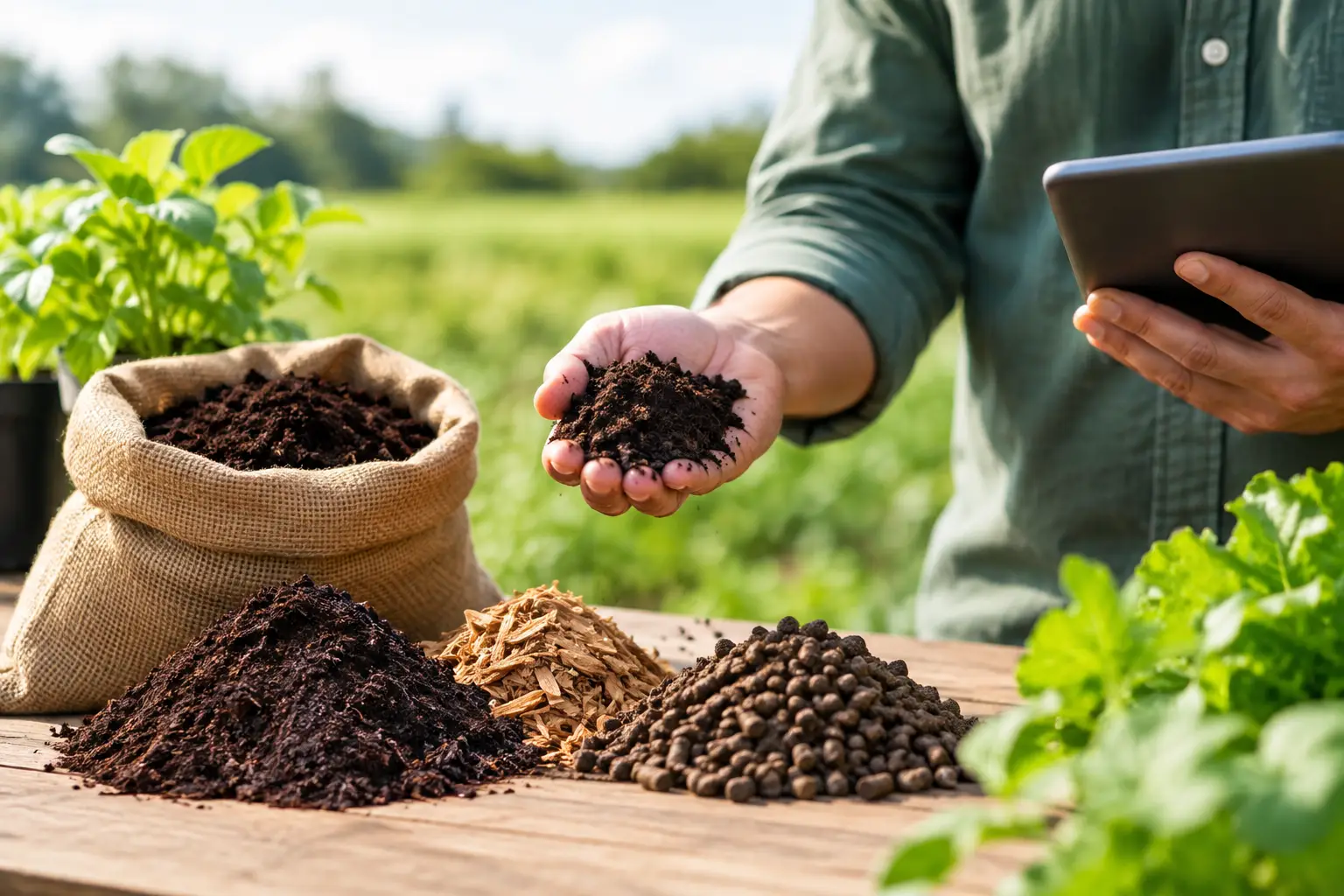
Organic fertilizer is not one product category. It includes composts, manures, plant meals, animal byproducts, mineral amendments, microbial products, and blended formulations. Their nutrient concentrations, release patterns, handling requirements, and regulatory status vary widely.
Before requesting quotes, define what the product needs to accomplish. A broad-acre buyer may need economical nutrient delivery per acre. A greenhouse operator may need a highly soluble product that works through fertigation equipment. A distributor may prioritize stable shelf life, compliant labeling, and packaging formats that can move through its existing sales network.
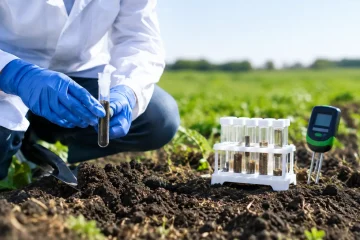
Soil tests and crop nutrient budgets should lead the conversation. Nitrogen, phosphorus, potassium, pH, organic matter, salinity, and micronutrient status all affect the right choice. For established farms, review previous application records as well. A product that is effective in one field can create nutrient imbalance in another when used repeatedly without a plan.
Ask for a Guaranteed Analysis, Not Just a Product Story
A supplier should provide a clear guaranteed analysis showing nitrogen, phosphate, and potash content, typically expressed as N-P-K. Ask whether values are stated on an as-is or dry-matter basis, particularly for composts, slurries, and liquid concentrates. That distinction can materially change the cost of nutrients delivered.
Also confirm the form of nitrogen. Organic nitrogen generally needs microbial activity before crops can use it, so release depends on soil temperature, moisture, and biology. Some products include ammonium, nitrate, or other readily available forms for faster early-season response. Neither approach is automatically better. The practical question is whether release timing matches the crop’s uptake curve.
Organic Fertilizer Buyer Guide: Compare Product Types
The best category depends on the crop system and operational constraints. Use the table below as a starting point for supplier comparisons.
| Product type | Typical commercial advantage | Main limitation | Common applications | |—|—|—|—| | Compost | Builds organic matter and improves soil structure | Low nutrient concentration means high hauling and spreading volumes | Field crops, orchards, landscaping, soil rehabilitation | | Pelletized manure | Easier storage, metering, and shipping than raw manure | Nutrient analysis can vary by feedstock and batch | Row crops, horticulture, retail distribution | | Bone meal or rock phosphate | Concentrated phosphorus source for suitable soils | Availability is often slow and pH-dependent | Transplanting, perennial crops, phosphorus-deficient soils | | Fish emulsion or hydrolysate | Fast-acting liquid nutrition with flexible application | Odor, storage, and freight can affect economics | Greenhouses, fertigation, foliar programs | | Plant-based meals | Often useful for nitrogen-focused fertility programs | May be more expensive per pound of nutrient | Organic vegetables, specialty crops, blended fertilizers | | Mineral amendments | Can address specific deficiencies or pH needs | Not all minerals supply immediately available nutrients | Calcium, magnesium, sulfur, and micronutrient programs |
For bulk field use, calculate the delivered cost per pound of plant-available nutrient, not just the price per ton. For high-value crops, labor savings, compatibility, residue standards, and application precision may justify a higher product cost.
Verify Quality, Compliance, and Consistency
The word “organic” can refer to the source material, a production method, or certification eligibility. Those are not interchangeable. If a buyer needs inputs for certified organic production, ask for documentation that confirms the product is permitted under the applicable program and market requirements. Requirements may differ by destination, certification body, and crop program.
A credible supplier should be ready to share a current certificate of analysis for each lot or production batch. At minimum, review nutrient analysis, moisture content, pH, electrical conductivity, organic matter, and declared ingredients. Depending on product type and market, request results for pathogens, heavy metals, weed seeds, foreign material, and stability or maturity indicators.
Questions That Protect the Purchase
Ask how the supplier controls variation in raw materials and whether batch testing is routine. For manure- and compost-based products, find out how feedstocks are sourced, processed, and sanitized. For imported products, verify that the documentation, labeling, and packaging meet the destination market’s requirements before the goods leave origin.
It is also useful to ask about claims beyond N-P-K. A product marketed for microbes, humic substances, or biostimulant effects should come with clear application guidance and evidence relevant to the intended crop system. Biological claims can be valuable, but performance is influenced by soil conditions, tank mixes, storage temperatures, and application timing.
Compare Suppliers on More Than Price
A low quote becomes costly when a shipment arrives late, nutrient analysis is inconsistent, or product handling does not fit the farm’s equipment. Evaluate suppliers as commercial partners, especially when buying across borders or building a distribution program.
| Supplier factor | What to check | Why it matters | |—|—|—| | Production capacity | Monthly output, peak-season availability, lead times | Prevents supply gaps during critical application windows | | Batch traceability | Lot numbers, test records, complaint process | Supports quality control and faster issue resolution | | Packaging | Bulk, totes, bags, labels, pallet configuration | Affects unloading, storage, resale, and product loss | | Logistics | Incoterms, freight options, port access, delivery schedule | Determines the true landed cost and delivery reliability | | Technical support | Rate guidance, compatibility data, agronomy contacts | Helps buyers use the product correctly and reduce claims | | Commercial terms | Minimum order, payment terms, samples, exclusivity | Clarifies cash-flow exposure and distribution rights |
For a first order, a sample or trial shipment is often the sensible route. Test the material through the actual spreading, injection, or fertigation system that will be used at scale. Review flowability, dust, odor, solubility, filter performance, and crop response. A small trial cannot predict every seasonal outcome, but it can expose handling problems before they become an expensive freight claim.
Calculate Landed Cost and Application Cost
Commercial buyers should convert every quote into a comparable unit. For solids, that may be cost per ton, per acre, and per pound of nutrient. For liquids, compare cost per gallon, dilution rate, nutrient concentration, and cost per treated acre. Include freight, tariffs where applicable, port or warehouse charges, insurance, storage losses, and local delivery.
Application is often the deciding factor. Compost may offer major soil-health value, yet its bulk can make long-distance sourcing impractical. A concentrated pellet may be cheaper to transport and easier to spread uniformly, even if its invoice price is higher. Liquid products can be efficient in controlled environments, but only when tanks, pumps, filters, and water quality support the program.
Do not overlook nutrient availability. Ten pounds of total nitrogen does not always equal ten pounds of crop-available nitrogen in the season of application. Build assumptions into the budget with an agronomist, using local soil conditions and the product’s release characteristics.
Match the Product to Equipment and Storage
A fertilizer program succeeds only if the product can move reliably from delivery to field. Confirm particle size, bulk density, moisture tolerance, dust level, and spreader calibration requirements for dry products. For liquids, ask about viscosity, agitation, settling, screen size, tank-mix compatibility, and freeze protection.
Storage conditions should be written into the purchasing plan. Some biological products have limited shelf life or temperature requirements. Bulk organic materials may absorb moisture, bridge in hoppers, or develop odor issues. Bagged products need pallet protection and dry warehousing. These are operational details, but they directly affect usable inventory and customer satisfaction.
Build a Smarter Supplier Shortlist
Use category-specific searches and quote requests to compare suppliers on specifications, documentation, and commercial fit. Agricial can help buyers place fertilizer suppliers alongside one another, reducing the time spent moving between fragmented directories and informal referrals.
Give each supplier the same brief: crop or resale market, required analysis, preferred packaging, target order volume, delivery destination, certification needs, and requested delivery date. Comparable information produces comparable quotes. It also signals that the buyer is prepared, which tends to improve the quality of supplier responses.
The right organic fertilizer purchase is rarely the product with the highest nutrient number or the lowest price. It is the product that arrives consistently, fits the application system, supports the nutrient plan, and leaves room for a profitable crop or resale program.