B2B Agriculture Trends Changing Farm Trade
A buyer sourcing replacement drip filters before planting season does not have time to chase incomplete catalogs, unclear specifications, and suppliers who cannot confirm delivery. That pressure explains why B2B agriculture trends are moving beyond simple online listings. Agricultural businesses now expect faster product discovery, credible supplier information, quote-ready details, and partners who understand the operating conditions behind every order.
For growers, importers, exporters, distributors, and service providers, the opportunity is clear: reduce friction in the buying process while building commercial relationships that can last beyond a single shipment. The businesses gaining ground are not always the largest. They are the ones that make it easier to compare, verify, communicate, and act.
Why B2B Agriculture Trends Matter Now
Agricultural procurement has become more complex. Input prices can change quickly, weather can alter demand without warning, and buyers often need to balance performance, compliance, freight, and financing in the same purchasing decision. A low quoted price alone is no longer enough to win serious business.
At the same time, digital discovery has changed how commercial relationships begin. A farm manager may research irrigation equipment online, an importer may compare fertilizer suppliers across several countries, and a machinery distributor may look for a specialized manufacturer before contacting anyone. The first point of trust is increasingly a supplier profile, product specification, or clearly managed inquiry.
This does not mean trade has become impersonal. Agriculture remains relationship-driven, particularly where product quality, seasonal timing, and after-sales support matter. Digital tools simply help qualified buyers and sellers find each other faster, then spend their time on the commercial details that count.
1. Digital Sourcing Is Becoming a Procurement Standard
Searchable marketplaces and agriculture-specific directories are replacing part of the old sourcing routine: trade show contacts, scattered spreadsheets, general web searches, and word-of-mouth referrals. Those channels still have value, but they are slow when a buyer needs to identify multiple options in a new market or product category.
Buyers Want Comparable Information, Not More Noise
A useful supplier presence answers practical questions before the first call. What products are available? Which crops, livestock systems, or farm sizes are they suited to? Is there a technical data sheet? Can the company export? What is the minimum order quantity? Can it provide local installation, agronomy advice, or spare parts?
For suppliers, this changes the role of a listing. It is no longer a digital business card. It is a commercial asset that should help a buyer move from discovery to a well-qualified quote request.
The strongest profiles use clear categories, current product information, relevant images, service territories, and direct contact paths. A company selling greenhouse film, for example, should make it easy to distinguish film thickness, UV treatment, width, expected lifespan, and suitable climate conditions. Vague claims create inquiries, but specific details create better inquiries.
2. Verification and Traceability Are Moving Closer to the Sale
Trust has always mattered in agricultural trade. What is changing is how early buyers expect proof. Product origin, certifications, batch records, technical documentation, and business identity increasingly influence which supplier gets a response.
This trend is especially strong in inputs and food-adjacent supply chains. Buyers may need to confirm that a seed variety meets market rules, a fertilizer shipment has the stated nutrient analysis, or an exporter can provide required documentation. The needed evidence depends on the product and destination market, but the commercial principle is consistent: uncertainty adds cost.
| Procurement area | What buyers increasingly check | Commercial benefit for suppliers | Common trade-off | |—|—|—|—| | Seeds and planting material | Variety identity, germination data, phytosanitary documentation | Fewer disputes and stronger buyer confidence | More recordkeeping and testing costs | | Fertilizers and crop protection | Nutrient analysis, active ingredients, labeling, batch details | Better fit for distributor and farm requirements | Regulations differ across markets | | Fresh produce and commodities | Origin, handling practices, residue or quality records | Easier access to premium and export channels | Traceability systems require discipline | | Machinery and irrigation | Specifications, warranties, parts availability, service coverage | Higher-value inquiries and repeat business | Requires accurate, regularly updated information |
Traceability is not a single system that every agricultural business must adopt in the same way. A local hay supplier and a multinational produce exporter face very different demands. The right approach is proportional: document what customers, regulators, and your own quality process genuinely require, then make the relevant proof easy to provide.
3. The Best Price Is Giving Way to the Best Total Cost
One of the most practical B2B agriculture trends is the shift from unit-price comparison to total-cost evaluation. Buyers are calculating the real impact of an offer: delivery timing, product lifespan, labor requirements, fuel use, downtime risk, yield impact, warranty terms, and technical support.
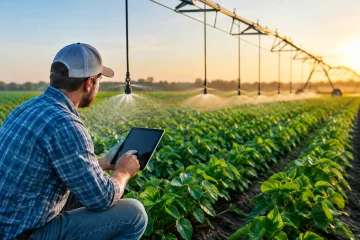
Consider an irrigation project. A lower-cost pump may look attractive on the purchase order, but it can become expensive if energy use is high, parts are hard to source, or the supplier cannot support installation. The same logic applies to livestock equipment, greenhouse systems, harvesting machinery, and agricultural software.
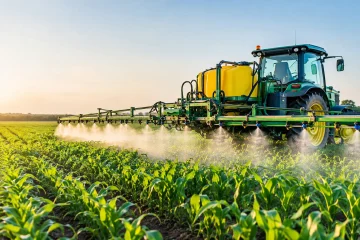
Suppliers can respond by selling the operating outcome, not just the item. Rather than saying a product is “high quality,” explain its working advantage. Does a filtration system reduce clogging? Does a sprayer design improve coverage? Does a livestock monitoring service reduce manual checks? Claims should be specific enough to evaluate and supported by realistic conditions.
Buyers should also resist the opposite mistake: paying a premium for features they will not use. A highly automated system may be a strong investment for a large operation with trained staff, but a smaller farm may gain more value from durable equipment with straightforward maintenance. The right choice depends on scale, labor availability, local service access, and the cost of disruption during the season.
4. Climate Pressure Is Reshaping What Businesses Buy
Water scarcity, heat stress, unpredictable rainfall, and pest movement are changing product demand across agriculture. These conditions are increasing interest in irrigation efficiency, protected cultivation, soil management, climate-adapted seed varieties, biological inputs, precision tools, and livestock cooling systems.
The commercial opportunity is not limited to AgriTech companies. Suppliers of pipes, valves, shade materials, weather sensors, soil amendments, feed solutions, and agronomy services all have a role in helping customers adapt.
| Market shift | What buyers need | Supplier opportunity | Question to ask before buying | |—|—|—|—| | Water efficiency | Better control of flow, pressure, and scheduling | Drip systems, filtration, automation, repair services | Will the system match the water source and field layout? | | Heat and weather risk | More resilient production systems | Shade, ventilation, protected growing, monitoring tools | Can local technicians support the equipment? | | Soil performance | Inputs that support long-term productivity | Soil testing, biologicals, amendments, advisory services | Is there evidence for this soil type and crop? | | Labor constraints | Faster, more consistent field operations | Mechanization, sensors, sorting equipment, managed services | Does the labor saving justify training and maintenance costs? |
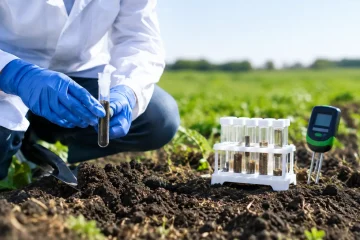
Climate-focused purchasing should remain practical. Not every farm needs sensors, automation, or a complete infrastructure upgrade. In many cases, a targeted improvement such as better filtration, a soil test program, or scheduled maintenance delivers a faster return than a major capital project. Suppliers that recognize this earn more trust than those pushing a one-size-fits-all solution.
5. Cross-Border Trade Is Becoming More Selective
Global agriculture markets create access to more buyers and suppliers, but distance introduces risk. Freight costs, lead times, customs processes, currency exposure, packaging requirements, and local standards can turn an attractive quote into a poor transaction.
As a result, buyers are building more resilient sourcing strategies. Many are qualifying suppliers in more than one region, keeping alternatives for critical inputs, and separating routine purchases from high-risk purchases. A distributor may source standard irrigation fittings from one market while maintaining an approved backup supplier for seasonal demand spikes.
For exporters, market access depends on clarity. Product descriptions should use recognized specifications, quantities should be stated precisely, and packaging or documentation capabilities should be visible early. Slow replies and incomplete commercial information can cause buyers to move on, even when the product is competitive.
A focused agriculture marketplace can make this process more efficient by bringing product categories, supplier profiles, and quote requests into one place. Agricial supports that need by helping agricultural businesses find relevant partners without sorting through a general-purpose directory.
How to Act on These Trends
Businesses do not need to overhaul their commercial process all at once. Start with the points where buying or selling currently slows down most. A practical next step is to:
- Review supplier or company information for missing specifications, outdated products, and unclear service areas.
- Define the documents buyers ask for most often and prepare them before an inquiry arrives.
- Compare major purchases using lifecycle cost, not only the initial quoted price.
- Build at least one qualified alternative source for critical seasonal inputs or equipment parts.
The next valuable business connection may begin with a search, but it is won through clear information, reliable follow-through, and a solution that works under real farm conditions.