Open Pollinated Versus Hybrid Seeds: Which?
A tomato field that ripens evenly over a short harvest window serves a very different business model than a farm that saves locally adapted seed year after year. That is the practical decision behind open pollinated versus hybrid seeds. Neither type is automatically better. The right choice depends on the crop, market specification, growing conditions, harvest method, and how much control the operation needs over future seed supply.
For growers, distributors, and input buyers, seed selection affects more than germination. It shapes crop uniformity, labor planning, packhouse performance, seed costs, and the reliability of contracts with buyers. Understanding the distinction helps agricultural businesses source seed with clearer specifications and fewer surprises in the field.
Open Pollinated Versus Hybrid Seeds at a Glance
Open-pollinated, often shortened to OP, varieties are pollinated naturally by wind, insects, or other natural mechanisms. When plants are adequately isolated from other compatible varieties, the seed they produce will generally grow into plants with traits similar to the parent variety. This makes properly selected OP seed suitable for saving and replanting.
Hybrid seed is produced by intentionally crossing two distinct, carefully selected parent lines. The first generation from that cross, known as F1, often combines desirable traits from both parents. These can include uniform maturity, vigor, disease tolerance, fruit shape, or yield potential. However, seed saved from an F1 hybrid usually does not reproduce the same consistent crop in the following generation.
| Factor | Open-pollinated seed | F1 hybrid seed | |—|—|—| | Pollination and breeding | Naturally pollinated, with stable variety traits over generations | Controlled cross between selected parent lines | | Seed saving | Usually practical when isolation and selection are managed | Not recommended for repeat commercial production | | Crop uniformity | Can show more plant-to-plant variation | Typically highly uniform in the first generation | | Seed price | Often lower per unit | Often higher due to breeding and production costs | | Local adaptation | Can improve over time through on-farm selection | Depends on the specific hybrid and target environment | | Best fit | Seed sovereignty, niche markets, adaptive local production | Standardized commercial output and performance-focused systems |
What Open-Pollinated Seed Can Offer Commercial Farms
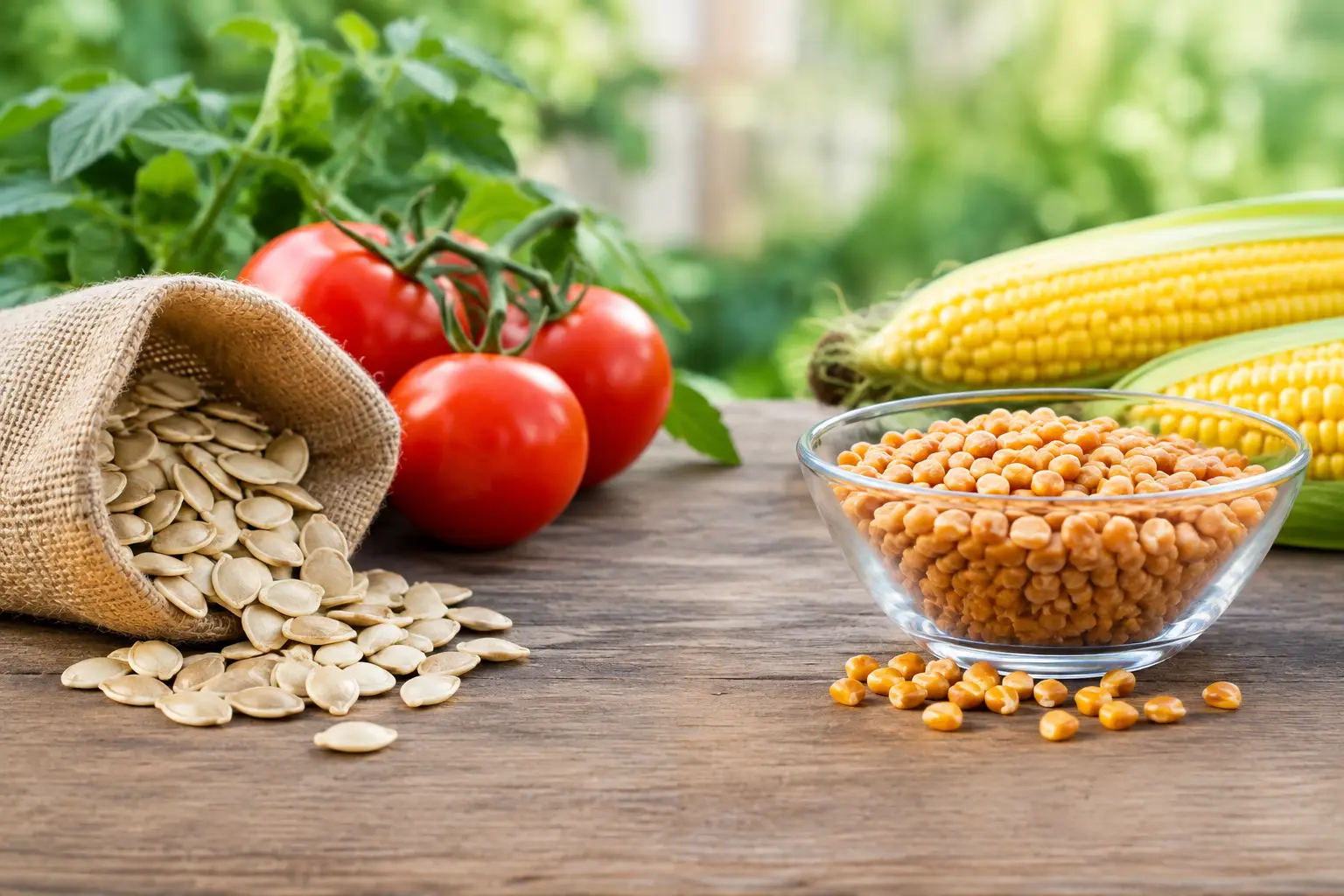
Open-pollinated varieties are not simply a legacy option. They can be a strategic input for farms that value independence, regional adaptation, and distinctive crop qualities. Heirloom vegetables are one familiar example, but OP varieties also matter in staple crops, forage systems, and locally developed horticultural production.
The most significant advantage is seed-saving potential. A grower who maintains varietal purity, selects healthy plants, and stores seed correctly may reduce annual purchasing needs over time. That can be valuable where imported seed is expensive, supply chains are inconsistent, or a farm wants to develop a variety suited to its own soils and climate.
OP crops may also offer market differentiation. Specialty retailers, chefs, direct-market farms, and processors sometimes value flavor, appearance, or heritage characteristics that are not the main focus of high-volume hybrid breeding programs. A less uniform crop can be commercially acceptable when the buyer is purchasing a distinctive product rather than a highly standardized one.
There are trade-offs. Greater variation in plant height, maturity date, fruit size, and quality can complicate mechanized harvesting and fixed delivery schedules. An OP variety may perform exceptionally well in one local production system but be less predictable across diverse sites. Seed saving also requires discipline: cross-pollinating crops such as squash, brassicas, and corn need adequate isolation to prevent unintended crosses.
When OP Seed Is the Better Procurement Choice
Open-pollinated seed can make strong commercial sense for farms building regional seed resilience, organic or low-input operations, specialty crop programs, and growers selling through differentiated channels. It is also worth considering when a trusted variety has already proven its fit under local pest pressure, rainfall patterns, and soil conditions.
Buyers should still evaluate each variety on performance data, seed health, germination standards, and lot traceability. “Open-pollinated” describes breeding and reproduction, not automatically quality, disease resistance, or suitability for every market.
Why Hybrid Seed Dominates Many Commercial Crops
Hybrid seed is widely used because uniformity creates operational value. When a vegetable crop reaches maturity within a narrow window, labor crews can be scheduled more efficiently, packaging lines receive more consistent product, and buyers can plan promotions or processing runs with greater confidence.
Hybrid vigor, sometimes called heterosis, can provide an advantage in growth rate, yield, stress tolerance, or overall plant performance. The result is not guaranteed in every crop or environment, but well-bred hybrids are developed to deliver reliable traits for specific production challenges.
For a commercial greenhouse tomato operation, a hybrid might be selected for resistance to a known disease complex, consistent fruit sizing, and long shelf life. For field corn, a hybrid may be chosen for maturity length, standability, grain characteristics, and performance within a particular climate zone. The value lies in matching the hybrid’s documented traits to the farm’s production plan.
The limitation is dependence on annual seed purchase. Seed collected from a hybrid crop may germinate, but the next generation will segregate into variable characteristics. That unpredictability can create unacceptable risk for farms supplying retailers, processors, or export buyers with specific grade and volume requirements.
The Real Cost of Hybrid Seed
The price per bag can make hybrid seed appear expensive, especially compared with an OP alternative. But seed cost should be evaluated as part of total production economics. If a hybrid improves marketable yield, reduces sorting losses, narrows the harvest window, or avoids a costly disease issue, the higher purchase price may be justified.
At the same time, a premium hybrid is not automatically profitable. If the farm lacks irrigation, fertility management, protected cultivation, or the disease pressure the hybrid was bred to address, its potential advantage may not cover the added cost. Trialing a new hybrid on a measured portion of acreage is often more useful than replacing an established variety across the whole farm.
How to Choose Between Seed Types
Start with the buyer, not the seed catalog. A processor may need uniform color and synchronized maturity. A wholesale distributor may prioritize shelf life and carton consistency. A local market customer may pay more for flavor and uncommon varieties. Those specifications should guide the seed decision.
Then assess production conditions. Review the crop’s history on the farm, likely pest and disease risks, irrigation reliability, seasonal temperatures, labor availability, and harvest equipment. A hybrid with resistance traits may reduce risk in disease-prone fields, while an OP variety that has performed well for years may be the lower-risk choice in a stable local system.
For procurement teams, compare suppliers on more than variety name and price. Request clear information on lot numbers, germination percentage, seed treatment, purity, production region, packaging size, storage recommendations, and delivery lead time. Where import rules apply, confirm phytosanitary and labeling requirements before committing to a shipment.
A useful evaluation process includes four commercial questions:
- Does the seed variety meet the end market’s grade, timing, and volume requirements?
- Is its performance supported by trial data from conditions similar to the intended production area?
- What is the full cost per acre or hectare, including seed rate, labor, crop protection, and expected pack-out?
- Can the supplier provide reliable availability, technical documentation, and consistent lots for future seasons?
Can Farms Use Both Open-Pollinated and Hybrid Seeds?
Yes. Many diversified farms use both because they are solving different problems. A grower may rely on hybrids for high-volume crops that need predictable harvests, then use OP varieties for specialty lines, seed-saving projects, or varieties adapted to a local niche.
This blended approach can reduce commercial risk. Hybrid varieties support consistency where contracts and logistics demand it, while open-pollinated varieties create flexibility and preserve access to genetics that may be valuable over the long term. The key is to separate the production goals rather than treating the choice as an ideological one.
Sourcing Seed With Fewer Surprises
Whether purchasing OP or hybrid seed, the variety description should translate into a clear production decision. Confirm whether disease resistance claims are relevant to local pathogen races, whether maturity dates reflect your season, and whether yield figures represent total yield or marketable yield. Ask for samples or small trial quantities when testing an unfamiliar supplier or variety.
For global buyers, supplier visibility and direct comparison matter just as much as genetics. Agricial helps agricultural professionals discover seed suppliers and connect with potential commercial partners across markets, making it easier to begin a more informed sourcing conversation.
The best seed decision is the one that fits the farm’s biology and the business behind it. Choose hybrids when repeatable performance and uniform output protect your margins. Choose open-pollinated varieties when adaptation, seed saving, and product distinction create more value. Then measure the result in marketable crop, not just in the price printed on the seed bag.