Livestock Equipment Marketplace Buying Guide
A feeder that cannot be serviced during peak season, a water system built for the wrong climate, or panels that do not match existing gates can turn a reasonable purchase into an expensive delay. A livestock equipment marketplace gives producers, distributors, and importers a more practical way to compare options before equipment reaches the farm.
The value is not simply having more products to browse. It is being able to identify credible suppliers, compare specifications side by side, request quotes with the right operating details, and evaluate the total cost of ownership. For livestock businesses managing cattle, dairy, sheep, goats, swine, poultry, or mixed operations, better sourcing decisions protect both productivity and cash flow.
What a Livestock Equipment Marketplace Should Deliver
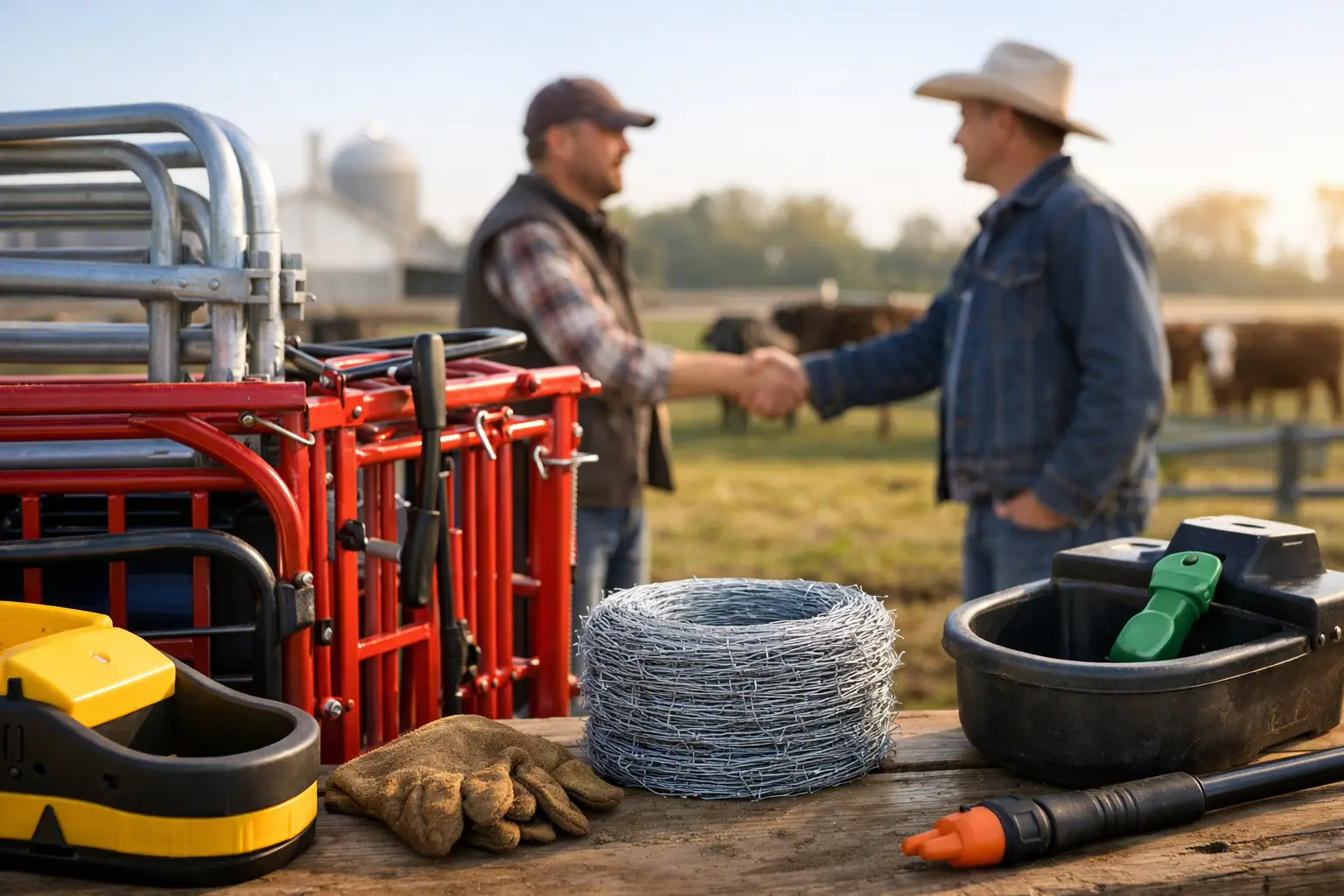
Livestock equipment covers a wide range of systems, from basic fencing hardware to automated feeding, ventilation, manure management, and animal handling equipment. A specialized marketplace organizes that complexity around real farm applications rather than forcing buyers to search through a general industrial directory.
For buyers, the strongest platforms make it easier to find equipment by animal type, production stage, capacity, material, power source, and geographic availability. For suppliers, they create direct visibility with qualified agricultural businesses that are already searching for a solution.
A useful marketplace should help users do four things well:
- Discover equipment and suppliers within relevant livestock categories.
- Compare technical details, commercial terms, and available service support.
- Send precise quote requests to several suitable vendors.
- Build relationships with suppliers that can support installation, spare parts, and future expansion.
That last point matters. A lower purchase price can lose its advantage quickly if replacement parts are difficult to source or if the supplier cannot provide documentation, training, or warranty support in the buyer’s market.
Equipment Categories Worth Comparing Carefully
The right purchasing criteria depend on the species, herd size, housing design, labor availability, and production model. A pasture-based beef operation will not evaluate equipment the same way as a high-output dairy or an integrated poultry facility.
| Equipment category | Primary purpose | Details to compare | Common trade-off | | — | — | — | — | | Feeding equipment | Deliver forage, grain, minerals, or rations | Capacity, feed type, accuracy, corrosion resistance, cleaning access | Higher automation can reduce labor but increases maintenance needs | | Watering systems | Provide dependable clean water | Flow rate, frost protection, filtration, trough material, valve quality | Larger systems need more plumbing and regular inspection | | Handling equipment | Move, restrain, sort, or load animals safely | Animal size range, gate design, operator safety, portability | Heavy-duty units cost more but often last longer under commercial use | | Housing and ventilation | Manage comfort, air quality, and weather exposure | Building dimensions, airflow, insulation, power demand, local climate fit | Lower upfront systems may have higher operating costs | | Manure management | Collect, move, store, or process waste | Volume capacity, pump compatibility, scraper layout, safety features | Capacity must allow for seasonal storage and future growth |
Feeding and Watering Systems
Feed and water equipment affects daily animal performance, so reliability matters more than appearance. Buyers should confirm whether a feeder suits dry feed, silage, pellets, minerals, or total mixed ration applications. They should also ask how quickly components can be cleaned and whether the design limits feed waste.
For watering systems, water pressure, line length, climate exposure, and herd demand should guide the decision. A system that performs well in a mild region may require insulation, heating, or different valve protection in colder areas. When comparing imported equipment, confirm that fittings, electrical requirements, and plumbing standards can be supported locally.
Handling and Welfare Equipment
Poorly matched handling equipment can increase stress for animals and risk for workers. Chutes, crushes, head gates, sorting pens, loading ramps, and portable panels should be evaluated for animal flow, not just steel thickness.
Ask suppliers for dimensions, weight ratings, recommended species, and installation requirements. For cattle operations, for example, curved race layouts and solid-sided systems may improve movement in certain facilities, while smaller operations may prioritize portable equipment that can serve several locations.
Housing, Ventilation, and Climate Control
Ventilation is often treated as a building detail when it is actually a production issue. Heat stress, moisture, ammonia buildup, and poor air circulation can affect feed intake, milk yield, weight gain, and disease pressure. Equipment listings should make clear whether fans, curtains, controllers, cooling pads, heaters, and sensors are designed for the required building size and climate conditions.
Do not compare ventilation equipment by motor size alone. Air volume, control capability, energy consumption, dust resistance, and spare-parts access all affect the long-term result.
How to Compare Suppliers Beyond the Price
Price is necessary, but it is not enough to make a commercial equipment decision. A livestock equipment marketplace is most effective when buyers use it to compare the supplier behind the product as carefully as the product itself.
Start with the supplier profile. Look for a clear business identity, product specialization, product images or technical documentation, market experience, and a direct method of contact. Suppliers that provide complete specifications are generally easier to evaluate than those offering only broad claims.
Then request a quote that gives vendors enough context to respond accurately. Include the species, animal numbers, desired capacity, operating environment, delivery location, preferred timeline, and whether installation or training is needed. A vague request may produce vague pricing that cannot be meaningfully compared.
| Supplier question | Why it matters | A strong response looks like | | — | — | — | | Is this model suitable for my animal numbers and production system? | Confirms capacity is not being overstated | A recommendation tied to herd size, usage frequency, and feed or housing conditions | | What is included in the quoted price? | Prevents missing costs | Clear details on equipment, freight, installation, taxes, accessories, and commissioning | | What warranty and parts support are available? | Protects uptime after purchase | Written warranty terms and a practical process for obtaining parts | | Can you provide technical drawings or operating data? | Helps with site planning and comparison | Dimensions, utilities, capacities, material grades, and operating requirements | | What is the lead time? | Supports production planning | A realistic manufacturing, shipping, and delivery schedule |
A supplier does not need to be local to be a good fit. International sourcing can broaden product choice and improve pricing, especially for specialized housing, dairy, processing, or automation equipment. But importers should calculate freight, insurance, duties, port handling, installation, currency exposure, and local compliance before comparing a foreign quote with a domestic one.
A Practical Buying Process for Livestock Equipment
A disciplined process keeps the marketplace search focused and reduces expensive revisions later. Begin by defining the operational problem. Is labor too high at feeding time? Is water access limiting pasture use? Are animal handling delays affecting vaccination or loading? Is heat stress reducing performance? The equipment choice should solve a measurable problem.
Next, set minimum requirements before contacting suppliers. These may include capacity, material, power supply, dimensions, safety standards, mobility, cleaning requirements, and budget range. This prevents a common sourcing mistake: choosing an attractive model first and trying to make it fit afterward.
After receiving quotes, compare the total delivered value. Include the purchase price, transport, installation, expected energy use, consumables, maintenance, anticipated lifespan, and downtime risk. If one system costs more but requires fewer labor hours every day, its payback may be stronger than a lower-cost alternative.
Finally, confirm the site is ready. Equipment installation often fails because foundations, drainage, electrical supply, ventilation openings, access routes, or water pressure were not assessed early enough. Share photos, drawings, and measurements with the supplier when possible. Clear information improves quote accuracy and reduces commissioning problems.
Common Mistakes That Cost Livestock Businesses Money
The first mistake is buying only for current herd size. Equipment with no room for practical expansion can force a second investment sooner than expected. Oversizing has a cost too, so aim for capacity that matches the business plan rather than an arbitrary maximum.
The second is overlooking compatibility. New gates may not connect to existing pens. Imported motors may not match local voltage. A manure pump may not fit the storage system. Confirm interfaces, connectors, dimensions, and utility requirements before placing an order.
The third is treating service as an afterthought. Ask who handles installation issues, whether manuals are available in English, how spare parts are supplied, and what response time can reasonably be expected. For equipment used every day, service capability is part of the product.
Turning Marketplace Searches Into Better Partnerships
A well-built supplier profile and a clear quote request create better commercial conversations from the start. Buyers save time by filtering for relevant livestock categories and asking specific questions. Suppliers receive more useful inquiries when they publish accurate product details, practical applications, and clear commercial information.
Agricial supports this process by bringing livestock equipment suppliers and agricultural buyers into a marketplace built around sector-specific discovery, direct contact, and quote comparison. The goal is not to make sourcing more complicated. It is to give agricultural businesses a faster route from a defined need to a dependable commercial partner.
Before your next purchase, put the operating conditions on paper, compare more than one qualified supplier, and make after-sales support part of the decision. The equipment that serves the farm best is the one that keeps working when the animals, the weather, and the production schedule leave no room for delay.