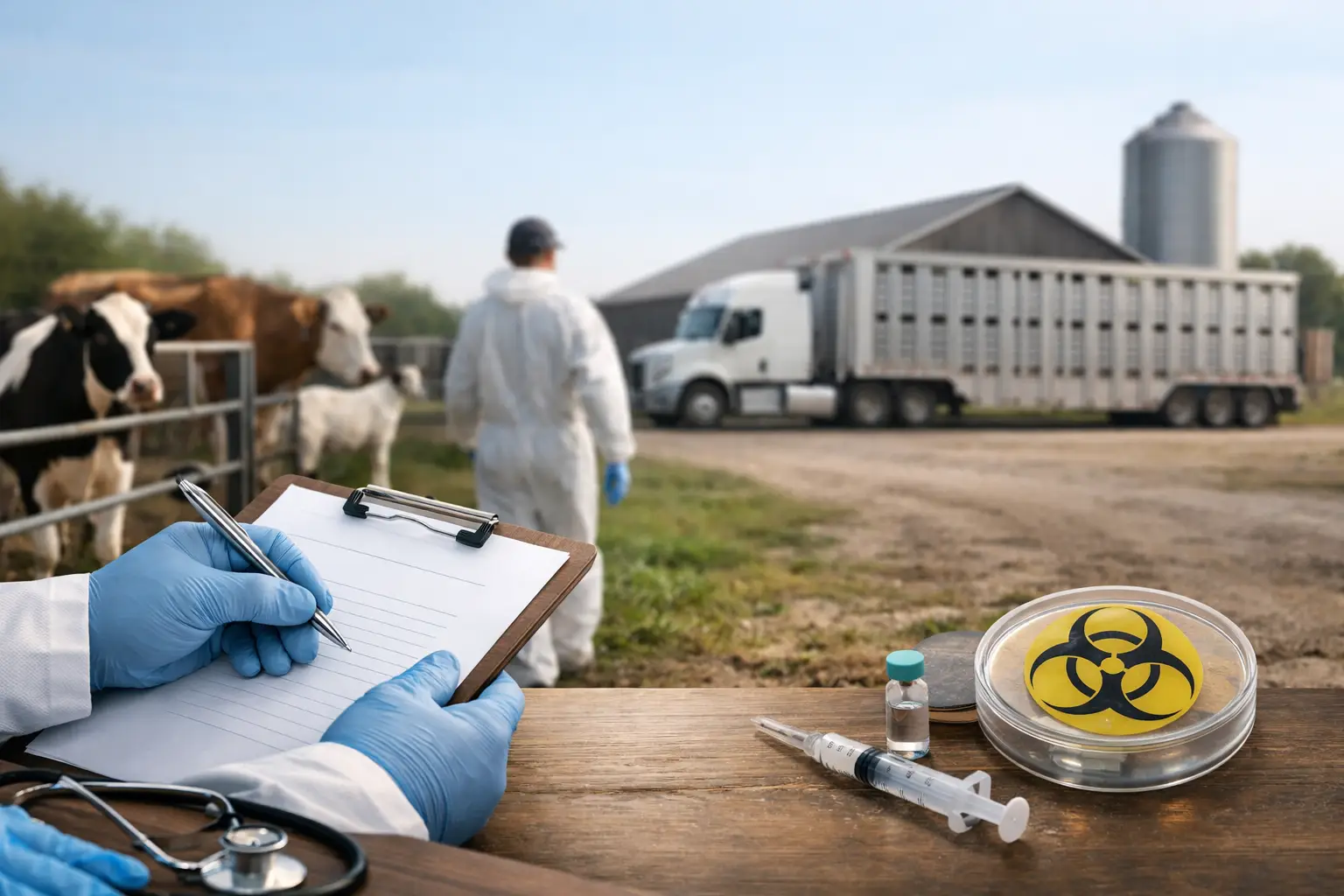
Livestock Biosecurity Planning for Safer Trade
A single unplanned visitor, a replacement heifer with an unknown health history, or a shared trailer can introduce disease long before animals show visible signs. Livestock biosecurity planning turns those routine business exposures into managed decisions. For farms, feedlots, dairies, poultry operations, and livestock traders, it protects animal health, production continuity, buyer confidence, and access to demanding markets.
Biosecurity is not one gate sign or one disinfectant product. It is a working system that controls how animals, people, vehicles, equipment, feed, and pests move through an operation. The best plan fits the species, production model, local disease pressure, labor capacity, and commercial goals of the business.
Why Livestock Biosecurity Planning Supports Business Growth
Disease outbreaks carry costs beyond treatment and mortality. They can reduce weight gain, milk yield, fertility, and feed efficiency. They may also delay shipments, disrupt contracts, trigger movement restrictions, and damage a supplier’s reputation with buyers.
For businesses selling breeding stock, meat, milk, eggs, genetics, or livestock services, biosecurity is part of commercial reliability. Buyers increasingly ask for health records, vaccination information, transport protocols, and traceability. A documented plan helps answer those questions consistently rather than relying on verbal assurances.
The level of control should match the risk. A closed dairy with no purchased animals needs a different approach than a cattle trader receiving animals from multiple regions each week. A small poultry producer may not need a complex digital system, but it still needs disciplined visitor control, clean footwear, and a clear plan for sick or dead birds.
Start With a Practical Risk Assessment
Before buying supplies or writing procedures, map the operation as it actually functions. Identify every point where disease can enter, spread within the site, or leave with animals and products. Walk the property with the farm manager, veterinarian, transport lead, and key employees when possible.
Map Movement, Not Just Buildings
Draw the flow of animals from arrival to housing, treatment, loading, and departure. Then map the people and equipment that cross those same areas. Pay special attention to contract crews, hoof trimmers, breeders, milk haulers, rendering services, feed deliveries, and visitors who may have contact with other livestock.
The most useful questions are direct: Where do new animals wait? Which boots enter multiple barns? Is a loading ramp shared by incoming and outgoing stock? Can a driver enter animal areas? Where does manure move after rain? Each answer identifies a control point.
Rank Risks by Likelihood and Impact
A simple risk matrix prevents teams from treating every issue as equally urgent.
| Risk source | Likelihood | Potential impact | Practical control | |—|—:|—:|—| | Purchased or returning animals | High | High | Health screening, isolation, testing, records | | Visitors and contractors | Medium | High | Sign-in, restricted access, clean footwear and clothing | | Shared vehicles and trailers | Medium | High | Cleaning, disinfection, controlled loading areas | | Rodents, wild birds, and pests | High | Medium | Exclusion, baiting program, feed and waste control | | Feed, bedding, and water | Low to medium | High | Approved suppliers, protected storage, water checks |
Focus first on risks that are both likely and costly. This approach keeps livestock biosecurity planning affordable and easier for staff to follow.
Build the Core Biosecurity Controls
An effective plan combines physical separation, hygiene, monitoring, and records. A written policy matters, but the daily routine matters more. Procedures should be short enough for workers to use during a busy shift and specific enough to verify.
Control Animal Entry and Isolation
Every incoming animal presents a health decision. Purchase from known sources when possible, request health and treatment records before shipment, and align requirements with your veterinarian and market destination.
Maintain a designated isolation area that does not share airspace, tools, drainage, or routine staff traffic with the main herd or flock where feasible. The right isolation period depends on species, disease risks, source history, and testing availability. During that period, observe animals daily, complete required testing or treatments, and use dedicated clothing and equipment.
Isolation can be difficult on smaller farms with limited space. If a separate building is not available, create the greatest possible separation using distance, fencing, assigned tools, scheduled care order, and strict cleaning between groups. Care for the healthiest and most established animals first, then quarantine groups last.
Set Clear People, Vehicle, and Equipment Rules
People often move pathogens farther and faster than animals. Restrict access to essential personnel, establish a single entry point, and record who enters animal areas. Visitors should understand where they may go and what clothing or footwear is required before they arrive.
Vehicle rules should cover more than delivery trucks. Include trailers, service vans, employee vehicles entering livestock zones, and equipment borrowed from neighboring farms. Designate clean and dirty areas around loading zones. When equipment must be shared, remove organic matter before applying an approved disinfectant, because disinfectant alone performs poorly on dirty surfaces.
A workable protocol usually includes four actions:
- Keep nonessential visitors outside production areas.
- Provide site-specific boots or disposable footwear where appropriate.
- Clean and disinfect trailers, tools, and handling equipment between animal groups.
- Maintain a log for visitors, animal movements, cleaning, and health events.
Protect Feed, Water, and Pest Management
Feed spills, open grain storage, standing water, and unmanaged mortality attract rodents, insects, wild birds, and scavengers. Those pests can spread pathogens between barns, pens, and neighboring operations.
Store feed in secured containers, repair leaks quickly, clean spills, and monitor bait stations on a documented schedule. Test or inspect water quality when source conditions change, particularly after flooding, drought, or infrastructure repairs. Mortality disposal must follow local regulations and should be prompt, contained, and separated from live-animal traffic.
Make Health Monitoring Actionable
A biosecurity plan fails if unusual illness is noticed but no one knows what to do next. Train employees to report changes in appetite, behavior, coughing, diarrhea, lameness, abortions, neurologic signs, unexpected mortality, or drops in production.
Create an escalation process with named responsibilities. Staff should know who contacts the manager, when the veterinarian is called, which animals are separated, and how movements are paused. For operations that trade across state lines or export markets, this process should also identify the records needed for traceability and customer communication.
| Situation | Immediate action | Business purpose | |—|—|—| | New arrivals | Isolate, inspect records, observe and test as needed | Prevent introduction into the main group | | Sick animal or bird | Separate, assess, record signs, contact veterinarian | Limit spread and support diagnosis | | Unexpected deaths | Restrict access, preserve relevant records, investigate | Identify a pattern before it expands | | Disease concern before shipment | Pause movement and verify health status | Protect buyers, contracts, and market access |
Do not create a plan that promises a specific diagnosis or treatment without veterinary input. Symptoms overlap, and premature assumptions can make an outbreak harder to manage. The goal is fast recognition, containment, and professional guidance.
Train Staff and Measure Compliance
Biosecurity is a management practice, not a binder kept in an office. New employees, seasonal workers, and contractors need practical instruction before they enter livestock areas. Use signs, simple checklists, and visual zone markings to make the right action obvious.
Review compliance regularly. Check whether quarantine records are complete, whether disinfectant stations are maintained, whether visitor logs are used, and whether cleaning procedures happen at the required frequency. If workers bypass a step, ask why. The issue may be poor training, insufficient supplies, unrealistic workflow, or a procedure that adds delay without clear value.
A quarterly review is often enough for stable operations, while higher-risk businesses may need monthly checks. Update the plan after a disease event, a new supplier relationship, facility expansion, changes in transport routes, or entry into a new market.
Source Biosecurity Services and Supplies With Confidence
Implementation depends on dependable partners. Farms may need veterinary consultants, diagnostic laboratories, disinfectants, protective clothing, pest-control services, livestock identification products, cleaning equipment, or specialized quarantine infrastructure. Compare suppliers on product suitability, availability, technical support, compliance documentation, and delivery reliability, not price alone.
For importers, exporters, and distributors, supplier verification is equally valuable. Ask whether products are suitable for the intended species and facility conditions, how they should be stored, and whether they meet destination-market requirements. Agricial helps agricultural businesses discover relevant suppliers and service providers in one place, making it easier to compare options and begin qualified commercial conversations.
A good biosecurity plan should make daily work clearer, not slower. When every employee knows the entry rules, every new animal has a defined pathway, and every unusual health event triggers a calm response, the operation is better positioned to protect livestock, maintain trust, and trade with confidence.