How to Source Drip Systems for Commercial Farms
A low per-acre price can become an expensive irrigation purchase when the dripline wall is too thin, filtration is undersized, or replacement fittings are unavailable during peak season. Knowing how to source drip systems means buying a complete, serviceable system matched to your crop, water source, field layout, and operating plan – not simply comparing rolls of tubing.
For growers, importers, distributors, and project managers, the sourcing process should reduce risk before product reaches the farm. The right supplier can support uniform irrigation, lower labor needs, and dependable seasonal supply. The wrong one can leave a field with uneven pressure, clogged emitters, and costly downtime.
Start With the Irrigation Requirement, Not the Catalog
A supplier needs more than acreage to recommend a drip system. Begin with a clear design brief that defines what the system must accomplish. This lets you compare quotes on an equivalent basis and prevents a supplier from pricing a lower-spec product that appears cheaper only on paper.
Document the crop, planted area, row spacing, field dimensions, water source, available pump capacity, water quality, and desired irrigation schedule. Also identify whether the installation is seasonal surface drip, permanent drip, or subsurface drip irrigation (SDI). Each application changes the expected lifespan, filtration standard, fittings, and service requirements.
Core specifications to prepare
Include these details in every request for quotation:
- Crop type, growing season, and expected irrigation demand
- Total acreage, block sizes, row length, and row spacing
- Water source, including well, canal, reservoir, or municipal supply
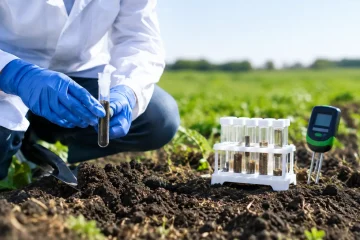
- Water test results for sand, silt, organic matter, iron, and salinity where available
- Pump flow rate, operating pressure, and power source
- Required dripline diameter, wall thickness, emitter spacing, and flow rate
- Surface, buried, or temporary installation method
- Target delivery date, destination, and expected repeat order volume
Water quality deserves special attention. A system using clean, treated water may perform well with a simpler filtration setup. Water drawn from an open canal or sediment-heavy well often requires more substantial media, disc, or screen filtration, along with flushing capacity. Saving money on filtration is rarely a saving if emitters clog halfway through the season.
How to Source Drip Systems From Qualified Suppliers
Source from suppliers that can explain how their components work together. Drip irrigation is a system of connected parts: pump interface, filters, pressure regulation, mainline, submains, valves, dripline, connectors, flush valves, and controls. A quote that covers only the drip tape or dripline is incomplete unless the buyer already has compatible infrastructure.
Search agriculture-focused directories and marketplaces such as Agricial to identify suppliers by irrigation category, location, and product range. Then move quickly from discovery to a structured supplier review. Ask each supplier to quote against the same specification sheet, with technical data and commercial terms separated clearly.
Check supplier capability before requesting final pricing
A credible supplier should be able to provide product data sheets, batch or lot traceability, installation guidance, and clear warranty terms. Manufacturers may offer better technical control and customized specifications, while distributors can provide faster local inventory, easier communication, and replacement parts close to the farm.
| Supplier type | Best suited for | Main advantage | Main trade-off | |—|—|—|—| | Manufacturer | Large projects, private-label programs, repeat procurement | Factory pricing and custom specifications | Higher minimum orders and longer lead times | | Authorized distributor | Farms needing local support and spare parts | Faster delivery and after-sales access | Pricing may be higher than direct factory buying | | Irrigation dealer or installer | Turnkey field projects | Design, installation, and commissioning support | Less control over individual component selection | | Trading company | Multi-country sourcing or consolidated shipments | Broader sourcing reach | Must verify technical knowledge and product origin carefully |
Ask who will handle warranty claims, technical troubleshooting, and replacement parts. This matters more than it appears. A supplier may offer an attractive initial quote but have no local stock of repair couplers, filters, pressure regulators, or matching dripline when a failure occurs.
Compare Dripline Specifications That Affect Field Performance
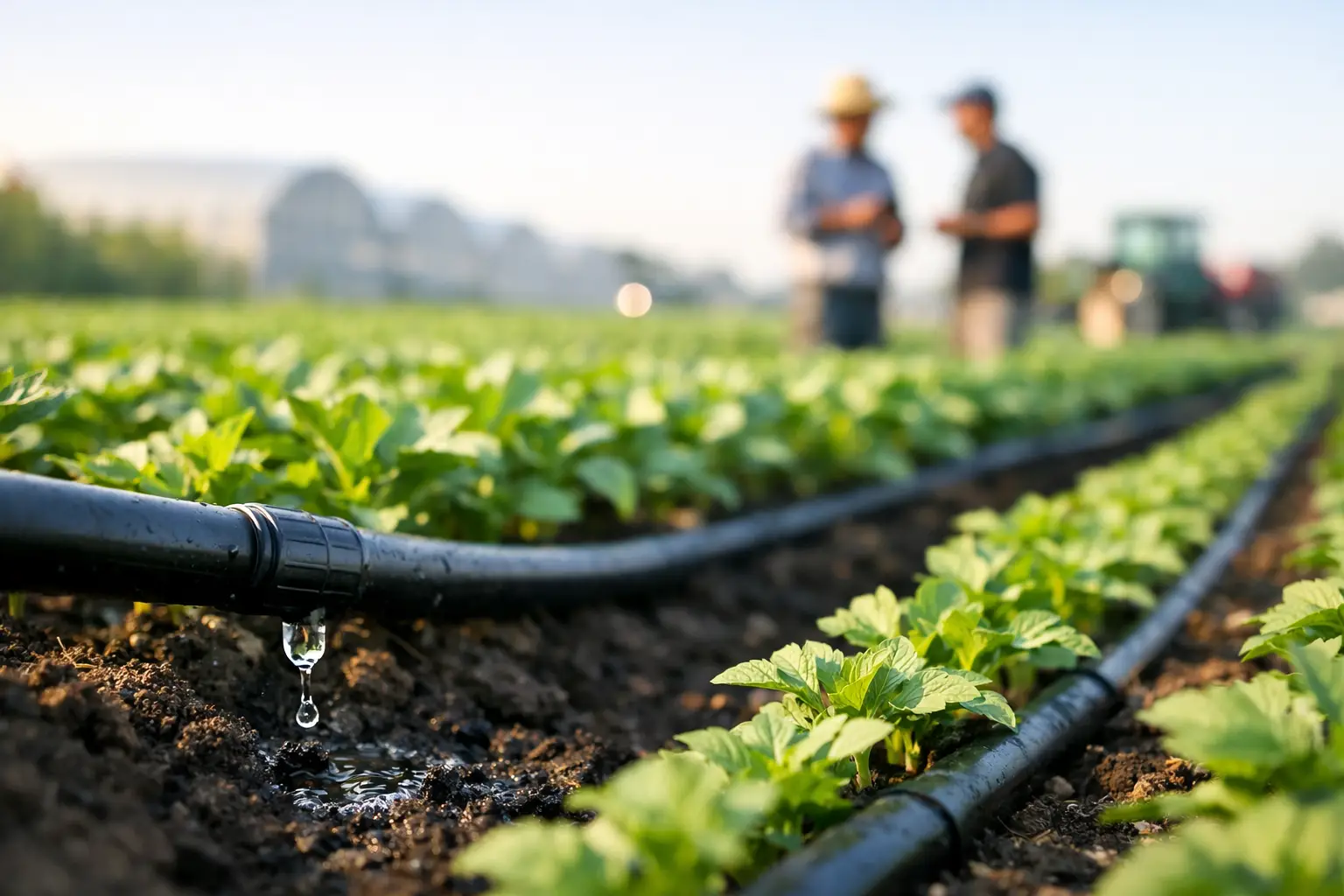
Dripline is often the highest-volume item in the order, but it should not be selected by price per roll alone. Compare the nominal and minimum wall thickness, material grade, emitter design, flow rate, spacing, pressure range, and manufacturing tolerances. If the product is described only as “16 mm dripline” without supporting specifications, request more detail.
| Specification | Why it matters | Typical sourcing decision | |—|—|—| | Wall thickness | Influences durability, puncture resistance, and expected service life | Use heavier walls for multi-season use, rough conditions, or buried lines | | Emitter spacing | Determines how evenly water is distributed along the crop row | Match spacing to crop density, soil texture, and root zone coverage | | Emitter flow rate | Affects application speed and hydraulic design | Balance irrigation duration with available pump capacity | | Pressure-compensating emitters | Maintain more consistent output on uneven terrain or long runs | Worth considering for slopes and variable elevations | | Filtration requirement | Protects emitters from clogging | Match filter micron rating to emitter passage size and water quality | | UV resistance | Reduces degradation in exposed surface installations | Prioritize for seasonal lines exposed to intense sunlight |
There is no universal “best” emitter spacing or flow rate. Closely spaced emitters can improve wetting in sandy soils but increase material cost and total water demand per row. Wider spacing may work in heavier soils where lateral water movement is greater. Ask suppliers to state the hydraulic assumptions behind their recommendation, especially maximum run length and operating pressure at the far end of the line.
Build a Quote That Covers the Complete System
Request an itemized bill of materials rather than a single lump-sum price. This makes it easier to identify missing parts, compare alternatives, and control logistics costs. A complete quote should state unit price, quantities, packaging, minimum order quantity, lead time, shipment terms, payment terms, warranty, and country of origin.
For commercial projects, include the following components in the comparison:
- Filtration units and replacement filter elements
- Pressure regulators, gauges, air-release valves, and backflow protection
- Mainline and submain pipe, valves, takeoffs, connectors, and end closures
- Dripline or drip tape, plus repair fittings and flushing accessories
- Fertigation equipment if nutrients will be injected through the system
- Automation controllers, sensors, and valves when remote management is required
Freight can materially change the landed cost, particularly for bulky pipe and low-density drip tape. Compare cost per acre or per irrigated row, not only the unit price per roll. For international procurement, confirm the shipping dimensions, container loading plan, import documentation, tariff exposure, and whether spare parts will travel with the main shipment.
Verify Quality Before You Commit
Product samples are useful, but a sample alone does not prove that the full order will match. For meaningful quality control, ask for manufacturer identification, production location, current technical sheets, and test records for the specific product line. Where order size justifies it, arrange pre-shipment inspection or require retained production samples from the shipment batch.
Check physical compatibility as well. A nominal diameter from one supplier may not seal reliably with fittings from another. If you are combining components across brands, test the connection under operating pressure before placing a full order. Small mismatches at thousands of takeoffs can create serious leakage and labor costs.
Questions to ask before issuing a purchase order
Ask for the minimum and maximum recommended operating pressure, maximum lateral length under your conditions, filtration recommendation, chemical compatibility, warranty exclusions, and expected field lifespan. Confirm whether quoted thickness is nominal or minimum thickness. Also ask whether the supplier can provide installation and flushing guidance for your exact layout.
Be cautious with vague claims such as “premium virgin resin,” “high flow,” or “long life” unless they are supported by measurable specifications. A practical supplier will answer direct technical questions without avoiding details or pushing an unsuitable standard package.
Plan for Service, Spares, and Repeat Supply
Drip irrigation works best when maintenance is part of procurement. Budget spare connectors, repair couplers, filter elements, gauges, valve components, and enough extra dripline for repairs and field extensions. For large operations, standardizing diameters and fitting families across blocks can simplify inventory and reduce repair time.
If you expect to expand acreage, negotiate continuity of supply early. Confirm whether the same emitter spacing, wall thickness, and fitting design will remain available next season. A low-cost system that cannot be matched later may force unnecessary replacement across the farm.
The strongest sourcing decision is the one that still works when water quality changes, a line needs repair, or the next planting season arrives faster than expected. Buy the system your operation can maintain, replenish, and trust in the field – then build supplier relationships that make every future irrigation purchase easier.