Climate Smart Agriculture for Profitable Farms
A missed planting window, a dry reservoir, or an unexpected heat wave can change a farm’s margin long before harvest. Climate smart agriculture gives producers and agricultural businesses a practical way to respond: improve productivity, use resources more carefully, and reduce exposure to climate-related disruption without losing sight of commercial returns.
For growers, the concept is not a single input, certification, or piece of machinery. It is a decision framework for choosing seeds, irrigation, soil practices, livestock systems, equipment, and market partners that can perform under changing conditions. For suppliers, exporters, and service providers, it is also a growing commercial opportunity to deliver solutions that help farms produce more reliably.
What Is Climate Smart Agriculture?
Climate smart agriculture is an approach to farming that works toward three connected goals: sustainable productivity, adaptation to climate impacts, and lower greenhouse-gas emissions where practical. The priority varies by farm. A water-stressed vegetable operation may focus first on irrigation efficiency, while a livestock business may prioritize feed management, manure handling, and heat-stress protection.
The key word is practical. A farm does not become climate-smart by purchasing the newest technology or changing every practice at once. It becomes more climate-ready when investments are matched to its crop, soil, weather pattern, labor availability, financing, and buyers’ requirements.
The three business outcomes
Climate-smart decisions should support measurable operational outcomes:
- More reliable production: Better seed selection, soil structure, and water management can reduce yield volatility.
- Lower input waste: Precision application and improved scheduling can reduce unnecessary use of water, fertilizer, fuel, and crop protection products.
- Stronger market access: Traceability, consistent quality, and documented practices can help suppliers meet the expectations of processors, retailers, exporters, and institutional buyers.
- Greater resilience: Farms with diversified production, healthier soils, and contingency plans are better positioned to absorb weather and price shocks.
These gains are not automatic. A new irrigation system, for example, may save water but create maintenance needs, filtration requirements, and up-front financing pressure. The right solution is the one that delivers a credible return under local operating conditions.
Climate Smart Agriculture Practices That Deliver Value
The strongest programs usually combine agronomy, equipment, and management rather than relying on one intervention. Start by identifying the farm’s most expensive or frequent source of risk, then select practices that address it directly.
Soil management for water and yield stability
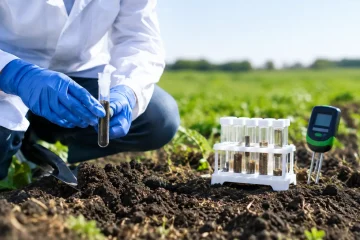
Healthy soil is often the most cost-effective resilience asset a farm can build. Cover crops, reduced tillage, compost or manure applications, crop rotation, and residue management can improve organic matter and infiltration over time. This helps soil hold water during dry periods while reducing erosion during intense rainfall.
The trade-off is timing and management. Cover crops require seed, planting capacity, and a termination plan. Reduced tillage can increase reliance on specialized equipment or require a revised weed-control strategy. Producers should test changes on representative blocks before expanding across the entire operation.
Precision irrigation and water management
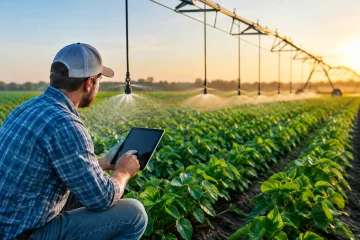
Water efficiency is central to climate smart agriculture in regions facing drought, high pumping costs, or inconsistent rainfall. Drip irrigation, soil-moisture sensors, automated controls, pressure regulation, filtration, and weather-based scheduling can help growers apply water closer to crop demand.
| Solution | Best fit | Commercial advantage | Key consideration | |—|—|—|—| | Drip irrigation | High-value row crops, orchards, vineyards | Delivers water and nutrients near roots | Requires filtration and regular maintenance | | Soil-moisture sensors | Farms with variable soils or costly water | Improves irrigation timing | Readings need correct placement and interpretation | | Variable-rate irrigation | Large fields with distinct management zones | Can reduce overwatering across variable ground | Requires compatible equipment and reliable field data | | Rainwater storage | Seasonal rainfall areas | Adds water security for critical periods | Storage capacity and water-quality controls matter |
For importers and distributors, demand is increasing for complete irrigation packages rather than isolated components. Buyers need compatible pumps, filters, valves, emitters, controls, installation support, and spare parts. Suppliers that clearly document specifications, pressure ranges, material quality, and after-sales support are easier to evaluate and more likely to earn repeat business.
Smarter nutrient management
Fertilizer remains essential for productivity, but applying the right source, rate, timing, and placement can improve crop response while limiting losses. Soil testing, tissue analysis, controlled-release products, fertigation, split applications, and calibrated spreaders all support better nutrient decisions.
A grower should not assume that lower fertilizer use always means better economics. Underapplication can reduce yield and quality, while excessive application wastes money and may create environmental risk. The commercial target is nutrient efficiency: producing more marketable crop per unit of nutrient applied.
Climate-resilient crops and seed choices
Seed selection is one of the earliest and most consequential decisions in a production cycle. Drought tolerance, heat tolerance, disease resistance, maturity length, root strength, and local market preference should all be considered alongside yield potential.
For exporters and seed suppliers, climate-resilient varieties need clear product information. Buyers should be able to compare adaptation zones, days to maturity, disease packages, germination standards, treatment status, storage guidance, and expected management requirements. A variety that performs well in one region may fail commercially in another due to day length, soil type, pest pressure, or buyer specifications.
Comparing Climate-Smart Investments
Not every farm needs the same starting point. The table below helps decision-makers compare common investments by their operational purpose.
| Investment area | Primary benefit | Typical buyer | Adoption challenge | Useful performance measure | |—|—|—|—|—| | Drip irrigation and controls | Water and fertilizer efficiency | Horticulture growers, orchards | Installation cost and maintenance | Water used per acre or per pound produced | | Conservation tillage equipment | Soil protection and fuel savings | Broad-acre crop farms | Equipment fit and weed management | Erosion reduction, fuel use, soil cover | | Weather stations and sensors | Faster field decisions | Farms with weather variability | Data interpretation and connectivity | Fewer spray delays, improved irrigation timing | | Improved seed varieties | Better performance under stress | Crop producers and seed distributors | Local trial validation | Yield stability and quality grade | | Livestock cooling and ventilation | Reduced heat stress | Dairy, poultry, and feedlot operators | Electricity demand and facility design | Mortality, feed conversion, milk yield |
A simple return-on-investment calculation should include more than the purchase price. Estimate installation, labor, energy, maintenance, replacement parts, training, expected savings, yield protection, and quality gains. When benefits depend on rainfall or commodity prices, use conservative, expected, and high-performance scenarios instead of one optimistic projection.
Building a Climate-Smart Sourcing Plan
Reliable sourcing determines whether a promising farm plan works in practice. A supplier may offer an attractive price, but inconsistent specifications, weak technical support, delayed spares, or unclear warranties can turn a cost-saving project into a production risk.
Define specifications before requesting quotes
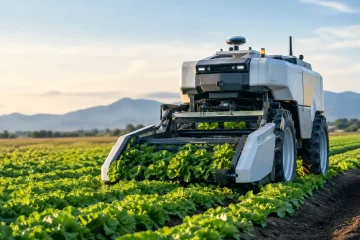
Before contacting vendors, document the operational need. For irrigation, include water source, flow rate, field size, elevation changes, crop type, filtration needs, available power, and target application rate. For machinery, identify working width, tractor horsepower, soil conditions, expected annual use, and access to parts and service.
Clear specifications make quote comparisons meaningful. They also reduce the chance that buyers compare a complete system from one supplier with an incomplete offer from another.
Evaluate partners beyond price
When reviewing suppliers, look for evidence that they understand agricultural operations and can support the product after delivery. Useful questions include whether they provide technical documentation, installation guidance, spare-part availability, training, reference projects, and transparent commercial terms.
For international trade, confirm packaging standards, lead times, export documentation, payment terms, applicable product certifications, and local import requirements early. Delays at this stage can affect planting schedules and seasonal sales windows.
Agricial helps agricultural professionals discover suppliers, compare category-specific offerings, and connect directly with businesses across irrigation, machinery, seeds, fertilizers, livestock, and AgriTech. A focused marketplace can shorten the search process, but buyers should still validate technical fit and commercial terms before placing an order.
Measuring Results Without Overcomplicating the Process
A climate-smart plan needs a baseline. Track a small number of indicators before and after a change, using the same field, production unit, or comparable block whenever possible. Good measures include yield, crop quality, water use, fertilizer use, fuel use, labor hours, input cost per acre, and revenue per acre.
For livestock systems, relevant measures may include feed conversion, mortality, milk output, weight gain, water consumption, and heat-stress events. The objective is not to create paperwork. It is to establish whether a practice protects margin, reduces risk, or improves buyer confidence.
Keep records by season and note unusual events such as drought, flooding, pest outbreaks, or equipment failures. Over several production cycles, these records reveal which investments provide dependable value and which need adjustment.
Where Opportunity Meets Farm Resilience
Climate-smart agriculture works best when it is treated as a business discipline, not a marketing label. Start with the constraint that matters most – water, soil loss, input costs, heat stress, unreliable yields, or buyer requirements – and build from there. A well-chosen improvement can protect the next harvest, strengthen supplier relationships, and give the farm more room to grow when conditions become less predictable.