7 Best Cattle Disease Monitoring Tools Compared
A sick animal rarely announces itself at the right time. A small drop in feed intake, a quieter-than-usual cow, or one animal separating from the group can be the first warning. The best cattle disease monitoring tools help producers turn those subtle changes into actionable alerts before a health issue becomes a treatment cost, production loss, or wider herd risk.
For commercial cattle operations, the right system is not necessarily the one with the most sensors. It is the one that fits the herd size, production model, labor availability, connectivity, and veterinary protocol. Good monitoring supports observation and decision-making. It does not replace a veterinarian, diagnostic testing, or sound stockmanship.
What cattle disease monitoring should detect
Early disease detection works by identifying changes from an animal’s normal baseline. Depending on the tool, those changes may involve body temperature, activity, rumination, feed and water intake, weight gain, milk yield, gait, or social behavior. A single alert is not a diagnosis. It is a prompt to inspect the animal, review its history, and decide whether further assessment is needed.
Monitoring is especially valuable for conditions where speed matters, including respiratory disease in calves and feedlot cattle, mastitis in dairy herds, metabolic disorders around calving, lameness, heat stress, and digestive upsets. It also creates more reliable health records for treatment reviews, welfare audits, and supplier or buyer discussions.
Best cattle disease monitoring tools by application
The most effective programs usually combine hands-on checks with one or two technology layers. The table below compares seven practical tool categories used across beef and dairy production.
| Tool category | Primary health signals | Best fit | Main advantage | Main limitation | | — | — | — | — | — | | Digital thermometers | Fever and abnormal temperature | Sick pens, calves, fresh cows | Low cost and direct measurement | Requires handling and routine labor | | Smart ear tags | Activity, rumination, eating behavior | Dairy and intensively managed beef herds | Continuous individual-animal data | Tag retention and subscription costs vary | | Rumen boluses | Internal temperature, rumination, drinking | High-value dairy, breeding, and research herds | Data is less affected by outside weather | Higher per-animal cost and administration needed | | Walk-over scales | Weight gain and weight loss trends | Feedlots, cow-calf systems, backgrounding | Detects poor performance without gathering cattle | Requires good placement and traffic flow | | Automated feed and water monitoring | Pen-level intake and drinking changes | Feedlots and larger group-housed herds | Flags group problems early | May not identify the affected animal | | Camera and thermal systems | Movement, posture, lameness, surface heat patterns | Dairy lanes, barns, and handling areas | Minimal handling and broad coverage | Results depend on camera setup and validation | | Herd health software | Treatments, symptoms, test results, withdrawal periods | Any operation building formal records | Connects observations to decisions and compliance | Only useful when staff enter consistent data |
1. Digital thermometers and structured visual checks
A digital thermometer remains one of the most dependable tools on the farm. It is inexpensive, easy to verify, and useful when an animal shows clinical signs such as depression, nasal discharge, scours, reduced appetite, or labored breathing. Pair temperature checks with a written observation protocol covering attitude, respiration, manure, appetite, hydration, and mobility.
This approach is often the best starting point for smaller herds or operations with limited connectivity. Its trade-off is labor. It detects illness after someone notices a concern, rather than continuously screening the herd.
2. Smart ear tags for activity and rumination
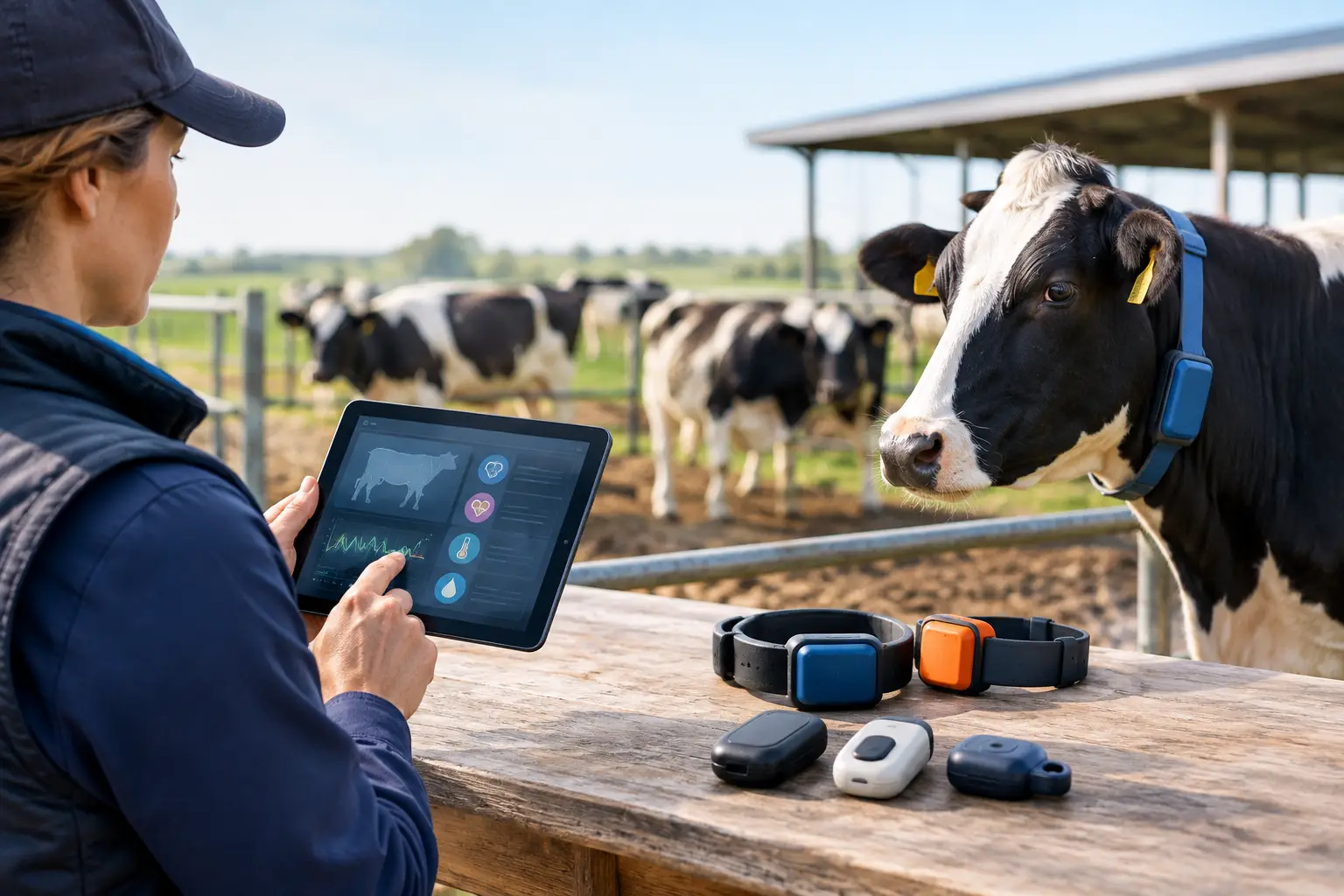
Electronic ear tags can track movement, eating time, rumination, and time spent resting. A cow with mastitis, respiratory illness, digestive trouble, or calving-related stress may show behavior changes before obvious physical signs appear. The system compares current activity with that animal’s usual pattern and sends an exception alert.
These tags are particularly useful where staff cannot watch every animal closely throughout the day. Before buying, ask how alerts are delivered, whether data works offline, how often batteries need replacing, and whether the platform can export records for veterinary review.
3. Rumen boluses for internal health data
Rumen boluses provide an internal view of temperature and, in some systems, rumination or drinking behavior. They can help distinguish a meaningful rise in body temperature from a short-term change caused by hot weather. That makes them appealing for high-value animals, transition cows, or herds where disease events carry substantial economic risk.
The downside is cost and management complexity. Boluses should be selected with veterinary input, particularly when monitoring protocols influence treatment decisions. They are strongest when producers have staff who will review alerts and act quickly.
4. Walk-over scales and growth monitoring
Disease often appears as lost performance before it appears as an obvious sick animal. Walk-over scales capture weight trends when cattle pass through a water point, mineral station, or gate. A sudden slowdown in gain can identify animals or pens that need closer inspection.
This is a practical option for feedlots and backgrounding operations focused on average daily gain. It will not identify a fever or specify a disease, but it can reveal the production impact of health problems earlier than periodic manual weighing.
5. Feed and water intake monitoring
When several cattle reduce feed or water intake, the cause may be health-related, environmental, nutritional, or equipment-related. Automated bunk, feed delivery, and water monitoring helps managers see those changes at the pen level. It is valuable for catching a developing respiratory challenge, heat stress event, spoiled feed issue, or water system failure.
Pen data should trigger a physical check, not an automatic medical response. If intake falls, review weather, ration changes, water flow, stocking density, and animal behavior alongside health records.
6. Camera and thermal monitoring systems
Camera systems can identify reduced movement, altered posture, crowding, time at feed bunks, and gait changes. Thermal imaging may show unusual surface-temperature patterns around udders, feet, or faces. In dairy barns, these tools can support lameness screening and fresh-cow observation without bringing cattle into a chute.
Performance depends heavily on installation. Dust, lighting, mud, animal density, and camera angle all affect data quality. Request evidence from operations similar to yours instead of relying only on a software demonstration.
7. Herd health software and diagnostic records
Software is the operating layer that makes monitoring data useful. It brings together treatment histories, vaccination dates, lab results, calving records, mortality, withdrawal periods, and sensor alerts. For multi-site businesses, it also creates a consistent way to compare health performance across locations and staff teams.
Choose software that works with the records your team already uses. A complicated platform with incomplete data is less valuable than a simple system used every day. Reporting should make it easy to review treatment outcomes, recurring disease patterns, and supplier documentation.
How to choose the right monitoring system
Start with the disease risk that costs your operation the most. A dairy with recurring mastitis and transition-cow problems may prioritize rumination, milk data, and fresh-cow alerts. A feedlot managing bovine respiratory disease may get more value from activity tags, pen-level intake data, and consistent pull-pen records. A cow-calf operation may need durable, low-maintenance tools that work across large pasture areas.
Evaluate suppliers against four practical questions:
- Does the system identify individual animals, pens, or both?
- Can your team receive and respond to alerts during normal work hours?
- Will the equipment operate reliably with your power and internet conditions?
- Can data be shared with your veterinarian, nutritionist, and management team?
Total cost matters more than the device price. Include tags or boluses, gateways, software subscriptions, installation, replacement parts, staff training, and the time required to investigate alerts. Request a pilot period where possible, then compare detection rates, false alerts, labor savings, and health outcomes before scaling across the herd.
Build a response plan before the alerts arrive
A monitoring tool creates value only when it leads to a repeatable response. Assign responsibility for checking alerts, set thresholds for animal inspection, and establish when to take temperature, isolate an animal, contact a veterinarian, or collect a diagnostic sample. Record what was found after each alert. That feedback helps refine settings and separates meaningful signals from routine variation.
For businesses sourcing equipment internationally, prioritize suppliers that can provide installation guidance, warranty terms, compatible data services, and ongoing technical support in your operating region. Agricial can help agricultural buyers compare specialized livestock technology providers and connect with suppliers that match their production requirements.
The strongest disease-monitoring investment is one that gives your team more time to see the animals that need attention most. Start with a clear health objective, test the technology under real farm conditions, and let disciplined follow-up turn data into better cattle care and stronger business results.