Top Livestock Equipment Vendors: How to Compare
A failed waterer, a poorly sized handling system, or an unavailable replacement part can cost more than the original equipment purchase. That is why comparing top livestock equipment vendors is not simply a matter of finding the lowest quote. For commercial farms, distributors, and importers, the right vendor supports animal welfare, labor efficiency, biosecurity, and long-term operating margins.
The best choice depends on your species, herd size, climate, production model, and access to local technical support. A dairy operation upgrading milking infrastructure has different requirements than a beef producer purchasing cattle panels or a poultry integrator sourcing ventilation controls. The goal is to identify suppliers whose products, service model, and commercial terms match the realities of your operation.
What Separates Leading Livestock Equipment Vendors
A strong livestock equipment vendor does more than sell gates, feeders, fans, or stalls. It provides accurate specifications, dependable lead times, clear warranty terms, and support after installation. This is particularly important for equipment that affects daily animal care or production continuity.
Top vendors commonly combine broad product availability with expertise in a specific livestock segment. Some specialize in high-capacity dairy systems, while others are better positioned for modular cattle handling equipment, poultry house automation, or swine feeding systems. A supplier with a large catalog may simplify procurement, but a specialist can offer deeper technical guidance for complex projects.
When screening vendors, assess these commercial fundamentals:
- Product specifications that clearly state dimensions, materials, capacity, power requirements, and compatible components
- Documented quality controls and relevant safety, electrical, or animal-welfare compliance information
- Parts availability, installation support, and response times for maintenance issues
- Transparent lead times, freight terms, minimum order quantities, and export documentation
- References or verified business information that demonstrate experience in your target market
For international buyers, communication quality is also a practical indicator. A vendor should be able to explain packaging, delivery schedules, spare-parts policies, payment terms, and the documents required for cross-border shipments without ambiguity.
Top Livestock Equipment Vendors by Equipment Category
Rather than treating every vendor as interchangeable, compare them by the equipment category that has the greatest effect on your operation. The table below shows what to prioritize when evaluating common livestock equipment suppliers.
| Equipment category | Common products | What to compare first | Main business risk | |—|—|—|—| | Cattle handling | Chutes, head gates, panels, scales, loading ramps | Animal flow, operator safety, steel gauge, modularity | Poor fit can increase stress, injuries, and labor time | | Dairy systems | Milking parlors, cooling tanks, stalls, manure systems | Throughput, cleaning requirements, service coverage, integration | Downtime can directly affect milk quality and revenue | | Poultry equipment | Feeders, drinkers, ventilation, heating, controllers | House size compatibility, energy use, automation, sanitation | Uneven climate control can reduce flock performance | | Swine equipment | Crates, feeders, drinkers, flooring, ventilation | Corrosion resistance, hygiene, animal-stage design | Difficult cleaning can raise disease-management costs | | Feeding and watering | Troughs, mineral feeders, automatic waterers, silos | Capacity, freeze protection, cleaning access, replacement parts | Interrupted feed or water access affects animal performance | | Fencing and housing | Electric fencing, shelters, gates, pens, shade structures | Weather resistance, installation requirements, expansion options | Low-grade materials can create frequent repair expenses |
Cattle and Beef Equipment Suppliers
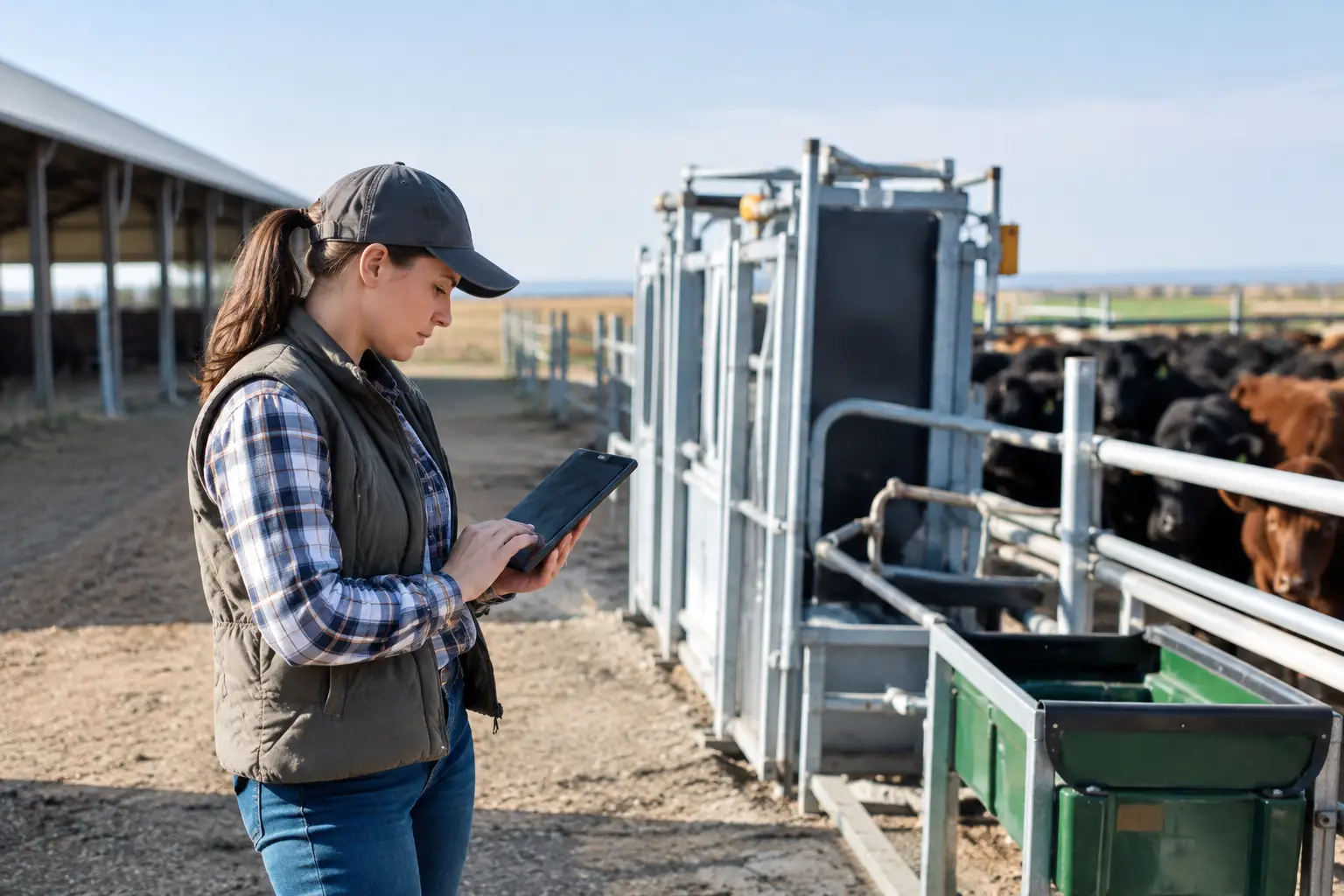
For beef operations, equipment needs often center on safe movement, sorting, weighing, feeding, and pasture management. The best vendors understand how cattle move through an alley, crowding tub, chute, or loading area. A system that looks efficient on paper can create bottlenecks if its layout does not fit the animals, handling crew, or available site space.
Ask vendors whether panels, gates, scales, and chutes can be expanded or reconfigured as the herd grows. Galvanized steel, strong weld quality, and easily replaceable hardware matter in high-use handling areas. If the equipment will be installed in a region with severe winters or high humidity, confirm the coating standard and corrosion warranty.
Dairy Equipment Suppliers
Dairy equipment purchases have high operational stakes because milking, cooling, sanitation, and manure handling are closely connected. A vendor should be able to calculate equipment capacity based on herd size, milking frequency, labor availability, and future expansion plans.
Do not compare a milking system only by upfront price. Consider cleaning cycles, water use, milk cooling performance, software compatibility, technician availability, and the cost of consumables. A lower-cost system may be a smart investment for a smaller dairy, but only if qualified service and spare parts are accessible when needed.
Poultry and Swine Equipment Suppliers
Poultry and swine production depends heavily on consistent environmental control. Feeding, drinking, ventilation, lighting, heating, cooling, and monitoring equipment work as a system, not as isolated purchases. Suppliers that can provide coordinated specifications across these systems may reduce installation conflicts and improve performance tracking.
For these facilities, ask detailed questions about sensor accuracy, controller reliability, backup power compatibility, cleaning procedures, and component life under dusty or humid conditions. Imported automation equipment can deliver valuable efficiency gains, but local commissioning support should be part of the buying decision.
How to Compare Vendors Beyond the Initial Quote
An equipment quote is only the starting point. A useful comparison evaluates total ownership cost over the expected service life of the equipment. This includes installation, freight, duties, electrical or plumbing modifications, training, maintenance, spare parts, and expected downtime.
| Evaluation factor | Questions to ask | Why it matters | |—|—|—| | Total landed cost | Does the quote include freight, packaging, insurance, and import documentation? | Prevents unexpected costs after purchase approval | | Installation | Who installs the equipment, and what site preparation is required? | Poor installation can shorten equipment life | | Service support | Is there a local technician, distributor, or remote support process? | Reduces production losses during breakdowns | | Spare parts | Which wear parts should be stocked, and what are normal delivery times? | Keeps critical systems operating during peak periods | | Warranty | What is covered, for how long, and who handles claims? | Clarifies the buyer’s risk after delivery | | Scalability | Can the system expand with herd growth or facility upgrades? | Protects the investment as the business develops |
Price still matters, especially for distributors serving competitive markets. However, the lowest quote is not necessarily the lowest-cost option. A durable feeder with readily available replacement parts may outperform a cheaper unit that requires full replacement after a few seasons. Similarly, a vendor with slightly higher freight costs may be preferable if it provides better packaging, accurate documents, and fewer shipment delays.
Build a Shortlist That Matches Your Operation
Start by defining the practical problem you need to solve. For example, are you reducing labor at feeding time, improving water access in winter, increasing dairy throughput, or upgrading biosecurity controls? A precise requirement produces better supplier conversations than a broad request for “livestock equipment.”
Next, prepare a short procurement brief with your livestock type, head count, site dimensions, climate conditions, power supply, target budget, required delivery date, and destination market. Include photos or a simple layout for facility-specific equipment such as pens, ventilation systems, milking rooms, and feeding lines.
Request comparable quotes from several qualified suppliers. To make the comparison fair, ask each vendor to quote the same capacity, material standard, accessories, delivery terms, and warranty period. If one quote appears much lower, check whether it excludes installation hardware, controls, freight, or essential parts.
A dedicated agriculture marketplace can make this early research faster by bringing specialized suppliers into one searchable environment. Agricial helps buyers compare relevant agricultural businesses and make direct inquiries without relying on a general-purpose directory where equipment expertise can be difficult to verify.
Questions That Reveal Vendor Quality
Before committing to a supplier, move beyond catalog claims. Ask how the equipment performs in conditions similar to yours and whether the vendor can provide technical drawings, operating manuals, installation requirements, and a recommended spare-parts list.
For larger projects, request a clear commissioning plan. This should identify who is responsible for site readiness, delivery inspection, assembly, testing, training, and post-installation support. If the equipment includes automation, confirm how software updates, remote diagnostics, and control-system failures will be handled.
It also helps to ask about limitations. A credible vendor will explain where a product is not the best fit, such as a waterer that is unsuitable for extreme freezing conditions or a ventilation design that requires a tightly sealed building. Honest constraints are often a stronger signal than broad promises.
Make the Purchase Decision With Long-Term Use in Mind
The best livestock equipment vendor is the one that helps your operation perform reliably after the equipment arrives, not just the one that responds fastest to an inquiry. Match product capacity to real production needs, evaluate service access before ordering, and keep the total cost of ownership in view.
A careful vendor comparison gives your business more than a better purchase price. It creates a stronger foundation for safer animal handling, more consistent output, and equipment decisions that continue to pay back as your operation grows.