Top Agricultural Consulting Services to Know
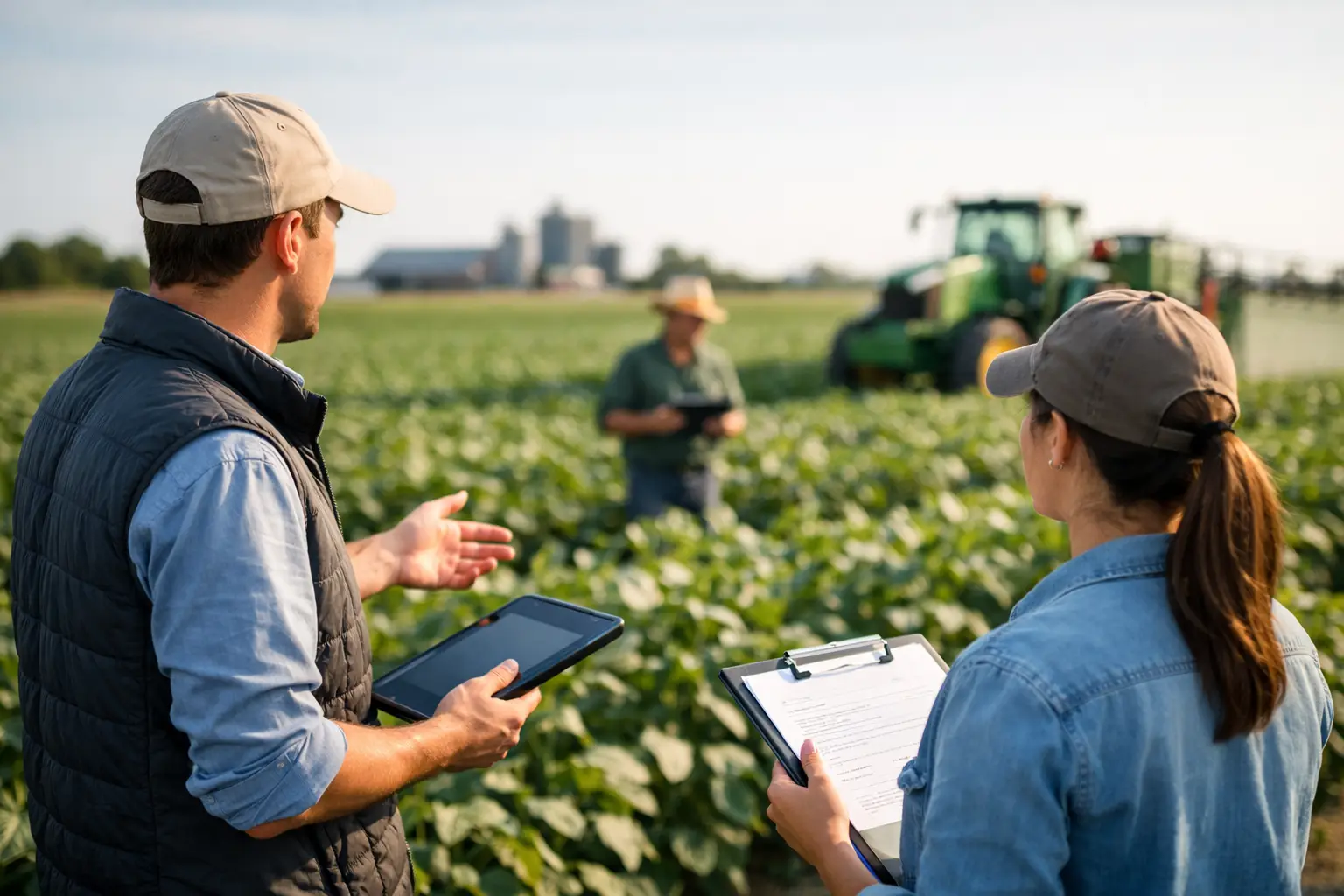
A fertilizer program that works in one region can cut yield in another. An irrigation upgrade that looks efficient on paper can miss the economics of local water pricing, labor, and crop mix. That is why top agricultural consulting services matter – not as a luxury, but as a practical business tool for farms, exporters, input suppliers, processors, and agribusinesses that need better decisions with less trial and error.
The right consultant helps reduce risk, improve output, and speed up execution. The wrong one adds reports, meetings, and expense without changing results. For agricultural businesses operating across markets, seasons, and regulations, choosing well is part of protecting margin.
What top agricultural consulting services actually cover
Agricultural consulting is a broad category, and that is exactly why buyers need to be specific. Some firms are field-first and agronomy-led. Others focus on engineering, compliance, livestock systems, trade, or commercial strategy. The best fit depends on the problem you need solved.
At the farm level, consultants often support soil fertility planning, crop nutrition, pest and disease management, irrigation design, precision agriculture, and yield improvement. In livestock operations, the work may center on ration optimization, biosecurity, housing systems, herd health planning, waste handling, and productivity benchmarking.
For agribusinesses, consulting often moves beyond production. It can include sourcing strategy, supply chain mapping, export documentation, market entry, sustainability certification, processing efficiency, and capital project planning. A seed supplier, for example, may need channel strategy and trial design. A grower cooperative may need water-use planning and post-harvest handling advice. An importer may need quality protocol support before signing a supply contract.
How to evaluate top agricultural consulting services
The strongest consulting engagements start with a narrow question. If your issue is irrigation uniformity, you do not need a general presentation on sustainability. If your goal is exporting fresh produce into a new market, broad agronomy support will not solve your customs, residue, and cold-chain risks.
A good consultant usually shows value in three ways: technical accuracy, commercial relevance, and implementation support. Technical knowledge matters, but agriculture is full of advice that is scientifically correct and financially unhelpful. The best advisors connect recommendations to cost, labor, timing, infrastructure, and expected return.
Signs a consulting service is worth shortlisting
Look for providers that can explain their method clearly. They should be able to define the problem, describe how they gather data, outline the likely options, and show how success will be measured.
The most credible firms also understand local conditions. That does not always mean they must be local, but they should know how to work with regional climate patterns, crop calendars, market standards, and regulatory requirements. Global experience is valuable, but generic advice rarely performs well on the ground.
Red flags to watch
Be cautious when a consulting firm promises yield gains before seeing your operation. Agriculture has too many variables for guaranteed outcomes. Weather, soil variation, labor quality, input timing, and market shocks all affect results.
Another red flag is overdependence on a single product or vendor. Some advisors are excellent and still have commercial bias. That does not automatically disqualify them, but you should know whether the recommendation serves your business or a sales target.
Types of top agricultural consulting services by business need
The table below helps match service categories to common commercial goals.
| Consulting service | Best for | Typical deliverables | Main advantage | Trade-off |
|---|---|---|---|---|
| Agronomy consulting | Crop producers, orchards, seed trials | Soil plans, nutrient programs, pest strategies, field audits | Direct impact on yield and input efficiency | Results depend heavily on execution and season |
| Irrigation and water management | Farms, greenhouses, estates, project developers | System design, water budgeting, pump sizing, uniformity analysis | Can reduce water waste and improve crop consistency | Upfront investment can be high |
| Livestock consulting | Dairy, poultry, beef, feedlots, integrators | Ration plans, housing advice, herd performance reviews | Improves productivity and animal health planning | Benefits vary with genetics and management discipline |
| Compliance and certification consulting | Exporters, packers, processors, commercial farms | Audit preparation, traceability systems, certification roadmaps | Supports market access and buyer confidence | Can become paperwork-heavy if poorly managed |
| AgriTech and precision farming advisory | Medium to large farms, input companies, machinery dealers | Sensor strategy, data analysis, equipment integration | Better visibility into field performance | Tools can be expensive and underused |
| Market and trade consulting | Exporters, importers, processors, distributors | Market entry plans, buyer requirements, supply chain reviews | Helps reduce commercial and logistics risk | Success depends on timing and partner quality |
Top agricultural consulting services for crop operations
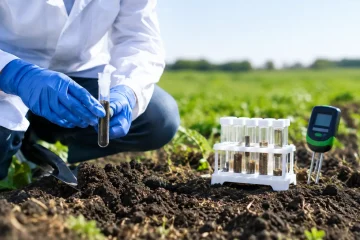
For crop-focused businesses, agronomy remains the core service line. This includes soil sampling strategy, fertility planning, variety selection, plant protection programs, and harvest timing. In high-value crops, consultants may also work on residue management, irrigation scheduling, and packhouse coordination.
The strongest crop consultants do not just recommend more inputs or newer products. They work backward from the target market, expected price, and field conditions. That may mean pushing for higher yield in one block and lower-cost stability in another. It depends on crop value, contract terms, weather risk, and available labor.
For commercial farms, precision agriculture consulting can add value when there is enough scale and discipline to use the data. Variable-rate application, satellite imagery, sensor integration, and machinery mapping can sharpen decisions, but only if someone translates the information into action. Technology without operational follow-through usually becomes an expensive dashboard.
Top agricultural consulting services for irrigation and infrastructure
Water management is one of the most commercially sensitive areas in agriculture. Poorly designed systems waste energy, reduce uniformity, and create avoidable crop stress. Strong irrigation consultants evaluate source capacity, pressure, layout, filtration, distribution, and maintenance planning.
This service is especially valuable for orchards, vegetables, protected cultivation, and regions facing water scarcity or rising pumping costs. Engineering support can also extend into drainage, fertigation systems, water storage, and automation.
Not every operation needs a full redesign. Sometimes the better investment is a targeted system audit that identifies pressure loss, emitter inconsistency, or scheduling errors. A smaller intervention can produce a faster return than a major installation.
Top agricultural consulting services for livestock businesses
Livestock consulting is most useful when performance is already being measured. Feed conversion, mortality, milk yield, weight gain, breeding results, and housing conditions all provide a starting point for improvement.
Good livestock advisors balance productivity with animal welfare, disease control, and cost management. In poultry and dairy in particular, small changes in ventilation, feed formulation, stocking density, or water access can materially affect margins.
There is also a growing need for manure management and environmental compliance support. As regulations tighten and buyer scrutiny increases, livestock businesses need systems that stand up operationally and commercially, not just technically.
Commercial and export-focused consulting services
Many agricultural businesses do not fail because they cannot produce. They fail because they cannot sell consistently at the right quality, into the right market, with the right documentation and logistics. That is where trade and commercial consulting can be a serious advantage.
These services often include buyer requirement mapping, product specification alignment, pricing strategy, export readiness reviews, quality assurance planning, and supplier qualification. For businesses expanding into unfamiliar geographies, this can reduce the cost of avoidable mistakes.
A marketplace-driven approach can also help companies compare providers faster. Platforms such as Agricial bring together agricultural service providers, suppliers, and commercial partners in one agriculture-specific environment, which makes early-stage discovery more efficient than searching through general directories.
Questions to ask before hiring a consultant
Before signing, ask how the consultant defines success. Ask what data they need, what timeline they expect, and what decisions they will help you make. If the answer stays abstract, the project may stay abstract too.
It also helps to ask whether implementation support is included. Some firms are excellent diagnosticians but leave execution to the client. Others stay involved through training, supplier coordination, or performance tracking. Neither model is automatically better, but you should know what you are buying.
Finally, clarify independence, reporting format, and cost structure. A lower consulting fee is not necessarily cheaper if it leads to weak recommendations, delayed action, or unnecessary capital spend.
Choosing the right service for your operation
The best choice is usually not the biggest consulting firm or the broadest package. It is the service that matches your current constraint. If your issue is crop inconsistency, start with agronomy. If margins are being eroded by water and energy costs, start with irrigation. If your expansion depends on audits and export buyers, focus on compliance and market access.
Agriculture moves on timing. A useful consultant helps you make better decisions before the season closes, before the shipment is rejected, and before the wrong investment becomes permanent. That is where real value shows up – not in the proposal, but in the results you can measure six months later.