Rethink Soybean Planting Order to Boost Farm Yields
A University of Illinois researcher urges farmers to reverse traditional planting order. Starting with weaker fields may lift overall soybean yields and ROI.
A Strategic Shift in Soybean Planting
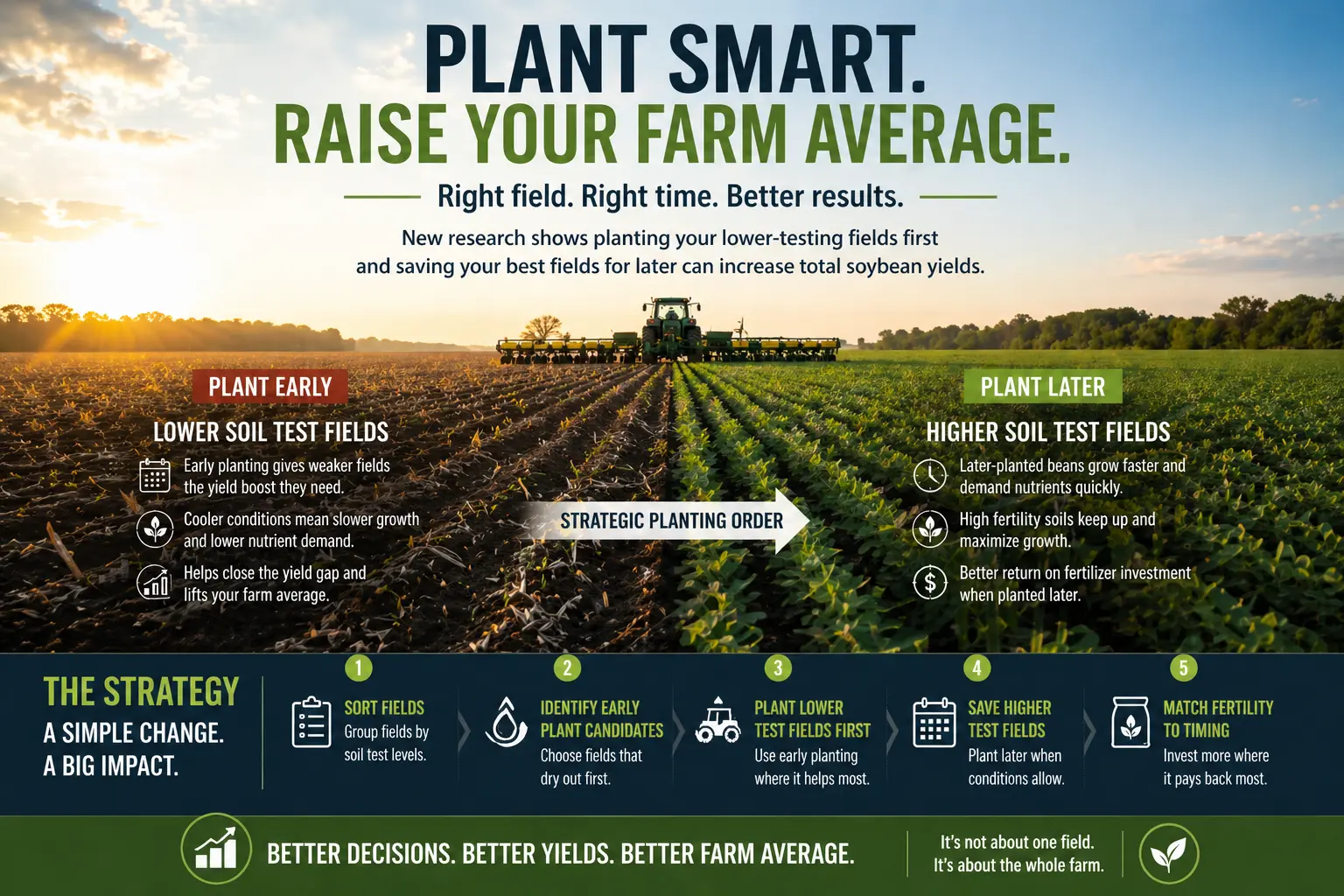
Farmers often begin soybean planting on their most fertile fields. However, Connor Sible from University of Illinois suggests flipping that approach. His research indicates that prioritizing lower soil-testing fields early in the season can improve total farm productivity—not just yields from individual plots.
When multiple fields are ready for planting in early spring, Sible recommends starting with those that typically underperform due to lower soil fertility. Higher-testing fields, he says, should be planted later.
Key Insight: Timing Meets Soil Fertility
Sible’s recommendation is based on long-term field research examining how planting timing interacts with soil conditions and crop performance.
| Factor | Early-Planted Soybeans | Late-Planted Soybeans |
|---|---|---|
| Soil Conditions | Cooler, wetter | Warmer, drier |
| Growth Rate | Slow initial development | Rapid growth |
| Nutrient Demand | Gradual uptake | High, fast uptake |
| Best Field Type | Lower soil-testing fields | Higher soil-testing fields |
This relationship between growth speed and nutrient demand is central to the strategy.
Why Early and Late Soybeans Perform Differently
Soybeans planted early—typically in April or early May—benefit from longer growing seasons and tend to produce higher yields. However, their early-stage growth is slow due to cooler temperatures and limited sunlight. This means:
- Nutrient uptake happens gradually
- Soil can often supply sufficient nutrients, even in weaker fields
- Additional fertilizer may not significantly improve results
In contrast, soybeans planted later—late May through June—develop under warmer conditions with more sunlight. These crops:
- Grow quickly and demand nutrients at a faster rate
- Respond more strongly to higher soil fertility
- Show better returns on fertilizer investments
Because of this, Sible argues that high-fertility fields should be reserved for later planting windows, where their nutrient-rich conditions can support rapid crop development.
How to Apply This Planting Strategy
Sible acknowledges that field conditions—especially moisture—often dictate planting order. However, when multiple fields are ready, growers can make more strategic decisions.
Step-by-Step Approach
1. Categorize Fields by Soil Fertility
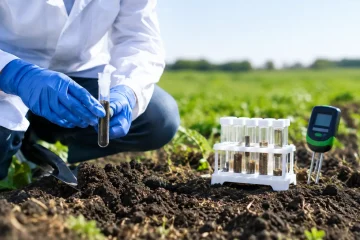
Group soybean fields based on soil test results, focusing on key nutrients like phosphorus and potassium.
2. Identify Early-Ready Fields
Determine which fields dry out first by evaluating drainage, soil type, and residue levels.
3. Prioritize Weaker Fields First
When planting begins, start with lower-testing fields that typically produce lower yields.
4. Delay High-Fertility Fields
Schedule higher-testing fields for later planting, especially if delays push planting into late May or June.
5. Adjust Fertilizer Strategy Accordingly
- Use minimal additional fertilizer for early-planted soybeans unless deficiencies are clear
- Invest more confidently in fertilizer for late-planted crops in high-testing fields
A Farm-Wide Perspective on Yield
Sible emphasizes that the goal is not to maximize output from a single field, but to improve performance across the entire farm. This requires a shift in mindset:
- Instead of enhancing already strong fields, focus on improving weaker ones
- Use early planting as a tool to lift underperforming areas
- Align planting timing with soil fertility to maximize efficiency
While late-planted soybeans may not always achieve the highest absolute yields, their relative performance—and the return on fertilizer use—can improve when matched with high-fertility soils.
A Low-Cost Change With Potential Gains
One of the most appealing aspects of this strategy is its simplicity. It doesn’t require new equipment or additional inputs—just a reordering of planting priorities.
For farmers managing tight margins, this approach offers a practical way to optimize both yield and input efficiency. As Sible explains, the real opportunity lies in improving the farm average, not just winning yield contests on individual fields.
Research-Backed Recommendations
Sible presented these findings during the 2026 Crop Management Conference, highlighting more than a decade of supporting data. His work reinforces a key principle: aligning planting timing with soil conditions can unlock better overall results.
By rethinking when and where soybeans are planted, growers can make more informed decisions that benefit the entire operation.