Irrigation Pumps vs Drip Tape: What Comes First?
A grower planning 100 acres of vegetables may ask whether to invest first in a pump or in drip tape. The practical answer is that irrigation pumps vs drip tape is not a true either-or decision. A pump moves and conditions water; drip tape applies it at the crop row. One cannot replace the other in a pressurized drip irrigation system.
The real purchasing question is how to match the water source, pump capacity, filtration, pressure regulation, mainlines, and tape specifications to the crop and field layout. Getting that sequence right helps farms avoid uneven irrigation, burst tape, poor fertilizer distribution, and unnecessary energy costs.
Irrigation Pumps vs Drip Tape: Core Differences
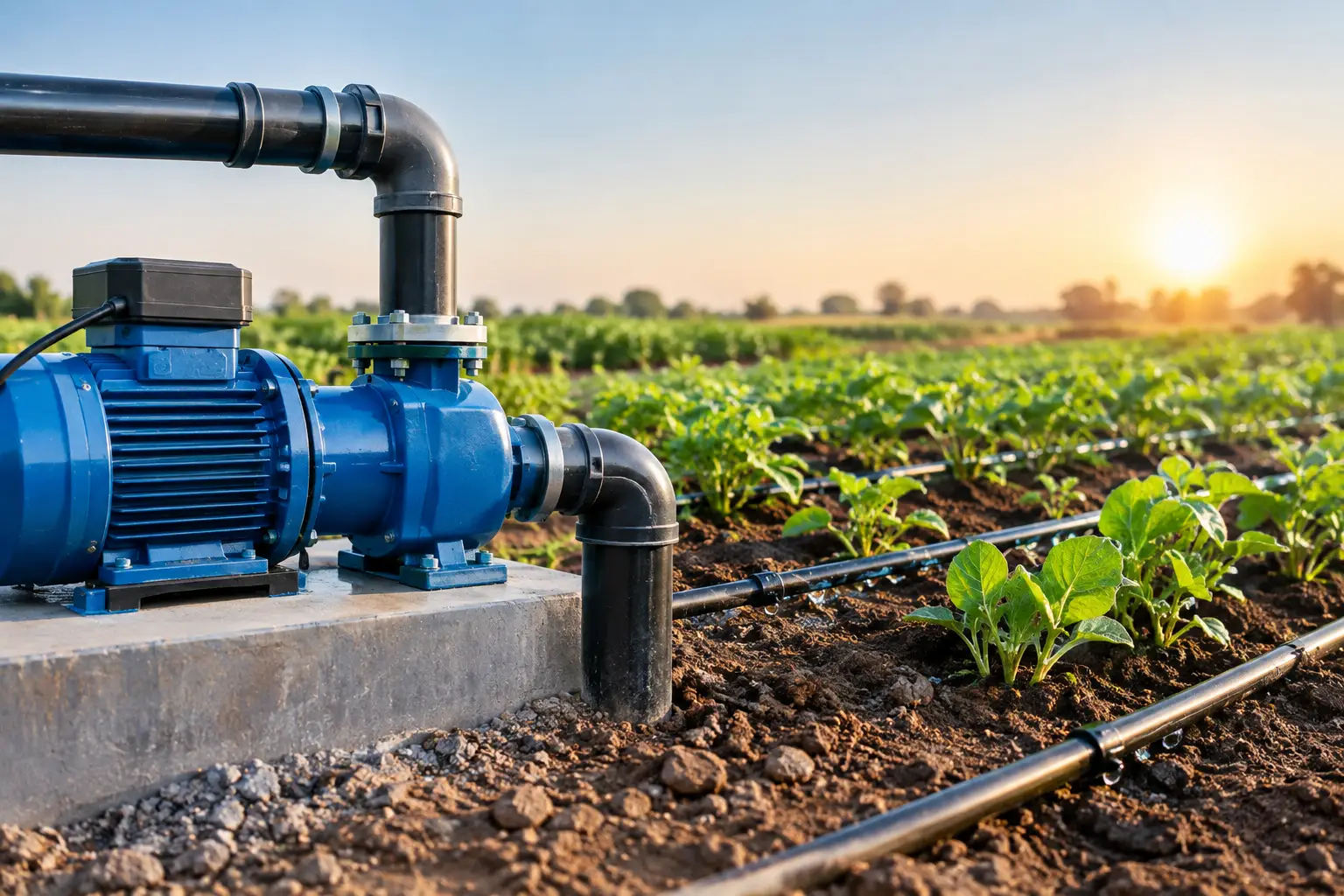
Irrigation pumps are mechanical units that lift or move water from a well, canal, reservoir, pond, or storage tank into an irrigation network. They are selected around flow rate, total dynamic head, power source, efficiency, and water quality.
Drip tape is a thin-wall polyethylene lateral line with built-in emitters. It delivers measured amounts of water close to the root zone. Most commercial drip tape is seasonal or short-term, although heavier-wall products may serve multi-season applications when managed carefully.
| Factor | Irrigation Pump | Drip Tape | |—|—|—| | Main role | Moves water through the system | Delivers water to crop rows | | Typical location | At the water source or pump station | Along planted rows | | Primary buying criteria | Flow, pressure, head, energy use | Wall thickness, emitter spacing, flow rate | | Lifespan | Often many years with maintenance | Usually one season or limited reuse | | Risk if undersized | Low pressure and uneven application | Insufficient wetting or poor row coverage | | Risk if oversized | Excess energy use, pressure damage | Excess application and higher input cost |
A pump creates the hydraulic capacity for the system. Drip tape uses that capacity efficiently. Between them, filters and pressure regulators protect the tape and maintain the operating conditions specified by the manufacturer.
Start With the Irrigation Design, Not the Product Catalog
Commercial buyers often lose time by pricing pumps and drip tape separately before calculating the full system requirement. The better approach is to begin with crop demand and field hydraulics.
First, determine the irrigation block size. A 10-acre block irrigated at one time requires a different pump flow than a 40-acre block, even when both use the same tape. Then consider the crop, planting geometry, soil texture, slope, water source elevation, and expected irrigation hours per day.
For example, closely spaced onions may need tape with tighter emitter spacing than processing tomatoes. Sandy soil may require shorter, more frequent sets because water moves downward quickly. A sloped field may need pressure-compensating dripline or carefully designed pressure zones to keep application uniform.
The Pump Must Meet Flow and Pressure Requirements
Pump selection is based on two linked measurements: flow and total dynamic head. Flow is commonly measured in gallons per minute. Total dynamic head combines the vertical lift from the water source, friction losses through pipe and filters, and the pressure needed at the drip tape.
A pump that supplies adequate gallons per minute but too little pressure may leave distant rows under-watered. A high-pressure pump without correct regulation can rupture tape, stress fittings, and create uneven emitter discharge.
For many drip systems, the tape itself operates at relatively low pressure. However, the pump must overcome system losses before that water reaches the field. This is why the pump station should be specified from a hydraulic plan rather than from tape pressure alone.
Drip Tape Must Match the Crop and Season
Drip tape selection is more than choosing a roll length. Buyers should compare wall thickness, emitter spacing, emitter flow rate, inside diameter, maximum run length, and recommended operating pressure.
Thin-wall tape can be cost-effective for annual row crops when installation and retrieval are managed efficiently. Heavier tape can make sense where reuse is planned, fields are rough, wildlife damage is common, or mechanical handling is demanding. The lowest price per roll is not always the lowest cost per acre if tape breaks frequently or delivers uneven water late in the season.
When to Prioritize the Pump Investment
A pump deserves early attention when the farm is developing a new water source, expanding irrigated acreage, converting from flood irrigation, or installing a centralized fertigation system. In these cases, the pump station sets the ceiling for future irrigation capacity.
Prioritize pump performance when:
- Water must be lifted from a deep well, canal, or low reservoir.
- Multiple irrigation blocks may operate simultaneously.
- Electricity, diesel, or solar energy cost is a major operating concern.
- Water quality requires substantial filtration and flushing capacity.
- The operation plans to add more acreage in future seasons.
A properly sized, efficient pump can reduce energy use over many seasons. Variable-frequency drives may also be valuable on operations with changing flow requirements, although their economic case depends on run hours, power pricing, and the complexity of the irrigation schedule.
When Drip Tape Deserves More Attention
Drip tape becomes the key decision when the pumping infrastructure already has sufficient capacity but the crop program is changing. This is common for farms moving into higher-value vegetables, berries, seed production, nurseries, or specialty crops where precise water and nutrient placement affects marketable yield.
Focus on tape design when row spacing, planting density, or soil variability changes across fields. Emitter spacing should support a continuous wetted pattern appropriate for the soil, not simply match what was used on a previous crop. On sandy ground, closer spacing may be needed. On heavier soils, wider spacing can sometimes perform well, provided irrigation scheduling is adjusted.
Tape also affects fertigation performance. Uniform emitters help distribute soluble nutrients consistently, but that result depends on clean water, correct filtration, and sufficient flushing. No tape specification can compensate for clogged emitters caused by untreated sediment, algae, mineral deposits, or organic debris.
The Missing Components Between Pump and Tape
A reliable drip system includes more than a pump and laterals. Buyers should treat the following equipment as part of the same sourcing package:
- Filtration sized for the water source and required flow.
- Pressure regulators to protect tape and maintain emitter performance.
- Mainlines, submains, valves, and fittings matched to zone flow.
- Fertilizer injection equipment with backflow protection.
- Flush valves or line ends for removing sediment from laterals.
- Pressure gauges and flow meters for daily system checks.
Skipping these components can make a competitively priced system expensive to operate. A blocked filter, leaking fitting, or missing pressure gauge can compromise an entire irrigation block before visible crop stress appears.
Cost Comparison for Commercial Buyers
The cost profile is different because pumps and drip tape serve different investment horizons. A pump is capital equipment with installation, energy, maintenance, and potential repair costs. Drip tape is usually a recurring seasonal expense, along with labor for installation, retrieval, and disposal or recycling.
| Cost Area | Pump Considerations | Drip Tape Considerations | |—|—|—| | Upfront cost | Equipment, controls, foundations, intake setup | Rolls, connectors, headers, installation tools | | Ongoing cost | Energy, seals, bearings, servicing | Seasonal replacement, labor, disposal or recycling | | Efficiency opportunity | Correct sizing and pump curve selection | Appropriate wall thickness and row design | | Procurement risk | Incompatible flow/head specification | Incorrect emitter spacing or insufficient durability |
For importers, distributors, and farm purchasing teams, compare complete technical data sheets rather than broad product labels. Ask suppliers for pump curves, motor details, recommended operating ranges, tape flow tables, filtration requirements, and warranty terms. Confirm whether quoted products are compatible with local voltage, fuel availability, water conditions, and field connections.
A Practical Sourcing Sequence
The fastest path to a dependable system is to source in design order: water source assessment, pump and power selection, filtration, mainline sizing, zoning, regulation, and finally drip tape. This order prevents a common problem: buying tape first, then discovering the existing pump cannot supply the planned acreage.
When requesting quotes, provide suppliers with acreage, crop, row spacing, water source depth, elevation changes, water test results if available, desired irrigation hours, and plans for fertigation. Clear specifications produce more comparable quotes and reduce costly changes after installation.
Agricial helps agricultural businesses compare relevant irrigation suppliers and service providers in one sector-focused marketplace, making it easier to start commercial conversations with the right technical information in hand.
The strongest irrigation investment is not the biggest pump or the cheapest tape. It is a matched system that gives each irrigation block the flow, pressure, filtration, and application precision the crop needs – season after season.