
How to List Farm Products for More Buyer Inquiries
A buyer searching for 500 tons of yellow corn, a drip irrigation supplier, or certified vegetable seed is not looking for vague promises. They need to know exactly what is available, whether it meets their requirements, and how quickly they can move forward. Knowing how to list farm products clearly gives your business a better chance of appearing in relevant searches, earning trust, and receiving serious inquiries.
A strong agricultural product listing works like a commercial sales sheet. It answers the practical questions before the buyer has to ask them: what the product is, where it comes from, what specifications apply, how much is available, and who is responsible for the supply. The goal is not to attract every visitor. It is to help qualified buyers recognize a fit and contact you with confidence.
Start With a Precise Product Identity
The product name is the first filter for buyers and procurement teams. Generic names such as “fresh produce,” “animal feed,” or “farm equipment” make comparison difficult and can attract irrelevant inquiries. Use the common market name first, then add the variety, grade, model, or key commercial attribute.
For example, “White Maize Grain, Grade 1, Bulk Export Supply” is more useful than “Maize for Sale.” Likewise, “16 mm Pressure-Compensating Dripline” gives irrigation buyers more direction than “Irrigation Pipe.”
Your product title should reflect the terms a buyer would use when sourcing. Avoid packing it with repeated keywords or claims such as “best quality.” Specificity does more commercial work than promotion.
Build Titles That Support Buyer Search
A practical title often combines the product, specification, and transaction context. The right order depends on the category, but the details should be immediately recognizable.
| Product category | Weak listing title | Stronger listing title | |—|—|—| | Grains | Corn available | Non-GMO Yellow Corn, Bulk Supply | | Fresh produce | Fresh onions | Red Onions, 50-70 mm, Export Grade | | Fertilizer | NPK fertilizer | NPK 20-20-20 Water-Soluble Fertilizer | | Machinery | Tractor for sale | 90 HP Four-Wheel Drive Farm Tractor | | Livestock inputs | Feed supplement | Dairy Cattle Mineral Premix, 25 kg Bags |
The stronger examples do not guarantee a sale, but they help the right buyer decide whether to open the listing.
How to List Farm Products With Complete Specifications
After the title, the description must remove uncertainty. Agricultural buyers often compare several suppliers at once, particularly for export orders, machinery purchases, inputs, and seasonal procurement. A listing with missing specifications may be skipped, even if your product is competitive.
Write the description in short, factual sections. Start with what the product is and who it serves. Then provide the details that affect use, compliance, performance, shipping, or price. Do not claim a certification, capacity, or quality grade that you cannot document.
For most product types, buyers expect to see:
- Product variety, grade, model, or formulation
- Available quantity and typical supply frequency
- Unit of sale, such as pounds, tons, bags, pallets, liters, or containers
- Origin and pickup location
- Packaging type and package weight
- Production date, harvest season, or shelf-life details where relevant
- Minimum order quantity and lead time
- Available documentation, testing, or certifications
The exact specifications depend on the product. A produce buyer may focus on size, color, firmness, residue compliance, and cold-chain handling. A machinery buyer will need engine power, working width, fuel type, condition, spare-parts availability, and warranty terms. For fertilizers and crop protection products, nutrient analysis, formulation, application method, registration status, and safety documentation are central.
Match Details to the Product Category
| Category | Details buyers commonly compare | Useful proof to provide | |—|—|—| | Fresh produce | Variety, caliber, grade, season, packaging | Product photos, packing details, quality reports | | Grains and pulses | Moisture, purity, foreign matter, crop year | Laboratory analysis, inspection records | | Seeds | Variety, germination rate, treatment, lot number | Germination test, seed certification | | Fertilizers | N-P-K analysis, micronutrients, solubility, form | Technical data sheet, batch details | | Machinery | Model year, capacity, dimensions, condition | Specification sheet, operating video, service history | | Irrigation | Diameter, pressure rating, flow rate, material | Product catalog, test data, installation guidance |
Use measurements familiar to your target market. If you sell internationally, include both metric and U.S. customary units when practical. For example, state a bag weight as 25 kg (55 lb) rather than leaving overseas buyers to calculate it themselves.
Use Photos That Prove What You Sell
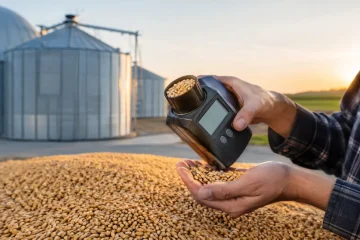
In agricultural trade, photos are evidence. A buyer wants to see the actual crop, packaging, equipment, facility, or inventory condition, not only a supplier logo or a stock image. Clear visuals reduce doubt and can prevent long email exchanges about basic product condition.
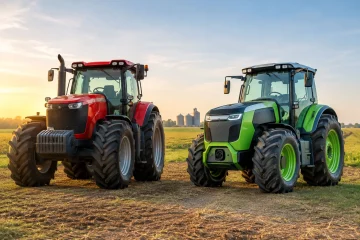
Include several current images from useful angles. For produce, show the product before packing, inside the carton or crate, and with visible labeling. For machinery, show the full unit, hour meter, wear points, controls, and attachments. For bulk commodities, show storage conditions, loading capability, and packaging if it is part of the offer.
Keep images well lit and honest. Excessive editing, old seasonal photos, or images that do not match the listed product can damage trust quickly. If the product has natural variation, show it. Commercial buyers value a realistic picture of what will arrive.
Make Pricing and Terms Easy to Understand
A listing does not always need a fixed public price. Market prices move, freight costs change, and large orders may require negotiated terms. Still, buyers need enough information to judge whether a conversation is worthwhile.
If you can publish a price, identify the currency, unit, minimum quantity, and what is included. For export products, clarify whether the figure is ex works, FOB, CIF, or another agreed trade basis. If pricing is quote-based, say so directly and explain which details you need to prepare an accurate quote, such as destination port, volume, packaging, or delivery date.
Avoid phrases such as “cheap price” or “best price.” They do not help a procurement professional compare offers. A clearer statement is: “Pricing available for orders from one 40-foot container; quote based on destination and packaging requirements.”
Establish Supplier Credibility Before the First Call
Buyers assess the supplier as closely as the product. An accurate company profile can be the difference between an inquiry and a closed browser tab. State whether you are a grower, processor, manufacturer, distributor, exporter, or service provider. Include the country and region where you operate, your years in business, and the markets you serve.
Add relevant capabilities without overstating them. A packing house can identify its daily capacity. A seed supplier can state its distribution coverage. An irrigation installer can list the farm sizes or system types it supports. These details make your offer easier to evaluate.
Where available, include verifiable business information, certifications, inspection procedures, and response contacts. On a specialist marketplace such as Agricial, a complete supplier profile works alongside product listings to give buyers a fuller view of who they are contacting.
Keep Inventory, Availability, and Responses Current
An excellent listing becomes a problem when it promotes inventory that is no longer available. Fresh products, seasonal crops, used equipment, and commodity stocks can change quickly. Review active listings regularly and update quantities, harvest dates, pricing guidance, lead times, and photos.
Fast response matters just as much. When an inquiry arrives, reply with the information needed to advance the discussion: available volume, current specifications, sample options, quote terms, delivery timeline, and required buyer details. A one-line response that only says “contact us” creates more friction than it removes.
A Final Review Before Publishing
Before you publish, check that the listing answers these questions without requiring a follow-up: What is the product? What exact specification is offered? Where is it located? How much can you supply? What does the buyer need to order? What proof supports the offer?
A clear listing will not replace product quality, reliable logistics, or commercial follow-through. It will make those strengths visible sooner. Treat every listing as a working sales asset, update it as your supply changes, and make it easy for the right agricultural buyer to take the next step.