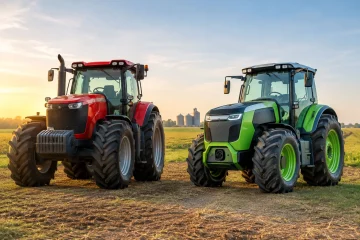
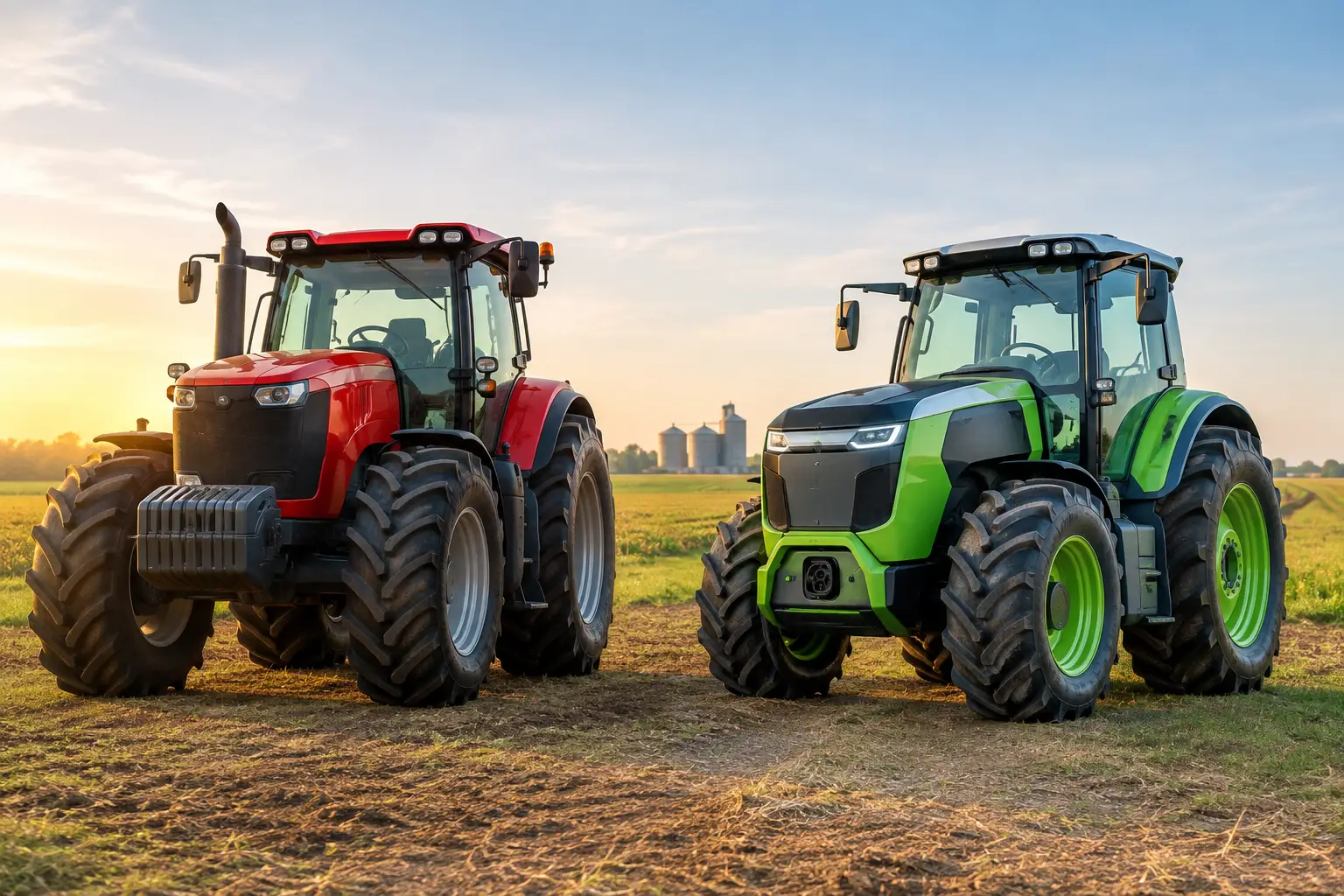
Diesel Versus Electric Tractors for Farm ROI
A tractor purchase can shape operating costs for a decade or more. The choice between diesel versus electric tractors is no longer only about engine preference. It affects daily uptime, fuel or energy planning, labor routines, service access, emissions goals, and the type of work a farm can complete without interruption.
For many commercial operations, diesel remains the practical default. Electric tractors, however, are becoming a credible option for specific duty cycles, especially where work is predictable, charging is available, and lower noise or zero tailpipe emissions create a business advantage. The better investment depends on the job, not the trend.
Diesel Versus Electric Tractors at a Glance
| Factor | Diesel Tractor | Electric Tractor | |—|—|—| | Upfront purchase price | Usually lower across most horsepower classes | Often higher because of battery cost | | Refueling or charging | Fast refueling and widely available fuel supply | Requires planned charging infrastructure and time | | Heavy-load endurance | Strong for long field days and high-draft work | Limited by battery capacity and workload | | Maintenance | More fluids, filters, belts, and engine service | Fewer moving powertrain parts and lower routine maintenance | | Noise and emissions | Higher noise and tailpipe emissions | Quiet operation with zero tailpipe emissions | | Best current fit | Broad-acre farming, heavy tillage, remote work | Livestock, orchards, greenhouses, municipalities, and short daily tasks |
The table gives a useful starting point, but tractor buyers should look beyond headline specifications. A 60-horsepower diesel model and a tractor marketed with similar electric horsepower may perform differently under sustained drawbar loads, hydraulic demand, slopes, cold weather, or extended transport work.
Where Diesel Tractors Still Lead
Diesel tractors have earned their place through proven torque, long operating range, and a dealer and parts network that reaches most agricultural regions. A farm can store fuel on site, refill in minutes, and continue running through planting, harvest, or weather-sensitive field windows. That flexibility matters when a delayed pass can reduce yield or increase labor costs.
High-demand field work
Diesel is generally the stronger choice for primary tillage, large-scale planting, hay production, heavy loader work, and long-distance transport. These applications demand sustained power over many hours, often far from a dependable electrical connection.
A diesel tractor also works well for operations with variable schedules. Contractors, custom operators, and farms that serve multiple properties may not know where the next job will be or how long it will last. Fuel logistics are easier to manage than finding suitable charging capacity across dispersed sites.
Equipment compatibility and resale
Diesel tractors support a wide range of established implements, from mechanical tillage tools to high-flow hydraulic attachments. Buyers can compare models across numerous brands and horsepower categories, and many mechanics are familiar with diesel diagnostics and repair.
Resale is another consideration. The used market for diesel machinery is mature, making values easier to estimate. Electric tractor resale values may strengthen as adoption grows, but battery health, software support, and charging standards will remain important questions for second owners.
Where Electric Tractors Create Value
Electric tractors are not simply diesel tractors without fuel. Their strongest business case often comes from lower operating complexity, quieter work, and a predictable daily schedule. Electric motors deliver immediate torque, and their simpler drivetrains can reduce routine maintenance requirements.
For a dairy, equine facility, nursery, vineyard, orchard, greenhouse operation, or municipal grounds team, these benefits can be meaningful. A compact electric tractor that returns to the same yard every evening may be easier to manage than a diesel machine that needs fuel deliveries, oil changes, filters, and warm-up time.
Lower maintenance exposure
Electric powertrains do not require engine oil changes, fuel filters, exhaust aftertreatment service, or many of the mechanical components found in diesel equipment. That can reduce scheduled service costs and downtime, particularly for fleets that accumulate frequent but lighter-duty hours.
Maintenance savings should be evaluated carefully. Battery systems, power electronics, onboard chargers, and software require qualified support. Before purchasing, ask the supplier what is covered by the battery warranty, how battery capacity is measured, and whether field service is available in your area.
Work environments where noise matters
Quiet operation is a commercial advantage near homes, schools, livestock barns, visitor-facing farms, and enclosed facilities. Lower noise can improve operator comfort and make early-morning or evening work less disruptive.
Electric models also eliminate tailpipe emissions at the point of use. That can support air-quality goals in enclosed or sensitive work areas, although the total environmental impact still depends on how the electricity is generated and how batteries are manufactured, maintained, and eventually recycled.
Cost Comparison: Look Beyond the Sticker Price
The purchase price is only one part of tractor ROI. A useful comparison includes total cost of ownership over the expected years of use.
| Cost Area | Diesel Considerations | Electric Considerations | |—|—|—| | Initial equipment cost | Often more competitive today | Can carry a premium, especially in new models | | Energy cost | Sensitive to diesel price swings | Depends on local electricity rates and charging times | | Infrastructure | Fuel tank and storage may already exist | May require panel upgrades, chargers, and installation | | Scheduled maintenance | Oil, filters, fluids, emissions components | Fewer routine engine-related service items | | Downtime risk | Fueling is quick; mechanical service needs vary | Charging delays and limited local service can affect uptime | | Incentives | Limited in many cases | Potential incentives may improve economics, depending on location |
A farm should calculate cost per operating hour rather than relying on a single purchase-price comparison. Include projected annual hours, expected energy use, finance costs, insurance, maintenance, charger installation, fuel storage, and expected resale value.
Electricity may cost less per hour than diesel, particularly when charging occurs during lower-rate periods. But those savings can disappear if a tractor needs a costly electrical upgrade or if battery limits force the business to keep a second machine available for peak workloads.
Match the Tractor to the Duty Cycle
The most useful question is not, “Which technology is better?” It is, “What does this tractor need to do on its hardest day?” Map the work by hours, load, location, and time sensitivity.
An electric tractor can be a strong fit when it operates four to six predictable hours a day, returns to a fixed charging point, and handles mowing, feeding, material movement, spraying, light cultivation, or loader tasks. It may be especially attractive where the operation values quiet work and lower routine service demands.
A diesel tractor is usually the lower-risk option when the machine must run 10 to 14 hours during seasonal peaks, pull heavy implements, cover large acreage, or work in remote fields. It also offers more flexibility for farms expanding acreage, taking on custom work, or using a tractor across multiple enterprises.
Questions to ask suppliers before buying
Before requesting quotes, buyers should confirm the rated and continuous power, maximum hydraulic flow, PTO configuration, lift capacity, battery capacity or fuel consumption, and expected runtime under real loads. Ask whether runtime estimates were measured during transport, mowing, loader work, or drawbar work, because the results can vary sharply.
For electric models, also ask about charging connector type, charging speed, required electrical service, battery warranty terms, cold-weather performance, remote diagnostics, and battery replacement pricing. For diesel models, clarify emissions-system requirements, service intervals, local parts availability, and compatibility with your existing implements.
Procurement Strategy for Farms and Dealers
For importers, distributors, and machinery dealers, the market may support both technologies rather than a single replacement path. Diesel inventory serves broad demand across horsepower ranges and challenging field conditions. Electric inventory can create a differentiated offer for specialty agriculture, institutional buyers, premium horticulture, and customers with sustainability targets.
Suppliers should present electric tractors with realistic application guidance rather than broad claims about replacing all diesel equipment. Clear runtime data, local charging support, parts availability, operator training, and warranty coverage will build buyer confidence faster than marketing language alone.
For farms sourcing machinery internationally, compare more than the unit price. Confirm parts lead times, technical documentation, safety compliance, dealer support, shipping terms, and access to trained technicians. Agricial helps agricultural businesses compare machinery suppliers and begin better-informed conversations across markets.
The Practical Decision
Diesel tractors remain the workhorse for high-hour, high-load, and remote agricultural operations. Electric tractors can deliver compelling value where work is repetitive, charging is convenient, and noise, maintenance, or on-site emissions are business concerns.
The strongest purchase decision starts with operational data: measure actual task hours, peak-season loads, travel distance, existing energy infrastructure, and the cost of a machine sitting idle. Choose the tractor that keeps work moving when timing matters most, then build a supplier relationship that can support it for the full life of the equipment.