A Guide to Cold Chain Logistics for Agribusiness
A shipment of berries can look perfect at loading and lose its market value before it reaches the buyer. The difference is often a few hours outside its required temperature range. This guide to cold chain logistics explains how agricultural businesses can move perishable goods with greater control, from pre-cooling at origin to delivery confirmation at destination.
For growers, exporters, importers, distributors, and food buyers, cold chain performance is not simply a transport issue. It affects shelf life, rejection rates, buyer confidence, claims exposure, and the price a product can command in the market.
What Cold Chain Logistics Means in Agriculture
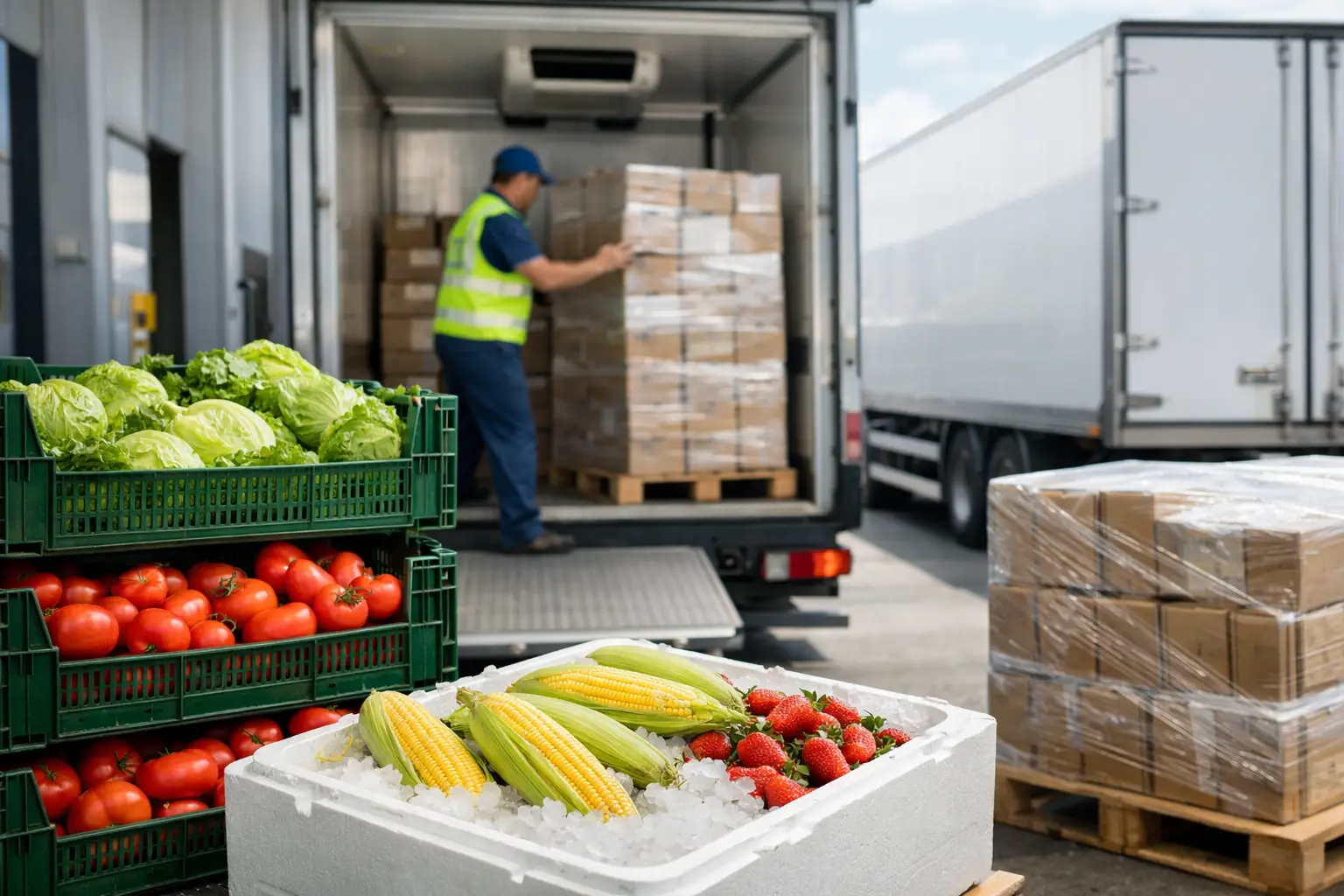
Cold chain logistics is the temperature-controlled handling, storage, and transportation of products that can lose quality or become unsafe when exposed to inappropriate conditions. In agriculture, that includes fresh fruits and vegetables, meat, dairy, seafood, cut flowers, seedlings, vaccines for livestock, and selected biological crop inputs.
The chain begins before the truck arrives. Field heat, harvest timing, packing practices, pallet configuration, warehouse conditions, border inspections, and final-mile delivery all influence product condition. Refrigerated equipment can maintain temperature, but it cannot reverse deterioration that started during harvest or packing.
A working cold chain has three connected jobs: remove field heat quickly, maintain the correct product temperature, and document what happened throughout the journey. If any link fails, the commercial impact may appear much later, when a buyer opens a container or a retailer receives a short-shelf-life product.
Why Cold Chain Control Protects Margin
Perishable agriculture has a narrow window for error. A temperature excursion may increase respiration in produce, accelerate moisture loss, cause condensation, or create conditions favorable to decay. For animal products, the stakes can also include food safety and regulatory compliance.
Strong cold chain management helps businesses:
- Reduce shrink, spoilage, and rejected loads
- Extend usable shelf life for buyers and distributors
- Support more consistent grading and product presentation
- Strengthen traceability for claims, audits, and export requirements
- Reach distant markets that would otherwise be commercially impractical
The benefit is not always a lower freight rate. Temperature-controlled service can cost more than standard transport, especially during peak seasons or on routes with limited reefer capacity. The right comparison is total landed value: freight cost plus product loss, claims risk, market access, and the price achieved for quality.
A Guide to Cold Chain Logistics: The Core Stages
1. Start With the Product, Not the Vehicle
Every commodity has different handling needs. Leafy greens, table grapes, mangoes, fresh herbs, milk, and frozen poultry should not be managed with the same temperature target or packaging approach. Some products are also sensitive to ethylene, humidity, vibration, or chilling injury.
Before arranging freight, define the product specification with the buyer and logistics partner. It should state the target temperature range, acceptable tolerance, relative humidity where relevant, packaging format, maximum transit time, ventilation needs, and inspection requirements. A vague instruction such as “keep refrigerated” leaves too much room for dispute.
| Product category | Typical handling focus | Common risk | |—|—|—| | Leafy greens and herbs | Rapid pre-cooling, high humidity, fast turnover | Wilting and decay | | Berries and grapes | Gentle handling, stable low temperature | Mold, crushing, moisture loss | | Tropical fruit | Commodity-specific temperatures | Chilling injury or premature ripening | | Dairy and fresh meat | Strict temperature control and sanitation | Food safety exposure | | Frozen products | Continuous frozen state | Thawing and refreezing damage | | Cut flowers | Quick cooling, hydration, careful air circulation | Botrytis, wilt, reduced vase life |
Typical ranges are only a starting point. Confirm the required set point for the specific variety, maturity stage, packaging, and destination market. A temperature that works for one cultivar may damage another.
2. Pre-Cool Immediately After Harvest
Refrigerated transport is designed to hold a product at temperature, not pull large amounts of field heat out of it. Loading warm produce into a reefer container can result in uneven cooling and a stressed refrigeration unit, while the center of the pallet remains too warm for too long.
The best pre-cooling method depends on the commodity. Forced-air cooling is widely used for packed produce. Hydrocooling can work well for products that tolerate water. Vacuum cooling is effective for many leafy vegetables. Ice may be appropriate for some commodities, but it requires packaging and drainage that can handle it.
Measure pulp temperature, not only room air temperature. A cold packing room can give false confidence if product at the center of a pallet has not reached its target range.
3. Pack for Airflow and Protection
Packaging has to protect product while allowing cold air to move through the load. Overpacked cartons, blocked vents, damaged pallets, or stretch wrap applied without airflow planning can create warm zones. In mixed loads, incompatible commodities may create added problems through odors, ethylene exposure, or different humidity needs.
Use pallets that are stable, clean, and built to the dimensions required by the vehicle or container. Keep cartons aligned so air channels remain open. Where required, use pallet covers, liners, absorbent pads, or insulated materials, but test them under actual route conditions rather than assuming more insulation is always better.
4. Select the Right Transport Mode
The right mode depends on distance, value, product durability, volume, and delivery deadline. Air freight may protect shelf life on high-value, highly perishable products, but it is expensive and capacity can change quickly. Ocean reefer containers offer lower unit costs for larger volumes, but require careful planning around port dwell time, power availability, and longer transit periods.
| Mode | Best suited for | Main advantage | Main trade-off | |—|—|—|—| | Refrigerated truck | Domestic and regional distribution | Flexible pickup and delivery | Delays can expose loads to frequent door openings | | Air freight | Premium, urgent, short-shelf-life goods | Fast transit | High cost and limited capacity | | Reefer container by sea | Export volumes with stable demand | Lower cost per unit at scale | Longer transit and port-related risk | | Rail with refrigerated equipment | Certain high-volume inland lanes | Efficient for long distances | Less flexible routing and scheduling |
Ask transport providers how they manage temperature monitoring, equipment maintenance, emergency response, cleaning, driver procedures, and claims documentation. Rate matters, but a low quote without defined accountability can be expensive after one rejected shipment.
5. Monitor the Load, Then Act on the Data
Temperature data loggers, telematics, and real-time sensors create a record of what happened during transit. For export shipments, place devices where they reflect product conditions, not merely the coldest point in the container. Agree in advance on device placement, data access, reporting format, and the process for responding to an alert.
Monitoring only has value when someone owns the response. A sensor alert should trigger a defined action: contact the carrier, verify the unit set point and return-air temperature, check door status, notify the buyer if necessary, and document the event. Without escalation procedures, data becomes evidence after a loss rather than a tool for preventing one.
Build Reliable Cold Chain Partnerships
Cold chain performance depends on coordinated partners. A grower may produce excellent fruit, but quality can still fail if the packhouse loads warm pallets, the forwarder books an unsuitable service, or the destination warehouse leaves cargo waiting on a warm dock.
When qualifying suppliers and logistics providers, look beyond certifications and marketing claims. Request commodity experience, lane-specific references, temperature records from comparable shipments, standard operating procedures, insurance details, and clear responsibility for handoffs. For buyers, supplier profiles and quote comparisons can speed up initial sourcing, but commercial due diligence should remain part of every new relationship.
Agricial helps agricultural businesses identify relevant suppliers, service providers, and commercial contacts across markets, making it easier to begin conversations with partners that fit the product and route.
Common Failures That Cause Avoidable Losses
Many cold chain losses start with routine shortcuts. Loading before pre-cooling is complete, leaving pallets on an open dock, using the wrong set point, or failing to verify reefer settings can turn a profitable order into a claim.
Other failures are less visible. A shipment may be cooled correctly but packed too tightly for air circulation. A container may run properly at sea but sit unplugged during a transfer. A buyer may reject product because the exporter cannot provide trustworthy temperature records. These are process failures, not merely equipment failures.
Create a simple written checklist for each shipment covering harvest release, pulp temperature, packaging inspection, truck or container pre-trip inspection, logger activation, seal number, handoff timing, and receiving confirmation. The checklist should be practical enough that the team actually uses it during busy periods.
Measure Performance Across the Full Route
Track more than whether a load arrived. Useful indicators include temperature compliance, average and maximum excursion duration, percentage of shipments delivered within the agreed window, rejection rate, claims value, spoilage percentage, and shelf-life feedback from buyers.
Review results by commodity, route, carrier, season, and destination. A provider may perform well on a short domestic lane but struggle with a port-intensive export route. Likewise, a product may need a different packaging configuration during hot harvest months than it does in cooler periods.
Cold chain logistics becomes a commercial advantage when it is treated as a managed system rather than a refrigerated truck booking. Start with one critical route, set clear product specifications, measure the handoffs, and use the results to choose partners that protect both quality and market opportunity.