Farm Export Documentation Checklist for Buyers
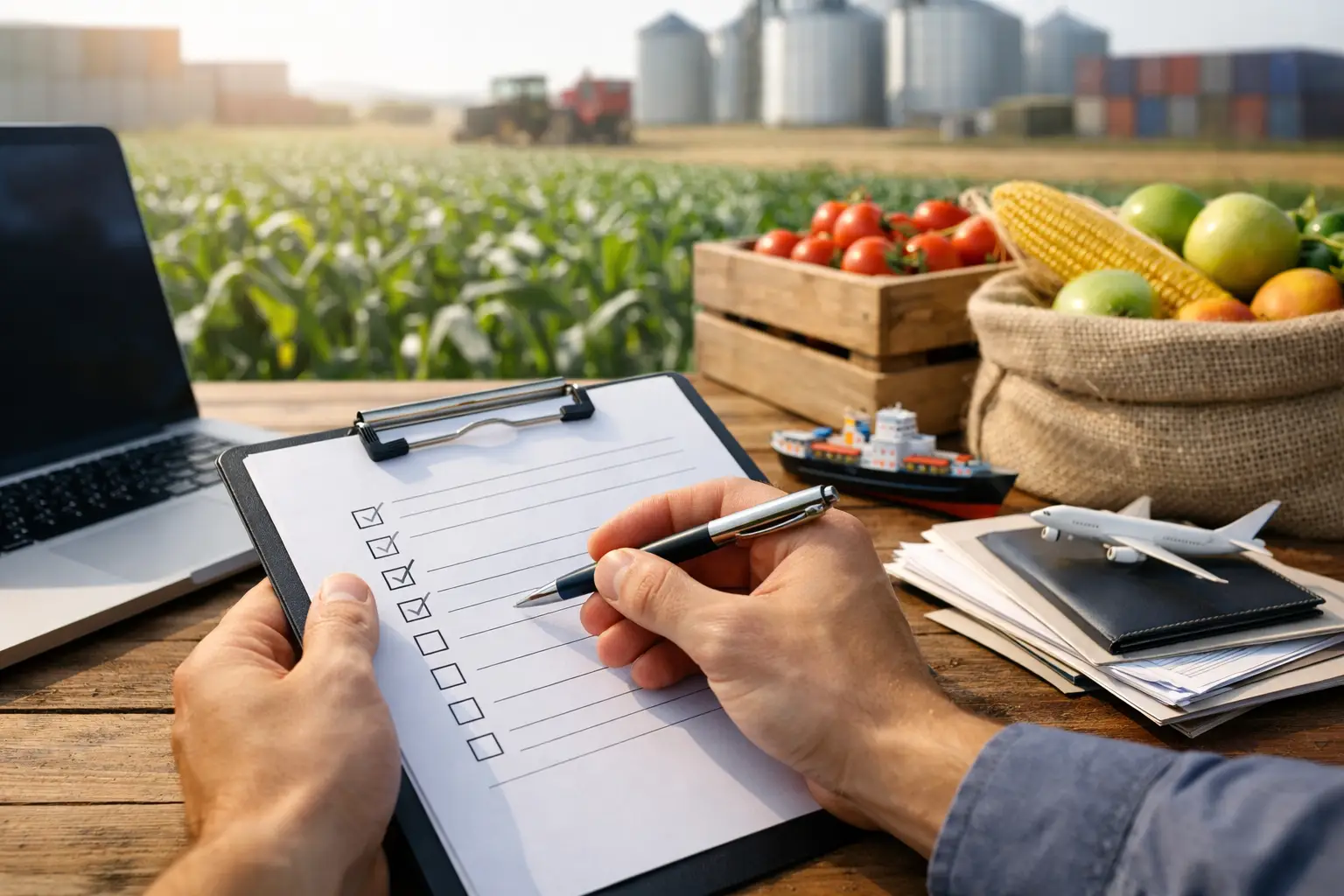
A shipment can be packed, booked, and ready at the port, yet still miss its vessel because one document names the wrong product variety, uses an outdated importer address, or lacks a required inspection certificate. A reliable farm export documentation checklist turns paperwork from a last-minute risk into a controlled part of your sales process. For agricultural exporters, it protects payment, keeps products moving, and gives overseas buyers confidence that they are working with a prepared commercial partner.
Export requirements vary by commodity, destination, transport method, and buyer agreement. Fresh produce, seed, livestock, animal products, grains, processed foods, and farm machinery all carry different documentation needs. The practical goal is not to collect every possible form. It is to prepare the documents that prove what is being shipped, where it came from, whether it meets market rules, and who is responsible at each stage.
Why Agricultural Export Documents Need Extra Care
Agricultural trade is subject to more inspection than many other product categories. Customs authorities may review commercial values and origin. Plant health agencies may check for pests, soil, seeds, or prohibited plant material. Food regulators may require traceability, labeling, residue information, or health certificates. When documents conflict, the shipment can be held even if the product itself is fully compliant.
The cost of a delay depends on the product. A container of dried beans may tolerate a few days in storage. Fresh berries, cut flowers, chilled dairy, or live animals may not. Export documentation should therefore be treated as part of quality management and customer service, not simply an administrative task.
A clear document pack also improves commercial control. Buyers can verify the shipment before arrival, freight agents can submit declarations faster, and finance teams can match invoices to letters of credit or other payment terms.
Farm Export Documentation Checklist: Core Documents
Most commercial agricultural exports begin with a group of documents that establish the transaction and describe the cargo. These are commonly required regardless of whether the shipment moves by sea, air, road, or rail.
- Commercial invoice: States seller and buyer details, product description, quantity, unit price, total value, currency, payment terms, Incoterms, and country of origin where applicable.
- Packing list: Breaks down cartons, bags, pallets, net and gross weight, dimensions, lot numbers, and package marks. It should match the physical load exactly.
- Purchase order or sales contract: Confirms the agreed commodity specification, price, delivery point, quality standard, payment method, and responsibilities of each party.
- Transport document: Usually a bill of lading for ocean freight, air waybill for air cargo, or road and rail consignment document. It confirms carrier custody and shipment routing.
- Export customs declaration: Filed according to the exporter’s national customs rules. It typically uses tariff codes, shipment value, origin data, and exporter identification.
- Certificate of origin: Confirms where the goods were produced or substantially processed. It may be necessary for customs clearance or preferential tariff treatment.
Accuracy across these documents matters more than presentation. Product names, quantities, weights, package counts, tariff classifications, and consignee details should be consistent. A buyer name listed as “Green Valley Imports LLC” on the invoice and “Green Valley Import LLC” on the bill of lading can trigger unnecessary questions at the border or bank.
Commercial Document Control Table
| Document | Main purpose | Usually prepared by | Common error to avoid | |—|—|—|—| | Commercial invoice | Establishes shipment value and sale terms | Exporter | Using vague descriptions such as “farm goods” | | Packing list | Verifies physical cargo details | Exporter or warehouse team | Weight or carton totals that do not match loading records | | Sales contract | Defines buyer and seller obligations | Exporter and buyer | Missing quality claims or delivery responsibilities | | Bill of lading or air waybill | Records transport and carriage terms | Freight carrier or forwarder | Wrong consignee, notify party, or destination port | | Certificate of origin | Supports origin verification and tariff treatment | Authorized body or exporter, where permitted | Declaring origin without production records |
Commodity-Specific Certificates and Evidence
The core file is only the starting point. Many farm products need additional certificates that address biosecurity, food safety, treatment, or product standards. The right combination depends on the destination market and the product’s form.
Plant Products, Produce, and Seeds
Fresh fruit, vegetables, nursery plants, cut flowers, grains, and seed shipments commonly require a phytosanitary certificate. This document confirms that the consignment has been inspected and meets the importing country’s plant-health conditions. Requirements can be especially strict for products carrying soil, husks, leaves, or propagative material.
Seed exports may also need a seed analysis certificate, variety identification, germination results, purity data, and treatment declarations. If seed has been treated with pesticides or fungicides, its label and safety information must align with destination requirements.
For fresh produce, keep harvest dates, packhouse records, lot codes, temperature records, pesticide application logs, and residue test results available when required. Not every shipment needs every record submitted at customs, but buyers and regulators may request them quickly.
Livestock and Animal Products
Live animals, meat, dairy, eggs, hides, wool, feed ingredients, and other animal-origin goods may require veterinary health certificates. These documents can confirm disease status, inspection results, animal identification, vaccination history, processing conditions, or cold-chain handling.
Animal products often carry import permits that must be secured by the buyer before the shipment leaves. Exporters should request a copy early. Shipping before the permit is approved can leave a consignment stranded at destination.
Processed Foods and Inputs
Processed agricultural foods may need certificates of analysis, ingredient lists, allergen declarations, food safety certificates, shelf-life information, and compliant labels. Fertilizers, crop protection products, and feed products can require composition records, safety data sheets, registration evidence, and labeling in the destination market’s required language.
Match the Paperwork to the Trade Terms
Incoterms shape who pays for freight, insurance, export clearance, import clearance, and delivery at destination. They do not replace a contract, but they help prevent costly assumptions between buyer and seller.
| Trade term example | Exporter typically handles | Buyer typically handles | Documentation focus | |—|—|—|—| | EXW | Makes goods available at the agreed location | Main transport, export and import process | Clear pickup records and product readiness | | FOB | Export clearance and delivery on board vessel | Ocean freight, insurance, import clearance | Accurate port, vessel, and loading details | | CIF | Export clearance, ocean freight, basic cargo insurance | Import clearance and duties | Insurance certificate and transport document consistency | | DAP | Transport to named destination, excluding import clearance | Import duties, taxes, and clearance | Precise destination terms and delivery instructions |
For many agricultural shipments, the buyer may ask the exporter to provide documents even when the buyer is responsible for import clearance. That is normal. The exporter controls much of the product, packing, and origin evidence, while the buyer controls local permits and destination compliance.
Build a Pre-Shipment Review Process
The best time to find a missing certificate is before cargo reaches the loading point. Assign one person to own the final document review, even if several teams contribute information. Sales may prepare the invoice, operations may confirm weights, quality teams may provide test results, and freight partners may issue transport paperwork. One final check keeps those inputs aligned.
Before release, confirm the following:
- The buyer’s legal name, address, tax or importer number, and contact details are current.
- The commodity description includes variety, grade, packaging, and lot details when needed.
- Product quantity, units, net weight, gross weight, and pallet or carton counts match across every document.
- Required permits, inspection certificates, treatment records, and health documents are valid for the destination.
- Labels, marks, and package numbers match the packing list and destination rules.
- The tariff code, country of origin, declared value, and Incoterms are correct.
- Digital copies are readable, properly signed where required, and shared with the buyer and freight partner before departure.
Keep an export file for each shipment. Include the final document set, emails approving specifications, loading photos, inspection records, temperature logs where relevant, and proof of delivery. This record becomes valuable if a buyer raises a claim, a bank questions payment documents, or authorities request traceability evidence.
Common Documentation Mistakes That Delay Farm Exports
The most damaging mistakes are usually simple. Exporters may use a generic product description instead of “Grade A Cavendish bananas, 13.5 kg cartons,” or report a net weight that differs from the carrier’s verified weight. Others issue certificates too early, allowing them to expire before arrival.
Another recurring problem is relying on a previous shipment’s requirements. Import rules can change by season, disease outbreak, trade agreement, or destination authority. A document pack that worked last year may not be enough for the next order.
Avoid assuming that a freight forwarder will validate agricultural compliance. A skilled forwarder is a valuable partner, but the exporter remains responsible for product accuracy and for supplying genuine supporting records. Confirm responsibilities in writing before booking cargo.
Make Documentation Part of Buyer Trust
Reliable documentation supports more than customs clearance. It signals that your business can deliver predictably across borders. For buyers comparing suppliers, complete specifications, traceable lots, and timely certificates reduce purchasing risk before the first container arrives.
Agricial helps agricultural businesses increase visibility with buyers and partners looking for credible suppliers across global categories. Your documentation process should support that same commercial promise: clear product information, dependable communication, and evidence that your shipment is ready for international trade.
Start each export order with the destination’s current requirements and a document timetable that works backward from the vessel or flight cutoff. When your records are organized before harvest, packing, and booking begin, paperwork stops being a border obstacle and becomes part of the confidence that wins repeat business.