Farm Directory vs Trade Show: What Wins?
A supplier spends months preparing for a major ag expo – booth design, samples, travel, staff time, follow-up materials. Then the event ends in three days. That is why the farm directory vs trade show question matters so much for agricultural businesses trying to grow without wasting budget.
For importers, exporters, machinery dealers, input suppliers, and farm service providers, both channels can generate real business. But they work in very different ways. One is built around short bursts of face-to-face visibility. The other creates ongoing digital discoverability. If your goal is better sourcing, steadier lead flow, and wider market access, the right choice depends on what you sell, who you want to reach, and how fast you need results.
Farm directory vs trade show: the core difference
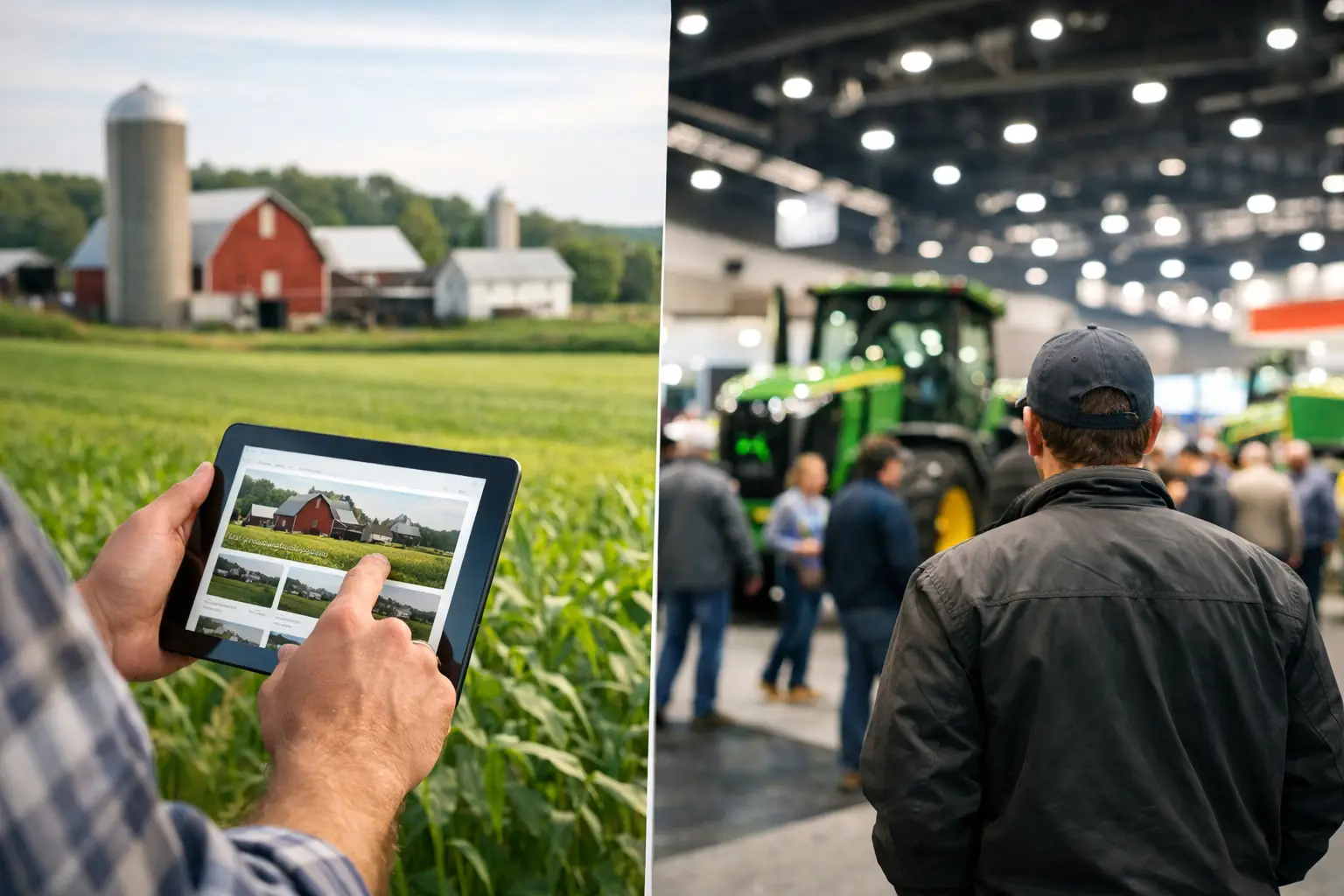
A farm directory is a searchable digital platform where agricultural businesses list products, services, and company details so buyers can find and contact them year-round. A trade show is a physical event where suppliers and buyers meet in person during a fixed period, usually over a few days.
That difference changes everything. A directory works continuously. It helps a fertilizer supplier in one region get discovered by a distributor in another without waiting for an event date. A trade show creates concentrated attention, but only for a short window and only for the people who attend.
For many agricultural businesses, this is not an either-or issue forever. It is a question of which channel should carry more of the workload.
Side-by-side comparison
| Factor | Farm Directory | Trade Show |
|---|---|---|
| Visibility duration | Year-round | Limited to event dates |
| Geographic reach | Global or multi-region | Mostly event-based and location-dependent |
| Cost structure | Usually lower ongoing cost | Higher upfront spend for booth, travel, and staffing |
| Lead speed | Continuous inbound discovery | Fast conversations during the event |
| Relationship depth | Starts digitally, builds over time | Strong face-to-face first impression |
| Product demonstration | Limited to photos, specs, and profiles | Strong for live demos and physical inspection |
| Scalability | Easy to expand listings across categories | Harder to scale due to event limits |
| Follow-up burden | More structured and trackable | Often heavy after the event |
The table makes one thing clear: directories are built for continuity, while trade shows are built for intensity.
When a farm directory has the advantage
A farm directory is often the stronger commercial tool when buyers are actively searching for suppliers, products, or service partners. In agriculture, that matters because demand does not wait for event calendars. A grower may need irrigation components this month. An exporter may need a packaging supplier next week. A dairy operation may be comparing feed equipment vendors right now.
Better fit for ongoing lead generation
If your business depends on being found consistently, a directory gives you more working days than a trade show ever can. Your profile, product categories, and business details continue to attract attention after business hours, during seasonal buying cycles, and across time zones.
This is especially valuable for:
- input suppliers selling fertilizers, seeds, crop protection products, and irrigation systems
- machinery vendors targeting dealers, distributors, and farm operators in multiple regions
- consultants and service providers who need steady inquiry flow rather than event-driven spikes
- exporters and importers looking for year-round sourcing and trade connections
For these businesses, visibility is not a one-time campaign. It is part of the sales infrastructure.
Lower cost per market opportunity
Trade shows can be effective, but they are expensive. Booth fees are only the start. You also have shipping, travel, lodging, printed materials, setup, and the opportunity cost of pulling staff away from daily operations.
A directory typically asks for far less operational effort. Once a listing is built well, it can keep generating visibility with updates rather than full event re-investment. For small to mid-sized agribusinesses, that difference can protect cash flow while still supporting growth.
Easier access to broader markets
Agriculture is local in practice but global in trade. A trade show may be strong in one country or one segment, yet weak in another. A farm directory can help a supplier appear in front of buyers who would never attend the same event.
That makes directories especially useful for businesses entering new export markets or testing demand across categories before investing in regional field sales.
When a trade show still makes sense
Trade shows are not outdated. In some cases, they remain one of the fastest ways to build trust, especially when products are complex, high-value, or highly physical.
Stronger for live demonstrations
Large machinery, greenhouse systems, livestock equipment, post-harvest technology, and precision agriculture tools often benefit from hands-on demonstration. Buyers may want to inspect build quality, ask technical questions in person, or compare multiple vendors on the same floor.
That tactile experience can shorten the path to serious negotiations, especially for larger purchases.
Better for relationship-led selling
In many agricultural markets, deals still move through personal trust. A trade show gives sellers the chance to meet buyers, distributors, and channel partners face to face. For businesses entering a market where relationships carry more weight than digital search, that matters.
Useful for brand launches and industry presence
If your company is introducing a new product line or trying to make a visible market statement, a trade show can create concentrated attention. The event environment can also help with media exposure, partner meetings, and competitor benchmarking.
The trade-off is simple: the impact can be strong, but it is compressed and expensive.
Farm directory vs trade show by business goal
If your goal is sourcing suppliers
A farm directory usually wins. Buyers can compare suppliers by category, region, product fit, and business profile without waiting for an event. That speeds up early research and vendor shortlisting.
Trade shows help later in the process if a buyer wants to inspect equipment, meet shortlisted suppliers, or negotiate complex deals in person.
If your goal is selling to more buyers
A directory is often the better foundation. It keeps your business visible between campaigns and beyond geographic limits. A trade show can support sales acceleration, but it rarely replaces continuous discovery.
If your goal is entering a new market
It depends on your budget and product complexity. If you need broad, low-friction exposure first, a directory gives you a more efficient starting point. If you need distributors, country agents, or strategic partners and the market values personal meetings, a targeted trade show can help.
How lead quality differs
One common objection to directories is that digital inquiries may be less qualified. Sometimes that is true. Some buyers are only researching. Some requests are broad. But trade show leads have their own problem: interest at the booth does not always translate into buying intent after the event.
The real issue is not channel quality alone. It is lead handling.
A well-structured farm directory profile tends to improve lead quality because it sets expectations clearly. Product categories, specifications, service regions, certifications, and company background help buyers self-qualify before they reach out. Platforms built specifically for agriculture also improve fit because they reduce random traffic and attract users with sector-specific intent.
Trade shows can produce warmer first conversations, but they also generate stacks of contacts that need heavy follow-up. If your sales team is not disciplined after the event, many leads fade quickly.
A smarter strategy: use one as the base, the other as the boost
For most agribusinesses, the strongest model is not choosing one forever. It is deciding which channel is your foundation and which one is your amplifier.
A farm directory should usually be the base if you want dependable year-round visibility, searchable supplier presence, and lower-cost lead generation. A trade show works best as a timed boost for launches, market entry, distributor meetings, or product demos.
That order matters. If your business only appears during events, your market visibility rises and falls with the calendar. If you maintain a strong directory presence first, every event works harder because buyers can continue finding you before and after the show.
This is where a focused agriculture marketplace such as Agricial fits naturally. Instead of relying on a general business listing or waiting for seasonal events, agricultural companies can position themselves where buyers are already searching by sector, product type, and commercial need.
How to decide where to invest first
Ask four practical questions. Is your product easier to evaluate online or in person? Do you need steady inquiries or concentrated meetings? Can your budget absorb travel and event costs without hurting operations? And are you selling locally, regionally, or across borders?
If your answers point toward efficiency, reach, and ongoing discovery, start with a farm directory. If they point toward demonstrations, relationship selling, and high-value negotiations, consider a trade show. If both matter, build digital visibility first, then choose selective events that match your most profitable buyer segments.
Agriculture moves on timing, trust, and access. The businesses that grow fastest are rarely the ones using the loudest channel. They are the ones using the right channel for the job – and making sure buyers can find them when demand appears, not only when the booth is open.
The best marketing investment in agriculture is often the one that keeps working after the event lights go out.