
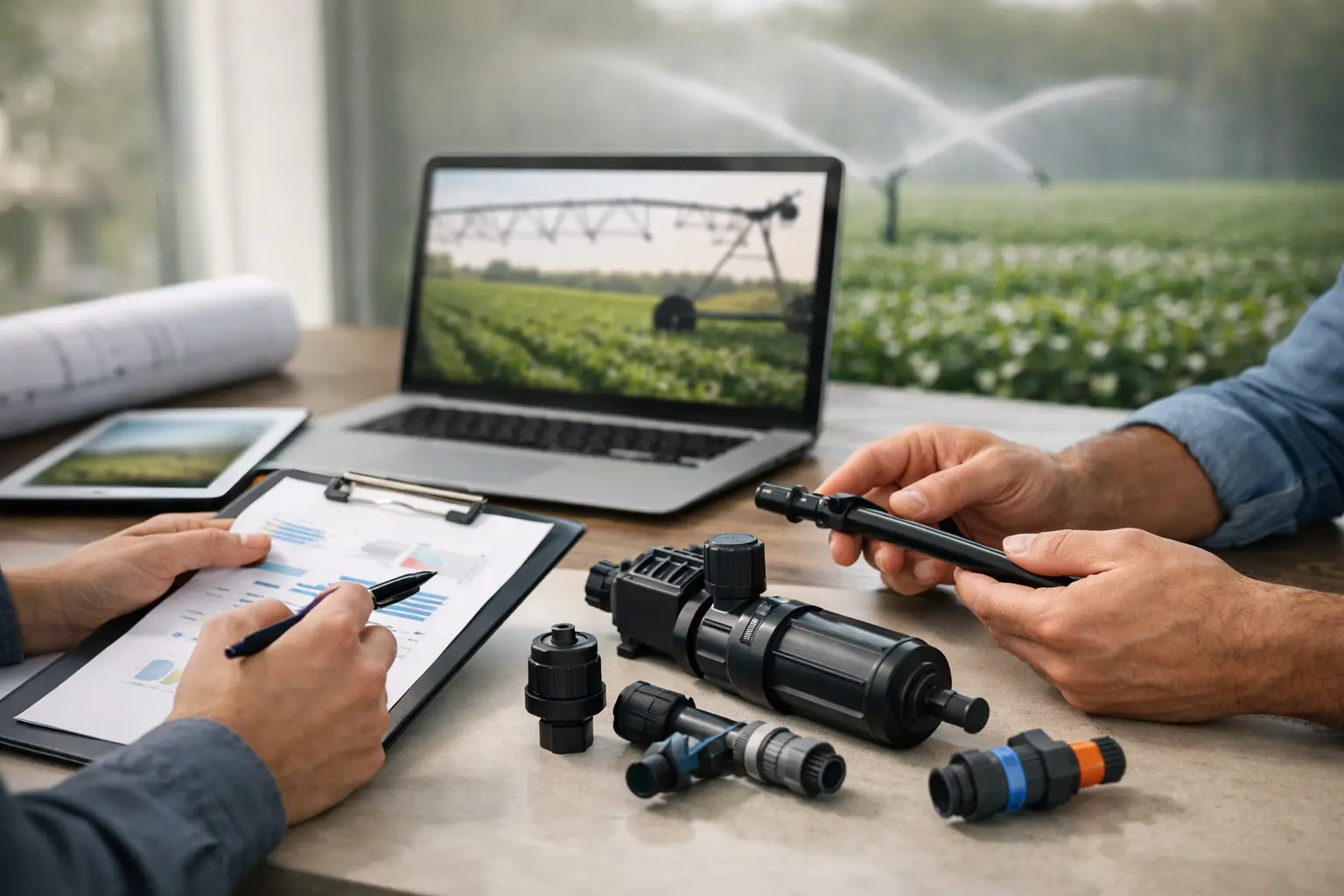
How to Compare Irrigation Suppliers
A low price on pipe or drip tape can look attractive until a shipment arrives late, a fitting standard does not match your system, or spare parts are hard to source in peak season. That is why knowing how to compare irrigation suppliers matters for more than procurement – it affects uptime, crop performance, labor planning, and long-term operating cost.
For growers, importers, distributors, and project buyers, the right supplier is rarely the one with the cheapest quote. The better choice is the one that can meet your technical requirements, deliver consistently, communicate clearly, and support your operation after the sale. A structured comparison makes that decision faster and far less risky.
How to compare irrigation suppliers without missing key details
Start by comparing suppliers against your actual irrigation needs, not against a generic product list. A supplier that is excellent for greenhouse drip systems may not be the best fit for center pivot parts, filtration packages, or large-scale pump installations. Before you ask for quotations, define the scope of the project.
This usually means clarifying the crop, acreage, water source, pressure requirements, field layout, climate conditions, and whether you need a complete system or replacement components. It also helps to separate must-haves from nice-to-haves. For example, pressure-compensating emitters may be essential on uneven terrain, while advanced remote monitoring may depend on budget and local technical support.
When your specification is clear, supplier comparisons become more accurate. You avoid pricing that looks competitive only because key items were left out.
Build a like-for-like comparison
The biggest mistake in irrigation sourcing is comparing quotes that are not based on the same scope. One supplier may include filtration, valves, controllers, and installation guidance, while another prices only the main line and emitters. On paper, the second offer looks cheaper. In practice, it may cost more once missing components are added.
Ask each supplier to quote against the same bill of requirements. If you are still evaluating design options, request that each quote clearly separates equipment, accessories, freight, lead time, warranty, and technical support. That creates a fair comparison and exposes hidden cost differences early.
The criteria that matter most
A strong supplier comparison balances commercial terms with technical fit. Price matters, but in irrigation, performance and continuity matter just as much.
1. Product range and technical fit
Look first at whether the supplier can cover your system requirements. Some suppliers specialize in drip irrigation, while others are stronger in sprinklers, pivots, pumps, filtration, fertigation, or automation. A broad catalog can simplify sourcing, but specialization can also be valuable if your project needs technical depth.
Check material specifications, pressure ratings, flow consistency, filtration compatibility, and fitting standards. If you operate across multiple sites, standardization also matters. Buying from a supplier whose components integrate well across projects can reduce maintenance complexity and spare parts confusion.
2. Quality and certification
Quality should be tested through evidence, not promises. Ask about manufacturing standards, quality control procedures, testing protocols, and any relevant certifications. For importers and distributors, consistency across shipments is especially important. A supplier that performs well on one order but varies on the next creates commercial risk.
It is also worth asking how products perform under local field conditions. UV exposure, water quality, sediment load, salinity, and operating pressure can all affect lifespan. The best supplier for one market may not be the best for another.
3. Pricing structure, not just price
Compare total landed cost rather than unit price alone. Freight, duties, minimum order quantities, packaging, replacement part availability, and payment terms can change the economics significantly.
A higher upfront price may still deliver better value if the supplier offers longer service life, fewer failures, lower clogging risk, or simpler maintenance. On the other hand, a premium brand is not always necessary for short-season or lower-intensity applications. It depends on how critical the system is and how expensive downtime would be.
4. Lead times and supply reliability
In irrigation, timing is commercial. A delayed shipment can push back planting, reduce yield potential, or force emergency local purchases at higher cost. Ask suppliers about standard lead times, stock availability, seasonal demand peaks, and backup plans for urgent orders.
Reliability matters even more than speed. A supplier who consistently delivers in four weeks is often better than one who promises two weeks and misses the date.
5. Technical support and after-sales service
This is where many sourcing decisions are won or lost. Strong after-sales support can save money long after the purchase order is issued. Ask whether the supplier provides sizing support, system drawings, installation guidance, troubleshooting, spare parts planning, and warranty handling.
If you are buying for a large farm, dealer network, or export market, response time matters. A slow answer during irrigation season can become a crop problem very quickly.
Comparison table for irrigation suppliers
Use a simple scorecard to compare suppliers on the factors that affect performance and buying confidence.
| Criteria | Supplier A | Supplier B | Supplier C | What to Look For |
|---|---|---|---|---|
| Product fit | Matches your crop, acreage, pressure, and water source | |||
| Range of components | Can supply complete system or required parts | |||
| Quality consistency | Stable manufacturing and field-tested performance | |||
| Certifications | Relevant product and quality standards | |||
| Unit pricing | Clear pricing on equivalent specifications | |||
| Total landed cost | Freight, duties, packaging, and minimums included | |||
| Lead time | Realistic delivery window during peak season | |||
| Spare parts access | Fast availability of replacement components | |||
| Technical support | Design help, troubleshooting, and training | |||
| Warranty handling | Clear process and response time | |||
| Communication | Fast, accurate, and commercially clear | |||
| Payment terms | Terms that match your cash flow and risk level |
A weighted score can help if several stakeholders are involved. For example, a farm manager may assign more weight to reliability and support, while a distributor may prioritize margin, consistency, and private label options.
Questions to ask before choosing a supplier
The quality of your questions shapes the quality of your decision. Good suppliers will answer directly and provide documentation where needed.
Here are the most useful areas to cover:
- Which crops, farm sizes, and irrigation methods do you support most often?
- Can you provide a complete component list for this scope?
- What is your average lead time in peak season?
- Which products do you keep in stock, and which are made to order?
- What warranty applies, and how are claims handled?
- Do you provide installation guidance or system design support?
- How available are spare parts after the initial purchase?
- Have you supplied similar projects in my region or climate?
These questions move the conversation beyond price and into operational reality.
Warning signs when comparing irrigation suppliers
Some risks are easy to miss during the quotation stage. If a supplier is vague about specifications, avoids discussing warranty terms, or responds slowly before the sale, expect bigger problems later. Poor documentation is another red flag, especially for import transactions or technically complex systems.
Be cautious if pricing is dramatically below the market without a clear explanation. Sometimes the reason is simple efficiency or direct manufacturing. Sometimes it means thinner materials, shorter lifespan, or missing accessories that will be billed later.
Another warning sign is a supplier who can sell the products but cannot support application decisions. Irrigation is not just a catalog purchase. The wrong emitter spacing, filtration setup, or pump sizing can create performance issues that are expensive to correct.
How digital sourcing makes comparison easier
Modern agricultural marketplaces and directories can reduce the time it takes to evaluate suppliers, especially when you are sourcing across regions or comparing multiple product categories. Instead of chasing scattered contacts, buyers can review supplier profiles, product coverage, and inquiry options in one place.
For businesses using a sector-focused platform such as Agricial, the advantage is relevance. You are not sorting through generic directories filled with unrelated vendors. You are comparing businesses that operate in agricultural categories and are easier to assess against real farm or commercial sourcing needs.
That does not replace due diligence, but it does make the first stage of supplier discovery faster and more organized.
Make the final decision on business fit
When deciding how to compare irrigation suppliers, think beyond the first transaction. The strongest supplier relationship supports future orders, expansion, seasonal urgency, and problem-solving when conditions change. A technically capable supplier with dependable communication often creates more value over time than a lower-cost seller with limited support.
If two suppliers are close on price and specifications, choose the one that gives you more confidence in delivery, documentation, and follow-through. In irrigation, the best buying decision is usually the one that keeps water moving when your operation needs it most.
A careful comparison today can protect yield, reduce sourcing friction, and give your business a stronger base for growth next season.