10 Farming Activities That Drive Farm Output
Every successful farm runs on more than planting and harvesting. The real work happens across a chain of decisions and field operations, and those daily choices determine yield, quality, labor efficiency, and profit. If you want a practical view of 10 farming activities, it helps to see them not as isolated tasks, but as connected parts of one production system.
For growers, contractors, input suppliers, and agribusiness partners, understanding these activities matters because each one affects sourcing, timing, and output. A delay in irrigation changes fertilizer performance. Poor land preparation limits seed emergence. Weak post-harvest handling can reduce the value of a strong season. That is why farm performance is built step by step.
Why 10 farming activities matter in commercial agriculture
On a commercial farm, activities are planned around cost control and market results, not just routine. The same crop can perform very differently depending on how well core operations are managed. A farm that chooses the right seed but applies poor nutrient management may still underperform. A livestock business with strong genetics but weak health protocols will face avoidable losses.
This is also where agriculture becomes a supply chain issue, not only a production issue. Each activity creates demand for equipment, inputs, labor, storage, transport, technical advice, and reliable service providers. For agribusinesses, these are not small details. They are the touchpoints where buying decisions happen.
1. Land preparation
Land preparation is the first operational step in most crop systems. It includes clearing residues where needed, plowing or minimum tillage, leveling, breaking compacted soil, and creating the right seedbed for establishment. The goal is not simply to make soil look neat. The goal is to improve root penetration, water movement, aeration, and uniform planting conditions.
The right approach depends on the crop, soil type, climate, and machinery access. Intensive tillage can control weeds and prepare a fine seedbed, but repeated passes may increase fuel use and damage soil structure. Conservation tillage can reduce erosion and preserve moisture, but it often requires stronger weed control planning. Good land preparation is not about doing more work. It is about doing the right work for the field.
2. Seed selection and planting
Planting is one of the most visible farming activities, but success starts before the planter enters the field. Farmers need to select seed based on maturity period, yield potential, disease resistance, climate suitability, and buyer requirements. In horticulture and export-oriented production, market preference may be just as important as agronomic performance.
Planting itself requires precision. Spacing, planting depth, row alignment, and timing all affect germination and plant population. Even a high-quality seed variety can underdeliver if it is planted into dry soil or at the wrong density. This is why commercial operations increasingly treat planting as a technical process rather than a seasonal routine.
3. Irrigation management
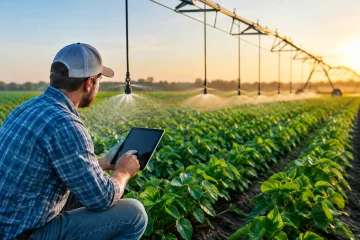
Water management can make or break farm output. Irrigation is not only about supplying water when rainfall is low. It is about applying the correct amount at the correct growth stage with minimal waste. Poor irrigation scheduling increases disease pressure, leaches nutrients, raises energy costs, and can reduce quality.
Different systems serve different production goals. Drip irrigation supports high-value crops with better water efficiency and targeted application. Sprinkler systems offer broad coverage, but wind and evaporation can reduce efficiency. Surface irrigation may still be practical in some regions, though it often needs careful leveling and water control. The best system is the one that fits the crop, water source, field layout, and operating budget.
4. Nutrient and fertilizer application
Plants remove nutrients from the soil, and productive farming depends on replacing them in a balanced way. Fertilizer application is one of the most critical activities because it directly affects growth, yield formation, and product quality. Yet more fertilizer does not always mean better results.
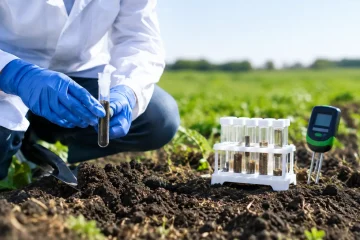
Effective nutrient management starts with understanding soil condition and crop demand. Nitrogen may drive vegetative growth, but phosphorus supports root development and potassium improves stress tolerance and quality. Micronutrients can also become limiting, especially in intensively managed systems. Timing matters as much as product choice. Fertilizer applied too early, too late, or in the wrong form can reduce efficiency and waste money.
5. Weed control
Weeds compete with crops for water, nutrients, sunlight, and space. Left unmanaged, they reduce yield and complicate harvesting. Weed control can involve manual labor, mechanical cultivation, mulching, cover crops, or herbicide programs. On many farms, the most effective strategy is a combination rather than a single method.
The trade-off is usually between labor, cost, and long-term resistance management. Heavy herbicide reliance may save time in the short term but create resistance problems over time. Manual weeding can be effective in smaller or high-value systems, yet labor availability may become a constraint. The right weed program should match the scale of the farm and the economics of the crop.
6. Pest and disease management
Healthy crops and animals require constant monitoring. In crop farming, pest and disease pressure can rise quickly due to weather shifts, planting density, poor sanitation, or weak rotation planning. In livestock systems, disease outbreaks can disrupt growth, reproduction, and market access.
Strong management depends on early detection and accurate diagnosis. Not every field issue needs a chemical response, and not every pest threshold justifies treatment. Integrated pest management gives better long-term control by combining monitoring, resistant varieties, biological tools, cultural practices, and targeted chemical use when needed. For commercial operators, this approach protects both output and input efficiency.
7. Livestock feeding and care
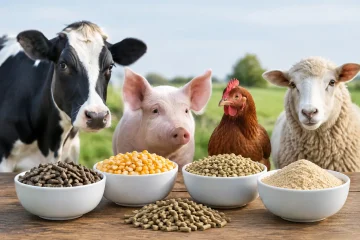
In mixed farms and animal production businesses, livestock care is one of the most important farming activities. It includes feeding, watering, housing, breeding support, sanitation, vaccination, and routine observation. Animal performance depends on consistency. Feed quality, ration balance, and health status all influence weight gain, milk production, fertility, and mortality rates.
This is an area where small gaps become expensive quickly. Inadequate housing increases stress. Poor water quality reduces intake. Weak recordkeeping makes it harder to spot performance issues early. Commercial livestock operations benefit from treating animal care as a system with measurable inputs and outcomes, not just daily chores.
8. Pruning, thinning, and crop maintenance
Many crops need active maintenance during the growing season. Fruit trees, vineyards, vegetables, and plantation crops often require pruning, thinning, staking, training, or canopy management. These tasks improve light penetration, airflow, plant balance, and fruit development.
They also influence labor planning and product quality. Skipping pruning may reduce labor costs for the week, but it can increase disease pressure and lower marketable output later. Thinning may feel counterintuitive because it removes part of the crop load, yet it often improves size, uniformity, and final value. Maintenance work is where experienced growers often protect margins.
9. Harvesting
Harvesting is the moment when production turns into saleable volume, so timing and handling are critical. Harvest too early and quality may fall short. Harvest too late and shelf life, moisture balance, or market grade may suffer. For grain producers, moisture content affects storage safety. For fresh produce growers, bruising and temperature exposure can cut value fast.
The right harvesting method depends on crop type, labor access, machinery availability, and buyer expectations. Mechanized harvest improves speed and scale, but not every crop or field is suited to it. Manual harvest can protect quality in delicate crops, though labor costs may be higher. The best choice depends on the economics of the operation, not only the technology available.
10. Post-harvest handling and storage
A farm does not finish its work when the crop leaves the field. Post-harvest handling includes cleaning, grading, drying, packing, cooling, storing, and preparing products for transport or sale. In commercial agriculture, this stage has a direct impact on market access and final price.
Poor storage conditions can erase the value created earlier in the season. Grain can spoil from excess moisture. Fruits and vegetables can lose freshness from heat or rough handling. Livestock products require strict hygiene and temperature control. For many businesses, investment in post-harvest systems delivers returns because it reduces loss and supports better market timing.
How these 10 farming activities connect to growth
What makes these 10 farming activities so important is their interdependence. Better seed performs best with good land preparation. Efficient irrigation improves nutrient uptake. Timely pest control protects the benefit of fertilizer and maintenance work. Smart harvesting only pays off if storage and distribution are ready.
That is also why sourcing matters. Farms need dependable access to machinery, irrigation systems, fertilizers, seeds, veterinary products, storage solutions, consultants, and technical service providers. In fragmented markets, finding those partners can slow operations and increase risk. Platforms such as Agricial help simplify that process by connecting agriculture businesses with relevant suppliers and service providers across the sector.
For any farm or agribusiness looking to improve output, the key is not chasing one miracle input. It is managing each activity with discipline, good timing, and the right commercial support behind it.