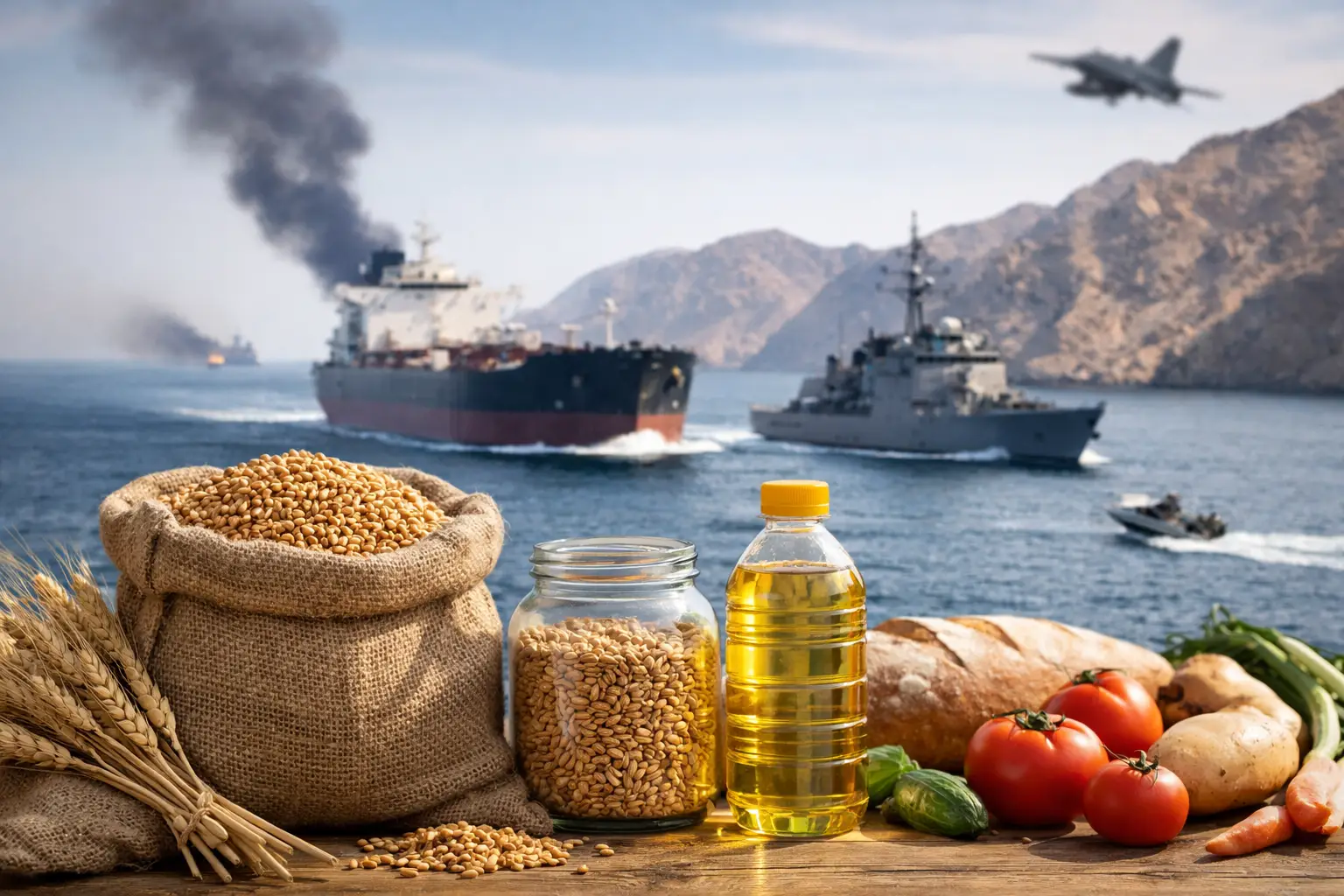
Hormuz Disruption Raises Global Food Crisis Fears
When a single maritime chokepoint handles roughly a fifth of global oil trade, any disruption quickly moves beyond energy headlines. Hormuz disruption raises fears of global food crisis because agriculture depends on far more than rainfall and acreage. It depends on fuel, fertilizer, shipping capacity, insurance, and steady cross-border trade.
For agricultural businesses, this is not a distant geopolitical story. It is a pricing, sourcing, and continuity risk with direct consequences for farm input costs, food processing margins, and import-dependent markets.
Why Hormuz matters to global agriculture
The Strait of Hormuz is one of the world’s most sensitive shipping corridors, linking Gulf producers to international markets. While it is usually discussed in relation to crude oil and gas, its importance to agriculture is just as serious. Energy prices shape nearly every part of the food system, from fertilizer manufacturing to irrigation pumping, cold storage, transport, and export logistics.
A disruption in Hormuz can drive up bunker fuel costs for vessels, increase marine insurance premiums, and force rerouting or shipment delays. That alone can tighten supply chains. But the bigger agricultural concern is that the Gulf region also plays a major role in fertilizer exports, especially nitrogen-related products and feedstock linked to natural gas.
If fertilizer shipments slow or energy costs spike, growers in Asia, Africa, and parts of Europe may face higher input prices just as planting decisions are being made. That creates a chain reaction. Higher production costs can reduce application rates, lower yields, and eventually push food prices higher.
How Hormuz disruption raises fears of global food crisis
The phrase “global food crisis” can sound dramatic, but the mechanism is straightforward. Food systems are interconnected, and pressure in one area quickly spreads to others. If Hormuz disruption limits fuel flows, transport becomes more expensive. If gas-linked fertilizer production becomes costlier, input markets tighten. If shipping schedules slip, importers may miss key delivery windows for grain, feed, or farm inputs.
This matters most in countries that depend heavily on food imports or imported agricultural inputs. Nations in North Africa, the Middle East, and parts of South Asia are especially exposed because they often rely on international markets for wheat, edible oils, animal feed, and fertilizers. A short disruption may create temporary price volatility. A prolonged disruption can affect procurement planning, food security budgets, and seasonal production.
There is also a confidence effect. When traders expect supply risk, they buy defensively. Freight rates rise, suppliers become more cautious, and buyers compete harder for available stock. In that environment, even businesses far from the Gulf can face tighter margins and reduced negotiating power.
The first markets likely to feel pressure
Fertilizers are near the top of the list. Ammonia, urea, and other nitrogen-based products are highly sensitive to gas and shipping conditions. If costs rise sharply, distributors may delay purchases in hope of stabilization, while farmers may reduce usage or switch products where possible.
Grain and oilseed markets can also react quickly, even if the disruption does not directly block those cargoes. The reason is simple: freight, insurance, and energy costs are embedded in final landed prices. Importers buying wheat, corn, soymeal, or rice may pay more even when physical supply remains available.
Livestock supply chains are another pressure point. Feed costs often move faster than finished animal protein prices, which can squeeze poultry, dairy, and meat producers. For operators already managing high financing costs or limited working capital, that squeeze can become operationally serious.
What agricultural businesses should do now
The right response depends on where your business sits in the supply chain, but waiting for clarity is rarely the best commercial strategy. This is the time to review supplier concentration, shipping exposure, and inventory timing.
Importers should check whether critical products are tied to Gulf routes, either directly or through energy-linked pricing. Fertilizer buyers, feed manufacturers, and bulk commodity traders should stress-test budgets against higher freight and input costs. If your purchasing model relies on just-in-time deliveries, this is the moment to reassess buffer stock.
Exporters and suppliers should communicate early with customers about lead times, pricing validity, and possible substitutions. In volatile conditions, silence creates more risk than bad news. Buyers can handle delays better than uncertainty.
It also helps to widen the sourcing base. Diversified supplier networks do not eliminate disruption, but they improve options when one corridor tightens. For businesses comparing international suppliers, verified agricultural marketplaces such as Agricial can support faster discovery and more direct commercial outreach across categories including fertilizers, machinery, irrigation, livestock inputs, and AgriTech services.
A supply chain issue, not just an energy issue
The biggest mistake is treating Hormuz as only an oil market story. For agriculture, it is a supply chain resilience story. Food inflation is often explained at the consumer end, but the real pressure usually starts earlier – in energy, inputs, freight, credit, and procurement timing.
Not every disruption will become a full-scale food crisis. Much depends on duration, alternative shipping capacity, government response, and the strength of regional inventories. But agricultural businesses do not need a worst-case scenario to feel the impact. Even brief instability can raise costs, delay contracts, and disrupt planning across entire growing cycles.
The businesses best positioned for this environment are the ones that move early, verify partners carefully, and keep sourcing channels flexible before the market gets crowded.