How to Export Agricultural Products Right
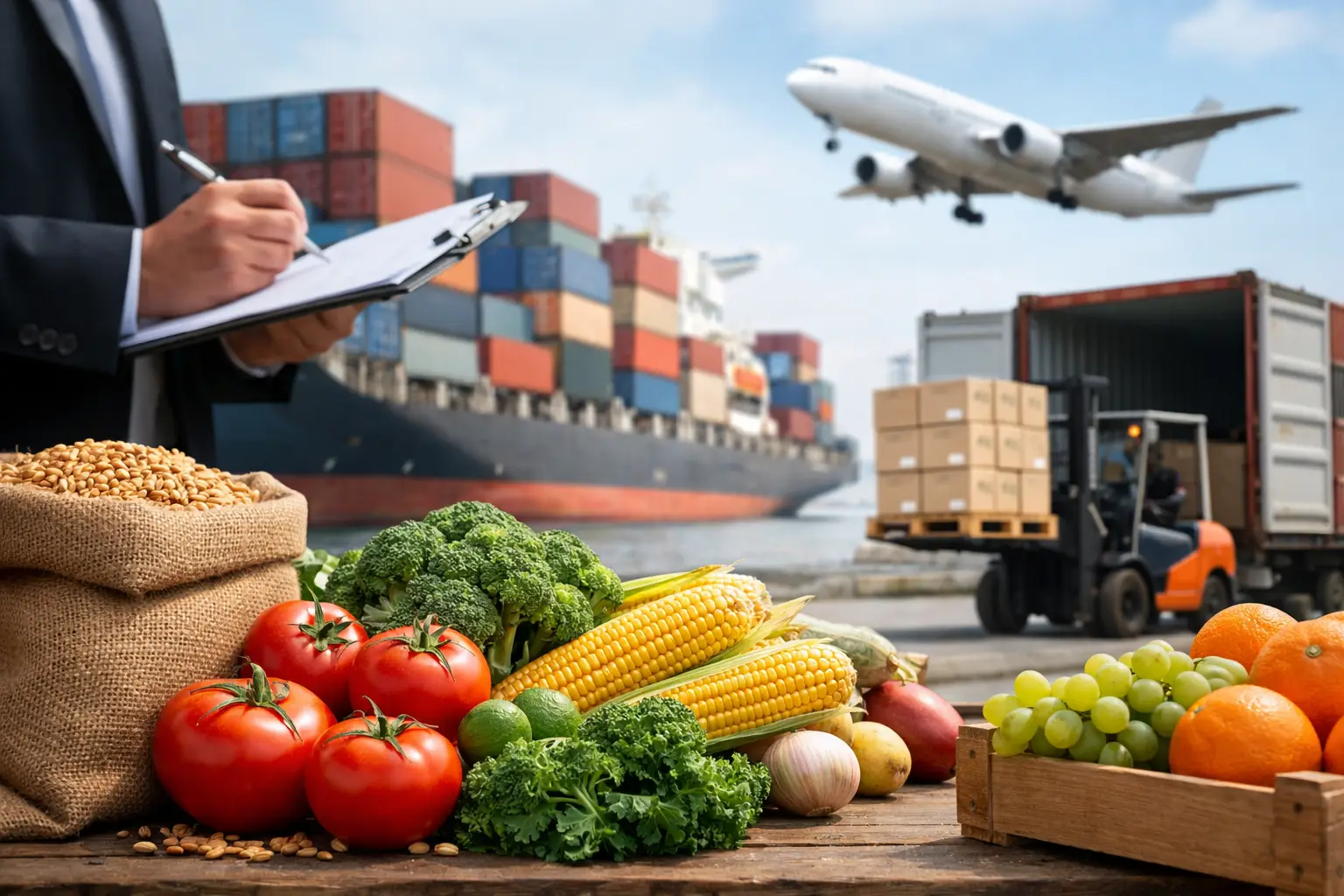
A container of fresh produce can lose value in a single afternoon if the paperwork is wrong, the cold chain breaks, or the buyer’s import requirements were misunderstood. That is why learning how to export agricultural products is not just about finding a customer abroad. It is about building a process that protects quality, cash flow, and reputation from the farm gate to the destination market.
For agricultural businesses, exporting creates access to larger markets, better price opportunities, and more diversified revenue. It also brings stricter standards, longer lead times, and higher consequences for small mistakes. The businesses that grow sustainably in export markets are rarely the ones moving fastest at the beginning. They are the ones that put the right commercial and operational system in place early.
How to export agricultural products without costly mistakes
The first decision is not shipping. It is product-market fit. Some products travel well, tolerate longer transit times, and face relatively simple import rules. Others are highly sensitive, heavily regulated, or commercially viable only in narrow seasonal windows.
Start by assessing your product in three ways: shelf life, compliance burden, and market demand. Dry grains, pulses, oilseeds, spices, and some processed agricultural goods are generally easier to export than fresh, highly perishable items. Fresh fruit, vegetables, meat, dairy, and live plants can deliver strong margins, but they require tighter handling, more certificates, and more disciplined logistics.
Choose the right export product first
Before you contact overseas buyers, confirm that your product can meet the destination market’s practical requirements. Ask whether your crop or commodity can maintain quality during inland transport, port handling, ocean or air transit, customs clearance, and final delivery. Then ask whether your production volume is consistent enough to support repeat business. One successful trial shipment matters less than dependable supply over time.
A simple comparison helps frame the risk profile:
| Product type | Export complexity | Shelf life risk | Typical compliance burden | Best fit | |—|—|—|—|—| | Grains and pulses | Moderate | Low to moderate | Moderate | New exporters | | Spices and dried herbs | Moderate | Low | Moderate | Small to mid-sized suppliers | | Fresh fruits and vegetables | High | High | High | Experienced operators with cold chain access | | Processed agricultural goods | Moderate to high | Low to moderate | High | Businesses with quality systems | | Live plants and planting material | High | High | Very high | Specialized exporters |
This is where many exporters overreach. A product with strong overseas demand is not automatically a good first export product. The better choice is often the one you can deliver consistently, document correctly, and price with confidence.
Research demand, access, and buyer quality
Exporting starts with market selection, not broad global targeting. Focus on a few countries where your product already has demand, trade access is realistic, and the commercial environment matches your scale.
Look at tariff treatment, phytosanitary rules, seasonal demand, competitor origins, and common packaging formats in the target market. A strong market on paper can still be a poor fit if the buyer expects private labeling, extended credit, or year-round volume you cannot support.
What to check before entering a market
You need answers to five practical questions. What product grade does the market buy? What certifications are commonly expected? Who are the main competing supplier countries? What delivery terms are standard? How long does payment usually take?
For many agricultural exporters, buyer quality matters more than market size. A smaller importer with a clear product specification and disciplined payment history is often better than a large inquiry with vague requirements and aggressive price pressure.
Platforms built around agriculture-specific discovery can shorten this stage because they help exporters compare real businesses by category, region, and product focus instead of searching through unrelated listings.
Get export compliance and documentation right
If there is one area where shortcuts become expensive, it is compliance. Agricultural products face quality, safety, labeling, and plant or animal health requirements that vary by destination and product type.
At minimum, exporters usually need commercial documents such as the commercial invoice, packing list, certificate of origin, and transport documents. Many products also require phytosanitary certificates, fumigation certificates, health certificates, residue compliance records, inspection reports, or product-specific test results.
Core documents often required
| Document | Purpose | Who usually provides it | |—|—|—| | Commercial invoice | Declares product, value, and sale terms | Exporter | | Packing list | Details packaging, weights, and quantities | Exporter | | Certificate of origin | Confirms country of origin | Chamber or authorized body | | Bill of lading or air waybill | Transport evidence | Carrier or freight forwarder | | Phytosanitary certificate | Confirms plant health compliance | Government plant authority | | Health certificate | Confirms animal or food safety status | Relevant authority |
The exact mix depends on the shipment. Fresh produce, seeds, animal products, and organic goods each carry different rules. This is why exporters should confirm destination requirements before production is packed, not while goods are already at the port.
Build packaging around transit reality
Agricultural packaging is not only about appearance. It protects product condition, supports handling efficiency, and helps customs and buyers verify what they received.
A good export pack balances cost, protection, and market expectation. Bulk buyers may prefer sacks, totes, or palletized cartons. Retail channels may require consumer-ready labeling, barcodes, or branded packs. Moisture sensitivity, ventilation, stack strength, and temperature tolerance all affect your packaging decision.
Packaging decisions that affect claims and losses
If your product is vulnerable to bruising, condensation, leakage, contamination, or infestation, your packaging specification should address that risk directly. Many disputes blamed on shipping actually begin with weak pack design or poor palletization.
Use clear lot identification and consistent labeling. If a buyer raises a quality issue, traceability can reduce the size of the claim and speed up resolution.
Price for margin, not just for the deal
New exporters often underprice to win the first order, then discover that inland freight, documentation, inspections, packaging upgrades, financing costs, and destination adjustments erased the margin.
Your export price should reflect the full landed cost up to the agreed trade term, whether that is EXW, FOB, CFR, CIF, or another structure. It should also reflect risk. A market with higher rejection risk, payment delay, or quality sensitivity may require a stronger margin than a straightforward commodity shipment.
Know your trade term before you quote
| Term | Exporter responsibility | Buyer responsibility | Best use case | |—|—|—|—| | EXW | Minimal | Most logistics and export handling | Experienced buyers | | FOB | Delivers goods on board vessel at origin | Main freight and beyond | Common for bulk exports | | CIF | Covers freight and insurance to destination port | Import clearance and inland delivery | Buyers wanting simpler sourcing | | DDP | Nearly all delivery steps | Receives goods | Only if exporter has strong destination support |
It depends on your operating model. FOB gives many agricultural exporters a practical balance because it keeps control of origin handling while limiting destination complexity.
Secure logistics before harvest or packing peaks
Logistics should be arranged early, especially for seasonal products. Vessel space, reefer container availability, trucking capacity, and port congestion can change quickly during harvest peaks or holiday periods.
For dry commodities, focus on moisture control, contamination prevention, weight accuracy, and loading discipline. For perishables, focus on pre-cooling, temperature monitoring, transit time, and transfer points where cold chain failure is most likely.
Freight partner selection matters
Choose service providers with proven agricultural handling experience. A forwarder that understands fresh produce, fumigation timing, documentation cutoffs, and commodity-specific loading practices can prevent problems that a general logistics provider may miss.
This is also where communication matters. Your buyer should know the shipping schedule, document timeline, and any realistic risks to arrival timing. Silence creates friction. Clear updates build trust.
Protect payment and reduce commercial risk
Export growth is attractive, but bad debt can erase the value of several successful shipments. Do not treat payment terms as an afterthought.
For first orders, safer structures include advance payment, partial advance with balance against documents, or a letter of credit when deal size justifies it. Open account terms may help win larger buyers later, but they should be earned through transaction history and credit evaluation.
Practical risk controls for new exporters
Use written product specifications, pre-shipment quality confirmation, clear tolerance language, and documented Incoterms. Verify the legal identity of the buyer and who is actually responsible for payment. If an intermediary is involved, define roles carefully.
Insurance can help, but it is not a substitute for basic discipline. Many export disputes come from preventable ambiguity around grade, moisture, count, packaging, or arrival expectations.
Build repeat export business, not one-off shipments
The strongest exporters do more than move product. They make buying easier. They respond quickly, present clear specifications, maintain consistent quality, and communicate in commercial terms the buyer can act on.
That means having a usable product sheet, dependable photos, standard packaging details, available volumes, lead times, and a fast way for buyers to request quotes. In a fragmented global market, visibility and credibility matter almost as much as price. This is one reason agriculture-focused marketplaces such as Agricial can support growth – they help suppliers show up where serious industry buyers are already searching by category, product, and region.
A practical path for how to export agricultural products
If you want a workable answer to how to export agricultural products, think in this order: choose the right product, validate the right market, confirm compliance, protect quality, quote with full cost visibility, and secure payment terms that fit the risk. Exporting rewards speed only after the system is sound.
The next opportunity is rarely the market with the loudest inquiry. It is the one where your product, paperwork, logistics, and buyer expectations align well enough to turn a first shipment into a durable trade relationship.