How to Choose Irrigation Contractors
A low bid can look attractive until the first pressure problem, uneven coverage, or delayed install starts costing you yield, water, and labor. That is why knowing how to choose irrigation contractors matters well before equipment arrives on site. For farms, nurseries, orchards, greenhouses, and commercial landscapes, the right contractor is not just installing hardware – they are shaping system performance, operating cost, and long-term reliability.
Why choosing the right contractor affects more than installation
An irrigation system is a working asset, not a one-time purchase. Pipe sizing, pump matching, filtration, emitter selection, zoning, automation, and layout accuracy all affect how efficiently water moves through your operation. A contractor who understands your crop, field conditions, and operating goals can help reduce waste and avoid underperforming designs.
The wrong contractor can still deliver a system that looks complete on day one. The real problems often show up later: pressure loss at the far end of a block, clogged emitters, poor scheduling logic, weak documentation, or service delays during peak season. For commercial agriculture, those issues quickly become financial issues.
How to choose irrigation contractors for commercial agriculture
The best selection process is practical and comparative. You are not just hiring for price. You are evaluating technical fit, service capability, responsiveness, and the contractor’s ability to support your operation after installation.
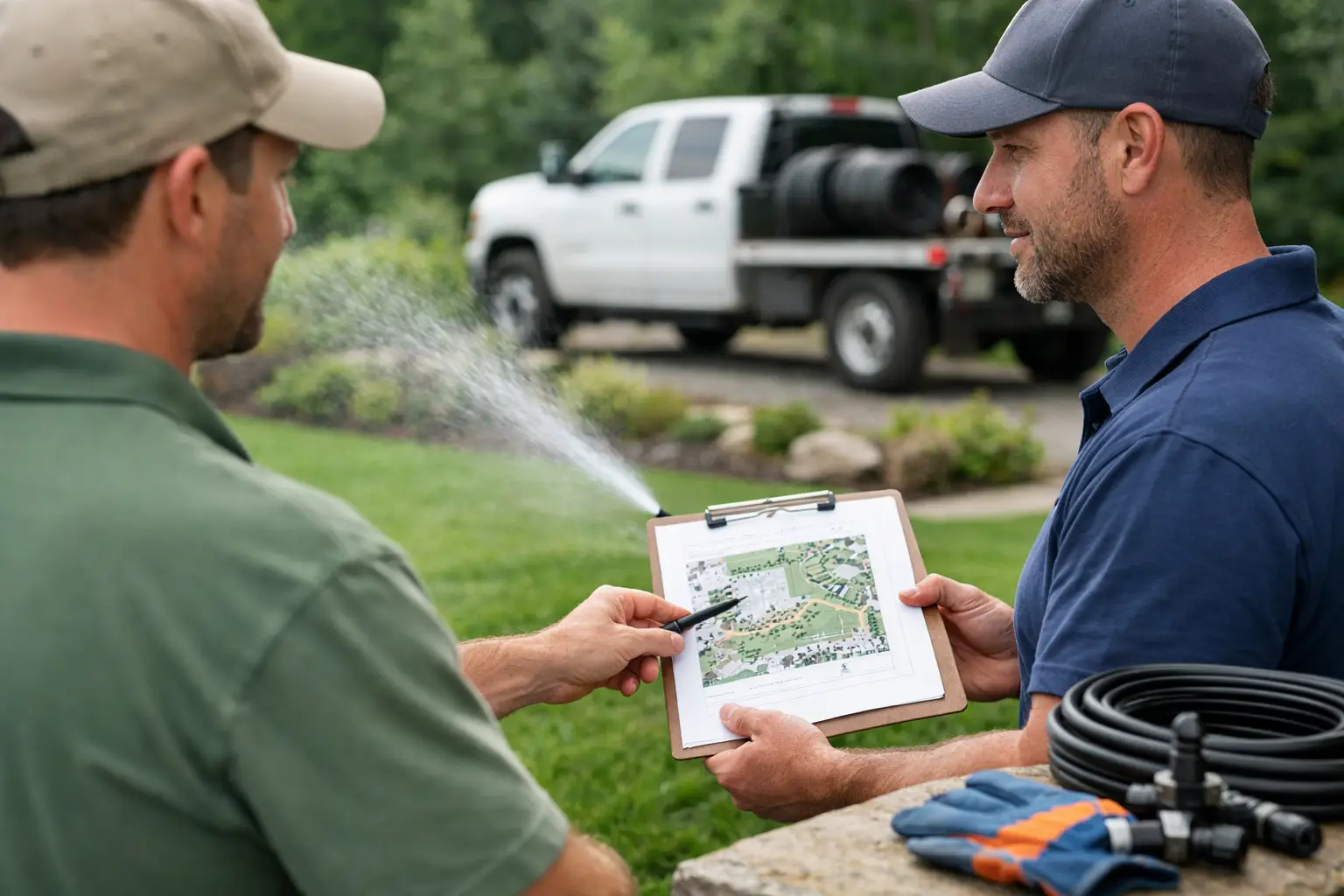
Start by defining your project clearly. A contractor can only give a meaningful proposal if they understand acreage, crop type, water source, available power, soil conditions, terrain, and your operating targets. If your scope is vague, bids will be vague too, which makes fair comparison almost impossible.
Start with your actual irrigation needs
Before requesting quotes, outline what the system needs to accomplish. A row crop operation may prioritize uniform coverage across large acreage and simple maintenance. A greenhouse may care more about automation, fertigation accuracy, and tight zone control. An orchard may need pressure-compensating drip, filtration, and expansion capacity for future blocks.
At a minimum, define these factors:
- Crop or application type
- Water source and flow availability
- Total irrigated area
- Soil profile and drainage conditions
- Current infrastructure that must integrate with the new system
- Need for fertigation, filtration, automation, or remote monitoring
- Timeline for installation and startup
This step helps separate contractors who ask good technical questions from those who are only trying to close a sale.
Look for relevant experience, not just general experience
A contractor may have years in business and still be the wrong fit for your project. Irrigation work is highly application-specific. Experience in residential turf does not automatically translate to open-field agriculture, greenhouse fertigation, or orchard drip systems.
Ask what kinds of projects they complete most often. Request examples that match your scale and system type. If your operation depends on micro-irrigation, pump stations, filtration, or controller integration, the contractor should be able to explain design choices in practical terms.
Experience also matters geographically. Local knowledge of soil, water quality, permitting, frost risk, and seasonal labor timing can improve both design and execution.
What to compare when reviewing irrigation contractors
Once you have two to four serious candidates, compare them across the same criteria. This is where many buyers save money in the right way – by avoiding incomplete proposals rather than simply choosing the lowest price.
Contractor comparison table
| Evaluation area | What to ask | Strong sign | Red flag |
|---|---|---|---|
| Project experience | Have you completed similar agricultural projects? | Can show comparable installations and explain results | Speaks only in general terms |
| System design | Will you provide design details and hydraulic logic? | Clear explanation of pressure, flow, zoning, and equipment choices | No calculations or vague layout |
| Materials | Which brands, pipe classes, filters, valves, and emitters are included? | Itemized specification list | Substitutions not disclosed |
| Installation timeline | What is the schedule from approval to commissioning? | Realistic timeline with milestones | Promises speed without details |
| Service support | Who handles startup, repairs, and in-season issues? | Defined support process and response expectations | No clear after-sales support |
| Warranty | What is covered and for how long? | Written labor and equipment warranty terms | Verbal assurances only |
| Documentation | Will we receive drawings, manuals, and settings? | Full turnover package included | No mention of records |
| Pricing | Is the quote itemized and complete? | Transparent breakdown of labor, materials, and exclusions | Low lump sum with unclear scope |
A comparison table keeps the decision commercial and objective. It also helps when multiple stakeholders are involved, such as farm managers, owners, engineers, or procurement teams.
Review the quote line by line
A professional quote should tell you what is included, what is excluded, and what assumptions the contractor is making. If one proposal is much cheaper than the others, there is usually a reason. It may exclude trenching, electrical work, controls, startup, filtration upgrades, or freight.
Ask each contractor to clarify the scope in writing. This reduces disputes later and gives you a cleaner basis for comparison. Price matters, but cost certainty matters too.
Check licenses, insurance, and compliance
This is basic risk control, but it is often rushed. Verify that the contractor is properly licensed where required, insured for liability and workers’ compensation, and able to meet local code or permitting requirements. If the project includes pumps, power, storage, or automation, there may be multiple compliance points.
For commercial buyers, documentation is part of contractor quality. A company that handles credentials professionally is often better organized across scheduling, safety, and service as well.
Questions that reveal contractor quality quickly
Good contractors tend to welcome detailed questions because they know strong answers build trust. Weak contractors often become vague when the conversation moves beyond equipment brands and budget.
Ask these before signing
- How do you calculate flow, pressure, and zone sizing for a project like ours?
- What design assumptions are you making about water quality and source reliability?
- Which components are most likely to need maintenance in this setup?
- How do you handle startup testing and performance verification?
- What happens if the installed system does not meet the agreed operating targets?
- Who provides service during peak irrigation season?
- How long are lead times for replacement parts you specify?
You do not need every answer in engineering language. What matters is whether the contractor can explain decisions clearly and tie them to your operation.
How to choose irrigation contractors when service matters most
For many agricultural businesses, service capability is the difference between a manageable issue and a lost production window. A contractor with strong design skills but weak support can still become a costly partner.
Ask about response times, spare parts availability, service territory, and whether they maintain installation records for future troubleshooting. If your business runs seasonally critical irrigation, after-sales support should carry significant weight in the decision.
This is also where local and regional contractors can have an advantage. A large company may have more resources, while a nearby specialist may respond faster and know local operating conditions better. It depends on your project scale and risk tolerance.
Common mistakes buyers make
The most common mistake is choosing on price alone. The second is failing to compare proposals on equal scope. The third is assuming that a product brand guarantees installation quality.
Another frequent issue is not planning for expansion. If you expect to add acreage, new blocks, or automation later, mention it early. A contractor can design with future capacity in mind, which is often cheaper than retrofitting later.
Buyers also sometimes skip references or only ask whether the contractor was “good.” A better question is whether the system performed as promised after one full season and how the contractor handled any problems.
A practical shortlist process
If you are sourcing through a commercial directory or marketplace, build a shortlist of three to five contractors that match your geography, project type, and service scope. From there, narrow based on responsiveness, relevant experience, and proposal quality. Platforms focused on agriculture, such as Agricial, can help reduce search time by making it easier to identify irrigation providers within a broader agricultural supply network.
Keep your process simple:
- Define the project clearly
- Shortlist qualified contractors
- Request comparable written proposals
- Check references and compliance documents
- Compare service capability, not just install capability
- Confirm warranty, documentation, and support terms before approval
That process is not complicated, but it protects your budget and your operating season.
When the cheapest bid is still the expensive option
A lower bid can be the right choice if the scope is complete, the materials are appropriate, and the contractor has proven they can deliver. But if a lower price depends on undersized pipe, lighter filtration, rushed installation, or weak support, the savings disappear quickly.
A better question than “Who is cheapest?” is “Who gives us the best operating result for the investment?” That is the question experienced growers and agri-business buyers tend to ask, because they know irrigation performance shows up in labor efficiency, crop consistency, and water cost month after month.
The right contractor should leave you with more than a finished install. They should leave you with a system that works as promised, can be serviced when it matters, and supports the way your business plans to grow. That is usually where the best value is found.